Understand Your Condition
Understanding what is causing your sciatica is an important first step towards recovery. When you know what is happening, why certain symptoms occur and which activities may help, the condition often feels less frightening, more manageable and under control.
What is sciatica?
Sciatica is not a disease in itself. It is a term used to describe symptoms caused by irritation or compression of one or more nerve roots in the lower back.
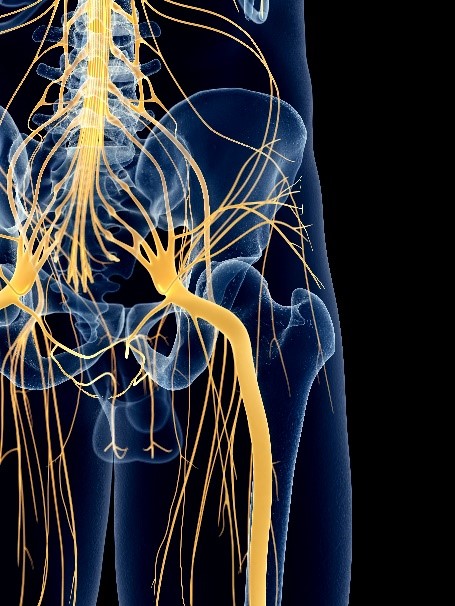
Sciatica can be caused by anything that comes into contact with the nerves which join together to form the largest nerve in the body….you’ve guessed it! The sciatic nerve!
There is no fixed number of causes for sciatica but there are roughly 15-20 common reasons that make up 90% of cases.
Although two people may both have pain travelling down the leg, the underlying cause, the severity of the nerve irritation and best treatment for that presentation can be very different indeed.
That is why successful treatment begins with your personal diagnosis. A one-size-fits-all approach does not exist.
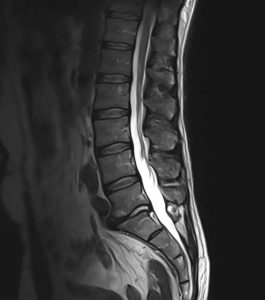
Both of these people below had sciatica.
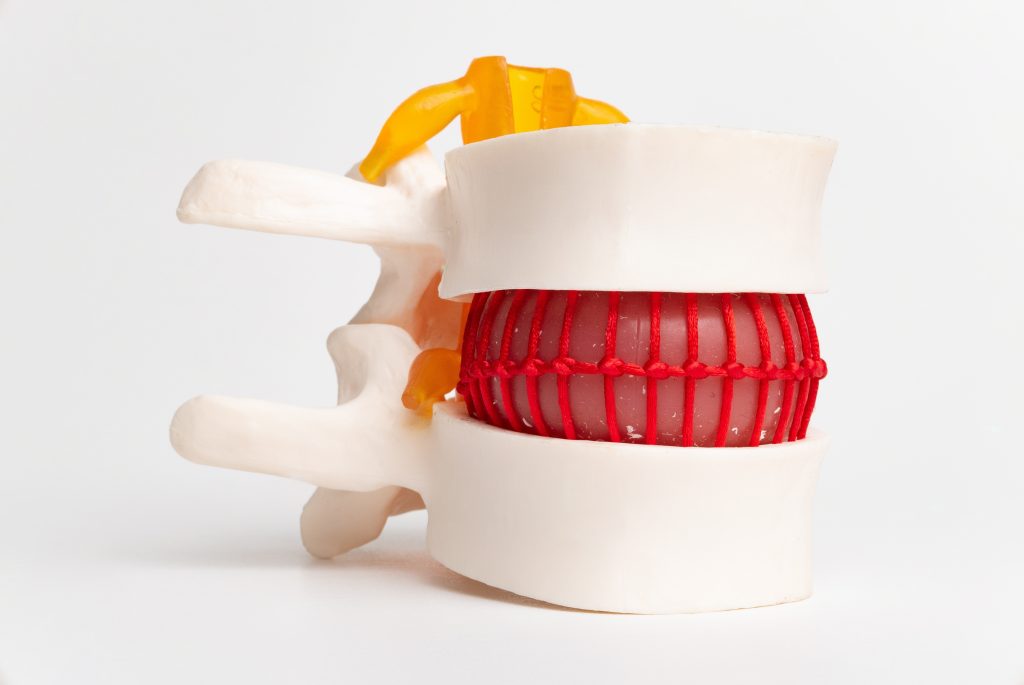
Both had different causes. One had a large disc bulge which is easy to see (the black bulge pushing into the white descending strip. the spinal cord, near the bottom of the spine).
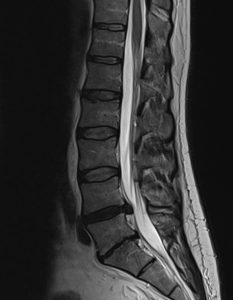
The other person below had a worn degenerative disc pressing on an exiting nerve that is more discreet and difficult to see from this angle.
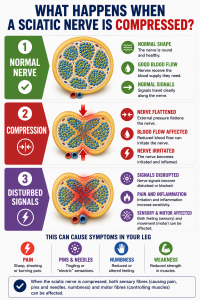
Many nerves join together to form the sciatic nerve, which travels through the buttock and down the leg towards the foot.
Sciatica may cause a wide range of symptoms that may be unique to you:
- Pain travelling from the lower back or buttock into the leg
- Burning, shooting or electric-shock sensations
- Pins and needles
- Numbness
- Leg or foot weakness
- Symptoms that worsen when sitting, bending, coughing or sneezing
Back pain may also be present, although the leg symptoms can be more noticeable than the discomfort in the back.
What is irritating your nerve?
Many different spinal conditions can produce sciatica. Common causes include:
Sciatica describes pain caused by irritation or compression of the sciatic nerve or one of the spinal nerve roots that forms it.
However, sciatica itself does not tell us why the nerve is irritated.
Your symptoms may be caused by:
- A herniated disc
- Spinal stenosis
- Degenerative disc disease
- Spondylolisthesis
- Piriformis syndrome
- Facet joint arthritis
- Trauma or injury
- Inflammation around the nerve
- Another spinal condition
Each of these conditions requires a different management plan.
Understanding your individual symptoms
Sciatica affects people differently. The precise location of your symptoms can provide useful information about which nerve root may be involved.
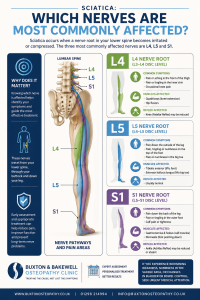
For example, symptoms may travel into:
- The buttock
- The back or outside of the thigh
- The calf
- The shin
- The top, side or sole of the foot
- One or more toes
The pattern is not always exact. Pain, pins and needles, numbness and weakness can overlap, and symptoms may change as the nerve becomes more or less irritated.
This is why your condition should be assessed as a whole rather than diagnosed from one symptom alone.
Why a clinical assessment matters
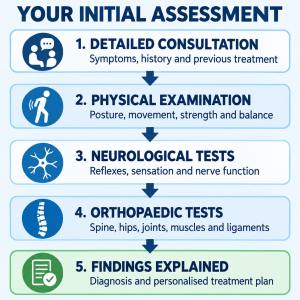
A careful clinical assessment helps us understand the likely source of your symptoms and identify anything requiring further investigation.
Do you always need an MRI scan?
Not everyone with sciatica needs an immediate MRI scan. In many cases, the likely cause can be identified through the history and physical examination. However if required we have a rapid and affordable private MRI referral pathway.
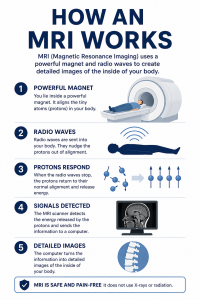
An MRI may be considered when:
- Symptoms are severe or persist despite appropriate treatment
- Significant weakness or foot drop is present
- The diagnosis remains unclear
- A more serious condition needs to be excluded
- A course of IDD Therapy is being considered
- The scan result is likely to change the treatment plan
An MRI should be considered alongside your symptoms and examination findings. Changes seen on a scan do not always explain the pain, so the image should never be interpreted in isolation.
Pain does not always equal damage
Sciatica can be extremely painful, but the intensity of the pain does not necessarily show how much physical damage has occurred.
An irritated nerve can become highly sensitive. Ordinary movements, sitting positions or small increases in pressure may then produce strong symptoms. Muscles may also tighten protectively around the lower back and pelvis, making movement feel more difficult.
Understanding this can reduce some of the fear associated with movement. Your recovery plan should introduce activity gradually and at a level appropriate for your condition.
Recovery is not always a straight line
Sciatica symptoms can fluctuate. You may have several better days followed by a temporary flare-up. This does not automatically mean that you have caused further damage or returned to the beginning of your recovery.
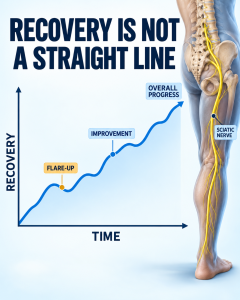
Symptoms may be influenced by:
- An increase in activity
- Prolonged sitting
- Poor-quality sleep
- Stress or fatigue
- Lifting or repeated bending
- A long car journey
- Doing too much too quickly
Recognising your individual triggers allows activity to be adjusted without necessarily stopping altogether.
Staying involved in your recovery
Recovery is usually more effective when you understand the purpose of each part of your plan.
Depending on the cause and severity of your sciatica, this may include:
- Advice about sitting, lifting and everyday movement
- Appropriate exercises and gradual rehabilitation
- Osteopathic or manual treatment
- IDD Therapy spinal decompression when clinically appropriate
- Treatment of contributing muscular or joint problems
- A gradual return to work, walking, sport or hobbies
- Monitoring changes in pain, sensation and strength
The aim is not simply to reduce pain temporarily. It is to improve function, restore confidence in movement and help you manage your spine more effectively in the future.
The NHS advises people with uncomplicated sciatica to continue normal activities as much as possible and begin gentle movement rather than remaining seated or lying down for long periods. Activity should still be adapted to your symptoms and clinical findings. NHS guidance on sciatica
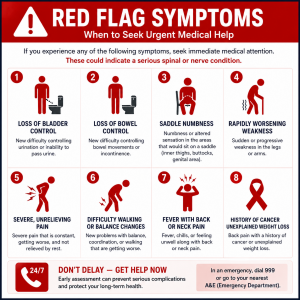
Know when to seek urgent help
Most sciatica is not an emergency. However, urgent medical assessment is required if you develop:
Helping you understand your diagnosis
At Buxton & Bakewell Osteopathy Clinic, we believe that you should understand your condition rather than simply be given the name of a diagnosis.
We will explain:
- Which structures may be involved
- Why your symptoms travel into a particular part of the leg
- What may be aggravating the nerve
- Whether further investigation may be helpful
- Which treatment options may be appropriate
- What you can do to support your recovery
- Which changes should be reported promptly
A clear understanding of your condition can replace uncertainty with a practical plan. It helps you make informed decisions, recognise meaningful progress and take an active role in your recovery.
Key Takeaways
- Every case of sciatica is unique.
- Sciatica is a symptom, not the diagnosis.
- Finding the underlying cause is essential for effective treatment.
- A detailed history and physical examination provide the foundation of an accurate diagnosis.
- MRI scans are useful in selected cases but are not always required.
- Personalised treatment plans offer the best opportunity for recovery.
- Ongoing reassessment helps ensure your treatment continues to meet your needs
Your Journey Starts With the Right Diagnosis
If you’re experiencing pain travelling down your leg, don’t settle for a generic approach. Understanding your personal diagnosis allows treatment to be tailored specifically to your condition, helping you recover more confidently and reducing the risk of future problems.
At Sciatica Hub in Buxton, we’re committed to helping you understand your condition and guiding you towards the most appropriate treatment for your individual needs.