Can Trauma and Injury Cause Sciatica?
Trauma and injury are often a catalyst for sciatica.
As we move through life our intervertebral discs age with us.
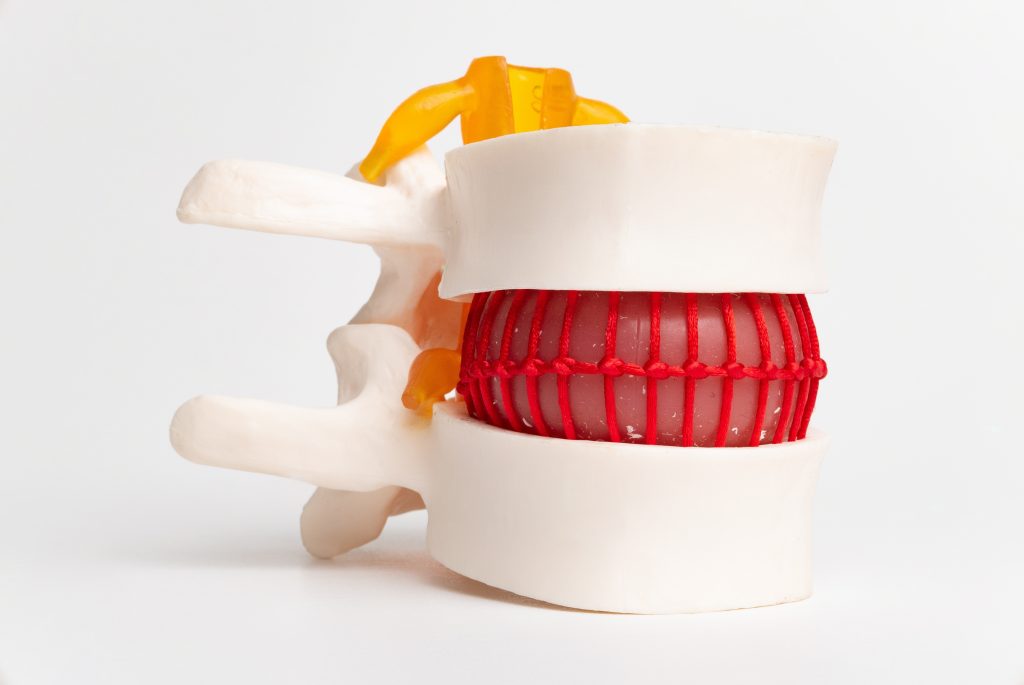
When we are young, the gel like nucleus in the middle of the disc is turgid with a 88-90% moisture content making it a flexible and effective shock absorber. Ironically for younger people this high-water content and high hydrostatic pressure can make disc herniate under certain conditions such as a heavy deadlift in the gym.
I have seen many young men who have done exactly this.
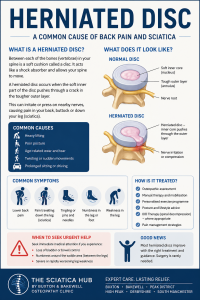
As we age the water content drops to 70% or lower and the cells inside the nucleus lose their ability to hold water.
The disc literally shrinks and becomes more brittle and the tough round rings of fibrocartilage become stressed. This is when micro tears begin to happen making them more susceptible to rupture.
When we experience a sudden trauma from a sports injury, car accident or sudden trip, the force and impact can violently affect the spine and its surrounding tissues. This mechanism can cause a herniated or prolapsed disc.
Sciatica is not actually a diagnosis itself, it is a symptom of irritation or compression of the sciatic nerve. The underlying injury may involve the spinal discs, joints, muscles, ligaments or nerves themselves.
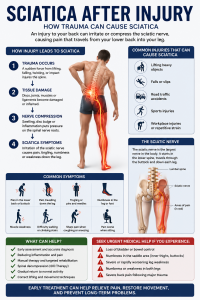
At the Buxton Sciatica Hub , we frequently assess patients whose leg pain began immediately after an accident or developed gradually over several days following an injury. Understanding exactly how trauma affects the spine is the first step towards successful treatment. We have a very effective treatment program for sciatic pain
What Is Sciatica?
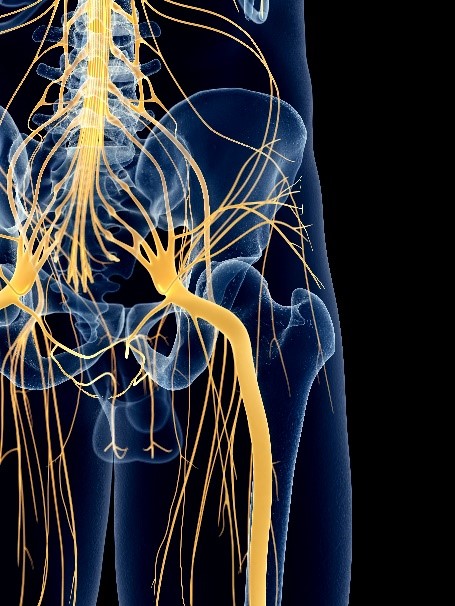
Sciatica describes pain travelling along the path of the sciatic nerve.
The sciatic nerve is the largest nerve in the body. It begins in the lower lumbar spine, travels through the buttock and down the back of the thigh before dividing into branches supplying the lower leg and foot.
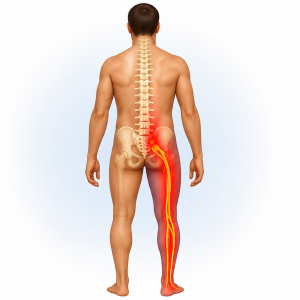
When one or more of the spinal nerve roots become irritated or compressed, symptoms may include:
Sciatica Symptoms
For mobile, I’d keep this to two columns with very short descriptions:
| Symptom | What it may feel like |
|---|---|
| ⚡ Leg pain | Sharp or shooting pain down one leg |
| 🔥 Burning pain | Hot or burning sensation in the leg |
| 🪡 Pins & needles | Tingling in the leg, foot or toes |
| 🦶 Numbness | Reduced feeling in the leg or foot |
| 💪 Weakness | Leg or foot feels weaker than normal |
| 🍑 Buttock pain | Pain starting in the buttock and travelling down |
| 🪑 Worse sitting | Symptoms may increase with prolonged sitting |
| 🤧 Coughing/sneezing | May trigger sharper leg pain |
| 🌙 Night symptoms | Pain or tingling may disturb sleep |
| 🔄 Changing symptoms | Pain may move between back, buttock and leg |
Important red flags
Seek urgent medical assessment for new bladder or bowel dysfunction, numbness around the saddle/genital area, or severe/progressive weakness. These can be warning signs of cauda equina syndrome.
For your Sciatica Hub, I think this shorter format will work much better on a phone than a large multi-column symptom table.
How Can Trauma Cause Sciatica?
| Type of Injury | How It Can Affect the Nerve |
|---|---|
| 🚗 Sudden impact | Can place a rapid force through the lower spine |
| 💿 Disc injury | A damaged disc may bulge or herniate and irritate a nerve |
| 🏋️ Heavy lifting | Sudden loading may aggravate or injure a spinal disc |
| 🤸 Twisting injury | Rotation under load can irritate discs and spinal structures |
| 🪜 Fall | Impact may injure the spine, pelvis or surrounding tissues |
| 🏃 Sports injury | Repeated or sudden forces can aggravate the lower back |
| 🦴 Vertebral injury | Fracture or displacement can reduce space around a nerve |
| 🔥 Inflammation | Injured tissues can become inflamed and irritate nearby nerves |
The simple pathway
Trauma → spinal/disc injury → nerve irritation or compression → sciatica
Important: Trauma doesn’t always cause sciatica immediately. In some cases, leg pain, tingling, numbness or weakness may develop after the initial injury.
Injuries That Commonly Lead to Sciatica
Herniated Disc
Herniated discs are by far the most common traumatic cause.
When excessive force is placed on the spine, the outer fibres of the disc may tear.
The soft gel-like centre then bulges or leaks backwards.
This disc material can compress nearby nerve roots causing:
- Severe leg pain
- Numbness
- Weakness
- Tingling
- Difficulty standing upright
Many patients report hearing a “pop” while lifting.
Others simply notice severe back pain followed several days later by sciatica.
Disc Bulges
Not every injury causes a full disc prolapse.
Sometimes repeated lifting or one awkward movement causes the disc to bulge slightly.
Although smaller than a prolapse, even a modest bulge can narrow the spaces through which nerves travel.
Inflammation around the bulge often contributes as much to pain as the mechanical compression itself.
Lumbar Sprains and Strains
Injuries to muscles and ligaments can also trigger sciatica.
Following trauma:
- muscles tighten
- swelling develops
- movement becomes restricted
The resulting muscle spasm may irritate the sciatic nerve or narrow the openings where nerves leave the spine.
Although these injuries often improve naturally, severe muscle guarding may prolong symptoms.
Facet Joint Injuries
The facet joints guide movement between each spinal vertebra.
Trauma may:
- inflame the joint
- damage cartilage
- cause locking
- create local swelling
This inflammation can irritate adjacent nerve roots, producing pain that closely resembles true sciatica.
Fractures
Although less common, fractures following significant trauma require urgent assessment.
Compression fractures or fractures involving the vertebrae can directly compromise nerve roots.
Any significant trauma associated with severe pain or neurological symptoms should always be medically assessed.
Can Minor Trauma Cause Sciatica?
Yes.
Not every injury is dramatic.
Simple events such as:
- lifting a suitcase
- gardening
- sneezing
- coughing
- picking up a child
- moving furniture
may be sufficient if the disc was already weakened.
Often the injury is simply the final event rather than the sole cause.
Why Symptoms Sometimes Appear Days Later
Patients are often confused because the pain didn’t begin immediately.
This is entirely normal.
Initially:
- inflammation is limited
- swelling is minimal
Over the next 24–72 hours:
- inflammation increases
- chemical irritation develops
- nerve sensitivity rises
- muscle spasm develops
As pressure builds around the nerve root, sciatica gradually appears.
Red Flag Symptoms
Seek urgent medical assessment if trauma is followed by:
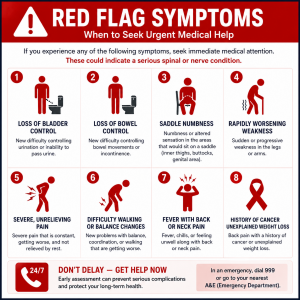
These may indicate Cauda Equina Syndrome or significant spinal injury and require emergency assessment.
Diagnosing Trauma-Related Sciatica
Accurate diagnosis is essential.
At Sciatica Hub in Buxton, assessment begins with a detailed clinical history followed by a thorough physical examination.
This may include:
- Neurological testing
- Muscle strength testing
- Reflex assessment
- Sensation testing
- Straight Leg Raise Test
- Slump Test
- Spinal movement assessment
- Walking analysis
If necessary, further investigations may include:
- MRI scanning
- X-rays
- CT scans
- Ultrasound (for soft tissue injuries in selected cases)
MRI remains the gold standard for identifying disc injuries and nerve compression.
Treatment Options
Treatment depends upon the injured structure.
Many patients recover well with conservative care.
Treatment may include:
- Activity modification
- Osteopathy
- Manual therapy
- Rehabilitation exercises
- Postural advice
- Lifestyle modification
- Pain management advice
- Nerve mobilisation techniques
For more persistent cases, advanced treatments may be recommended.
IDD Therapy for Trauma-Related Sciatica
One of the most effective non-surgical treatments for disc-related sciatica is IDD Therapy (Intervertebral Differential Dynamics Therapy).
IDD Therapy is an advanced form of computer-controlled spinal decompression designed to gently reduce pressure within injured spinal discs.
Unlike simple traction, IDD Therapy carefully targets the affected spinal level using precisely controlled distraction forces.
Potential benefits include:
- Reduced nerve compression
- Improved spinal mobility
- Reduced muscle spasm
- Increased disc hydration
- Reduced inflammation
- Improved function
- Reduced leg pain
- Avoiding surgery in appropriate patients
IDD Therapy is particularly helpful for patients with:
- Herniated discs
- Disc bulges
- Degenerative disc disease
- Persistent sciatica
- Foraminal narrowing
- Chronic trapped nerves
Following a comprehensive assessment, a personalised treatment programme can be created to match the specific injury and severity of symptoms.
Rehabilitation Following Injury
Recovery does not end when pain settles.
Successful rehabilitation aims to:
- restore movement
- improve spinal strength
- improve flexibility
- rebuild confidence
- reduce recurrence risk
Exercises are progressed gradually according to healing.
Returning too quickly to heavy lifting may simply recreate the original injury.
Can Trauma-Related Sciatica Heal Without Surgery?
Yes.
The vast majority of patients improve without surgery.
Research consistently shows that many disc injuries gradually reduce in size over time as inflammation settles and the body naturally repairs damaged tissues.
The key is receiving the correct diagnosis, appropriate treatment, and a structured rehabilitation programme.
Surgery is generally reserved for patients with severe neurological deficits, significant weakness, cauda equina syndrome, or persistent symptoms that fail to improve despite comprehensive conservative management.
Preventing Future Injury
Once you have experienced traumatic sciatica, reducing the risk of recurrence becomes an important part of long-term recovery.
Simple strategies include:
- Learning correct lifting techniques.
- Strengthening your core and hip muscles.
- Maintaining a healthy body weight.
- Staying physically active.
- Warming up before sport or exercise.
- Avoiding prolonged sitting without regular movement.
- Using appropriate manual handling techniques at work.
- Seeking early assessment if back pain develops after an injury.
Many recurrent episodes occur because the original problem was never fully rehabilitated. A structured recovery plan can significantly reduce the likelihood of future flare-ups.
Why Choose Sciatica Hub in Buxton?
At Sciatica Hub in Buxton, we specialise in the assessment and non-surgical treatment of sciatica caused by trauma and spinal injury. Every patient receives a detailed clinical examination to identify the underlying cause of their symptoms rather than simply treating the pain.
Our approach combines evidence-informed osteopathic care with advanced rehabilitation and, where appropriate, IDD Therapy to address disc-related nerve compression. We also provide access to private MRI referrals when further investigation is needed, ensuring patients receive an accurate diagnosis and the most appropriate treatment plan.
Whether your sciatica developed after a lifting injury, a sporting accident, a fall, or a road traffic collision, our goal is to help you reduce pain, improve mobility, and return to the activities you enjoy as safely and quickly as possible.
Key Takeaways
- Trauma and injury are common causes of sciatica.
- Herniated discs and disc bulges are the most frequent injury-related causes.
- Symptoms may begin immediately or develop over several days.
- Early assessment helps identify the underlying cause and guides treatment.
- Most people recover without surgery using appropriate conservative care.
- IDD Therapy may be beneficial for suitable patients with persistent disc-related sciatica.
- Emergency symptoms such as bowel or bladder dysfunction, saddle numbness, or rapidly worsening weakness require immediate medical attention.
If you are experiencing sciatica following an injury and are looking for expert assessment and treatment in Buxton, Sciatica Hub is here to help. A personalised treatment plan can help relieve symptoms, address the underlying cause, and support your recovery back to everyday life.
FAQs: Trauma, Injury and Sciatica
1. Can trauma cause sciatica?
Yes. Trauma such as a fall, lifting injury, sports injury or road traffic accident can damage the discs, joints, muscles or ligaments in your lower back. If these injured tissues compress or irritate a spinal nerve root, sciatica can develop.
2. Can sciatica start days after an injury?
Yes. It’s common for sciatica to develop 24–72 hours after an injury. This is because inflammation and swelling increase over time, placing greater pressure on the affected nerve.
3. What injuries are most likely to cause sciatica?
The most common injuries include:
- Herniated (prolapsed) discs
- Bulging discs
- Heavy lifting injuries
- Falls
- Road traffic accidents
- Sports injuries
- Lumbar muscle strains
- Facet joint injuries
4. Can a minor injury cause sciatica?
Yes. Even relatively minor incidents such as lifting a heavy shopping bag, gardening, twisting awkwardly or slipping can trigger sciatica, particularly if your spinal discs have already weakened with age or previous injury.
5. How do I know if my leg pain is sciatica?
Sciatica usually causes pain that starts in the lower back or buttock and travels down one leg, often below the knee. You may also experience tingling, numbness, burning sensations or muscle weakness in the affected leg or foot.
6. Does everyone with a back injury get sciatica?
No. Many back injuries only affect the muscles or joints and do not involve the nerves. Sciatica only occurs when the sciatic nerve or one of its nerve roots becomes irritated or compressed.
7. How is trauma-related sciatica diagnosed?
A specialist will take a detailed medical history, examine your spine and perform neurological tests to assess strength, reflexes and sensation. If a disc injury or nerve compression is suspected, an MRI scan may be recommended to confirm the diagnosis.
8. Can trauma-related sciatica be treated without surgery?
Yes. Most people recover with non-surgical treatment. This may include osteopathy, rehabilitation exercises, advice on activity modification, and, for suitable patients with disc-related sciatica, advanced spinal decompression such as IDD Therapy.
9. When should I seek urgent medical attention?
Seek immediate medical help if you experience:
- Loss of bladder or bowel control
- Numbness around the groin or saddle area
- Rapidly worsening leg weakness
- Weakness affecting both legs
These symptoms may indicate Cauda Equina Syndrome, which requires emergency treatment.
10. Can trauma-related sciatica be prevented?
While not all injuries can be avoided, you can reduce your risk by maintaining good spinal strength and flexibility, using safe lifting techniques, staying active, warming up before exercise, maintaining a healthy weight and seeking early assessment if back pain develops after an injury.