Weakness in the Leg or Foot Drop: A Serious Symptom of Sciatica
A good metaphor for weakness is the leg or foot is like a light bulb that flickers (the foot) or dims when there is a faulty power supply (compressed sciatic nerve).
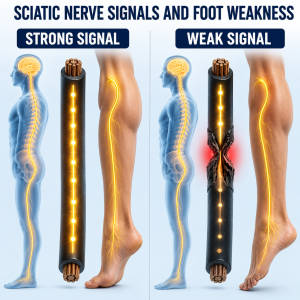
Another would be a garden hose (the nerve) that you have stepped on with your full weight and only a little trickle comes out of the nozzle (the foot)
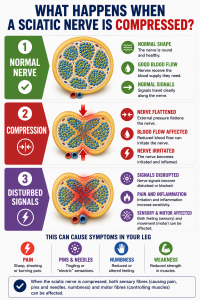
When a nerve root becomes irritated or compressed, electrical signals are impeded. The sciatic nerve is made up of both sensory (which innervate your skin) and motor fibres (which provide electricity to your muscles).
Sensory fibres allow us to detect temperature, touch, vibration and pain. If these fibres are affected by nerve compression they generate faulty signals and we feel this as pins and needles or, if the compression is more extreme, numbness. If the motor fibres are compressed we can experience weakness in our limbs.
Weakness in the Leg or Foot Drop: A Serious Symptom of Sciatica
While pain is the most common symptom of sciatica , weakness in the leg is often a much more significant finding.
If you notice that your leg feels weak, your foot doesn’t quite feel right when you walk or you struggle to lift your toes, it may indicate that the sciatic nerve or one of the spinal nerves that forms it is under significant pressure.
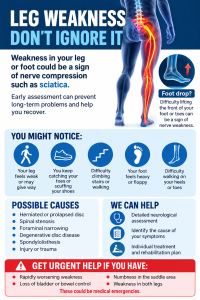
At Buxton & Bakewell Osteopathy Clinic, we regularly assess patients with leg weakness caused by herniated discs, spinal stenosis, nerve compression and other spinal conditions. Early diagnosis is extremely important because prolonged nerve compression can sometimes lead to permanent weakness.
What Is Leg Weakness?
| Feature | What It Means |
|---|---|
| 🦵 Definition | Reduced strength in one or more leg muscles. |
| 🪫 What it feels like | Your leg may feel heavy, unstable, floppy or weak. |
| 🚶 Walking | You may limp, trip, drag your foot or catch your toes. |
| 🪜 Climbing stairs | Your leg may lack the power needed to climb normally. |
| 🪑 Standing up | Getting out of a chair or squatting may feel difficult. |
| ⚖️ Balance | You may feel less steady, especially when standing on one leg. |
| 🦶 Foot movement | Difficulty lifting the front of your foot can cause foot drop. |
| 🦵🦵 One or both legs | Weakness can affect one or both legs, depending on the cause. |
| 🩻 Common causes | Sciatica, disc problems, spinal stenosis, trapped nerves, nerve injury or neurological conditions. |
| 🚨 Urgent help | Sudden or rapidly worsening weakness, new foot drop, bladder/bowel changes or saddle numbness need urgent medical assessment. |
Weakness should never simply be ignored.
What Is Foot Drop?
Foot drop is a specific type of weakness.
It occurs when you cannot properly lift the front of your foot (dorsiflexion).
Instead of clearing the floor normally, your toes drag along the ground.
Many people compensate by lifting their knee much higher than normal—a movement known as a high-stepping gait.
Others swing the leg around to avoid tripping.
Foot drop is not a diagnosis itself—it is a sign that one of the nerves controlling the muscles has become damaged or compressed.
How Does Sciatica Cause Weakness?
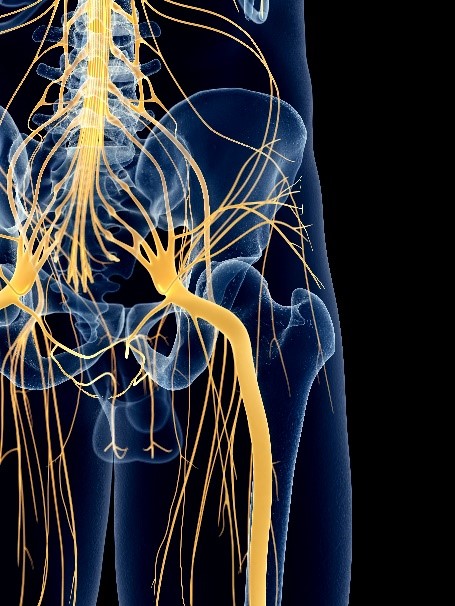
The sciatic nerve is the largest nerve in the body.
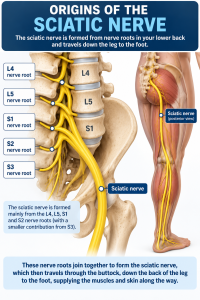
It begins in the lower spine from the:
- L4 nerve root
- L5 nerve root
- S1 nerve root
- S2 nerve root
- S3 nerve root
When one of these nerve roots becomes compressed, the electrical signals travelling from the brain to the muscles become disrupted.
The muscles therefore become weaker.
Pain may improve while weakness continues—or weakness may appear even with surprisingly little pain.
Common Causes of Nerve Compression
Several spinal problems can compress the nerve roots.
Herniated Disc
A prolapsed disc is the most common cause of sudden weakness.
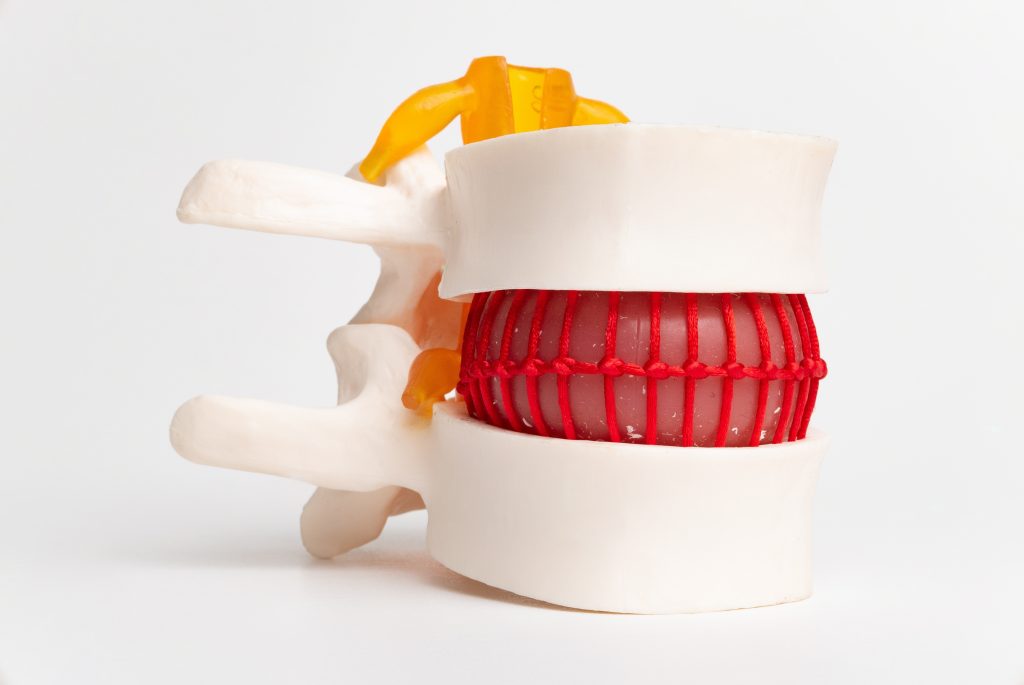
Disc material presses directly onto the nerve root.
This often affects younger and middle-aged adults.
Spinal Stenosis
Narrowing of the spinal canal reduces the available space for nerves. This is called spinal stenosis.
Symptoms often develop gradually.
Weakness may worsen after walking.
Degenerative Disc Disease
As discs lose height with age, the openings where nerves leave the spine become smaller. This is called Degenerative Disc Disease
This can irritate the nerves supplying the leg.
Spondylolisthesis
When one vertebra slips forwards, it may compress nearby nerves.
Patients frequently experience weakness together with back pain.
Trauma
Road traffic accidents
Falls
Sports injuries
Heavy lifting injuries
These can all result in disc injuries that compress nerves. For a detailed article on how trauma causes sciatica click this link. Trauma
Which Nerve Root Is Involved?
Different nerves control different muscles.
| Nerve Root | Common Weakness | What Patients Notice |
|---|---|---|
| L3 | Quadriceps | Difficulty climbing stairs |
| L4 | Knee extension | Knee giving way |
| L4/L5 | Foot lifting | Toes catching |
| L5 | Big toe lifting | Difficulty heel walking |
| S1 | Calf muscles | Difficulty standing on tiptoes |
This pattern helps clinicians identify which spinal level is affected.
Symptoms That Often Accompany Weakness
Weakness rarely occurs on its own.
Common accompanying symptoms include:
- Lower back pain
- Buttock pain
- Sciatica
- Pins and needles
- Numbness
- Burning pain
- Altered sensation
- Muscle cramps
- Balance problems
- Walking difficulty
Early Warning Signs of Foot Drop
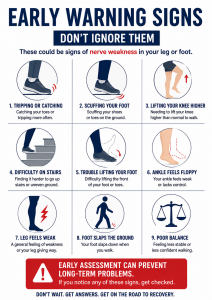
Early recognition allows treatment before weakness progresses.
How Is Weakness Assessed?
A spinal specialist will perform a neurological examination.
This includes:
Muscle Strength Testing
Different muscles are tested against resistance.
Reflexes
Reduced reflexes can indicate nerve involvement.
Sensation Testing
Areas of numbness often match the compressed nerve.
Walking Assessment
Heel walking
Toe walking
Single-leg standing
Balance
These help identify functional weakness.
When Is Weakness an Emergency?
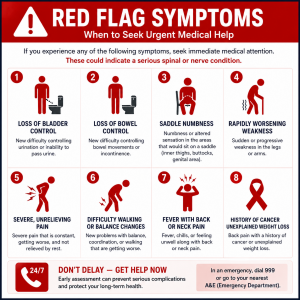
These symptoms could indicate Cauda Equina Syndrome, a rare but serious condition requiring emergency treatment.
Does Foot Drop Always Mean Surgery?
No.
Treatment depends on:
- Severity
- Cause
- Duration
- MRI findings.
- We offer fast affordable private MRI scans
- Rate of progression
Some patients recover well with conservative treatment.
Others require spinal surgery to relieve pressure on the nerve.
Prompt assessment helps determine the most appropriate management.
Can Nerves Recover?
Yes.
Nerves can recover surprisingly well once compression is relieved.
However:
- Mild weakness often improves faster than severe weakness.
- Long-standing compression may take many months to recover.
- Some severe cases may not regain full strength if treatment is delayed.
The sooner significant nerve compression is recognised, the better the chance of recovery.
How Is the Cause Diagnosed?
Diagnosis usually combines:
- Detailed history
- Neurological examination
- Orthopaedic testing
- MRI scanning (when indicated). We offer fast affordable private MRI scans
MRI is particularly useful for identifying:
Treatment for Weakness Caused by Sciatica
Treatment depends on the underlying diagnosis.
It may include:
Gentle manual treatment may help improve spinal mobility, reduce muscle spasm and support recovery where appropriate.
Exercise Rehabilitation
Specific exercises help maintain strength and improve movement while avoiding unnecessary irritation of the affected nerve.
For carefully selected patients with conditions such as:
- Herniated discs
- Degenerative disc disease
- Foraminal stenosis
- Some cases of spinal stenosis
IDD Therapy gently distracts the affected spinal segment with the aim of reducing pressure on compressed nerve roots. It is not suitable for every patient, particularly where there is rapidly progressing neurological deficit, and a full clinical assessment is essential before treatment.
Medical Management
Some patients benefit from medication prescribed by their GP or specialist to help control pain while the nerve recovers.
Spinal Surgery
Where there is significant or progressive weakness, or where imaging confirms severe nerve compression, surgery may be recommended to relieve pressure on the affected nerve.
When Should You Seek Specialist Advice?
Arrange an assessment promptly if you experience:
- Weakness in one leg
- Difficulty lifting your foot
- Foot slapping the floor
- Repeated trips or falls
- Loss of muscle strength
- New numbness with weakness
- Symptoms that are getting worse
Early diagnosis can make a significant difference to recovery.
Why Choose Buxton & Bakewell Osteopathy Clinic?
At our clinic, we regularly assess patients with suspected nerve compression affecting the legs. Every consultation includes a detailed neurological examination to determine whether symptoms are due to muscle weakness, nerve irritation or another condition.
When appropriate, we can arrange private MRI referrals, explain the findings in straightforward language and discuss the most suitable treatment options. For selected patients with disc-related nerve compression, this may include structured rehabilitation and IDD Therapy as part of a comprehensive, evidence-informed management plan.
We provide care for patients from Buxton, Bakewell, the Peak District, High Peak, Chapel-en-le-Frith, Whaley Bridge, Matlock, Ashbourne, Macclesfield and surrounding areas, helping people understand the cause of their symptoms and access timely treatment.
Frequently Asked Questions
Can sciatica cause weakness without severe pain?
Yes. Some people develop noticeable muscle weakness or foot drop even when leg pain is relatively mild. Any new weakness should be assessed promptly.
Is foot drop permanent?
Not always. Many cases improve when the underlying nerve compression is treated early, although recovery may take weeks or months depending on the severity and duration of compression.
Which disc usually causes foot drop?
A herniated disc affecting the L4/L5 or L5/S1 level is among the most common spinal causes of foot drop.
Should I exercise if my leg feels weak?
Light activity may be appropriate in some cases, but progressive weakness should always be assessed before starting an exercise programme.
Is leg weakness more serious than pain?
Generally, yes. Pain indicates irritation of a nerve, whereas weakness suggests the nerve’s ability to supply the muscles has been affected. New or worsening weakness should be investigated promptly.
Key Takeaway
Pain, numbness and tingling are common symptoms of sciatica, but weakness in the leg or foot drop is often a more significant clinical finding. If you notice your foot catching the ground, difficulty lifting your toes or a loss of strength in your leg, seek a professional assessment as soon as possible. Early diagnosis and appropriate treatment can improve the likelihood of nerve recovery and help prevent long-term disability.