Sometimes we do suggest that imaging might be a good idea when we do a clinical assessment.
This can be the case if you have undiagnosed chronic lower back or neck pain that is not getting better. This can apply to other joints in the body such as hips or knees or shoulders.
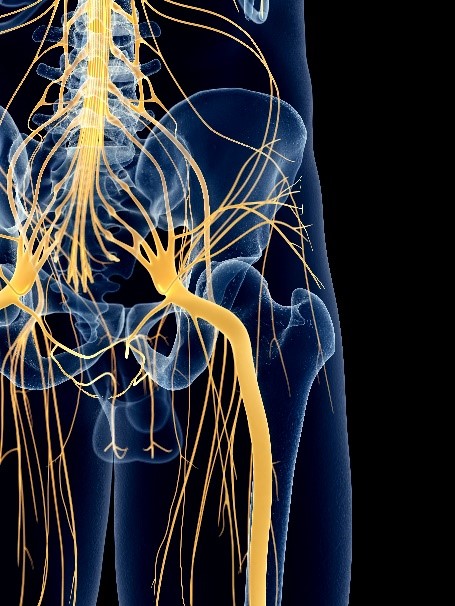
Repetitive episodic back pain or a severe sudden onset of acute concerning sciatic pain or trapped nerves in the neck are other common reasons for referral.
This becomes still more imperative if your sciatica has caused progressive or sudden weakness in your leg or foot or if the pain suddenly takes a turn for the worse. This is when rapid and affordable access to MRI scan matter matters.
We offer a fast alternative to long NHS wait times giving you much quicker access to gold standard imaging. You can request a private MRI referral through Buxton & Bakewell Osteopathy Clinic, giving you a super-fast referral system across Derbyshire and the Peak District.
This piece explains simply what MRI scans are, how they work, what they can diagnose, and why getting the right scan at the right time can make a huge difference to your recovery.
Whether you’re dealing with back pain, sciatica, tendon issues, joint injuries, or unexplained symptoms, understanding MRI technology helps you make good quality decisions about your health.
What Is an MRI Scan?
An MRI scan is very safe. It uses magnetic fields and radio waves to produce highly detailed pictures of the inside of your body. Unlike X-rays or CT scans, MRI does not use radiation, making it safer for repeated or long-term use.
MRI is particularly good at showing:
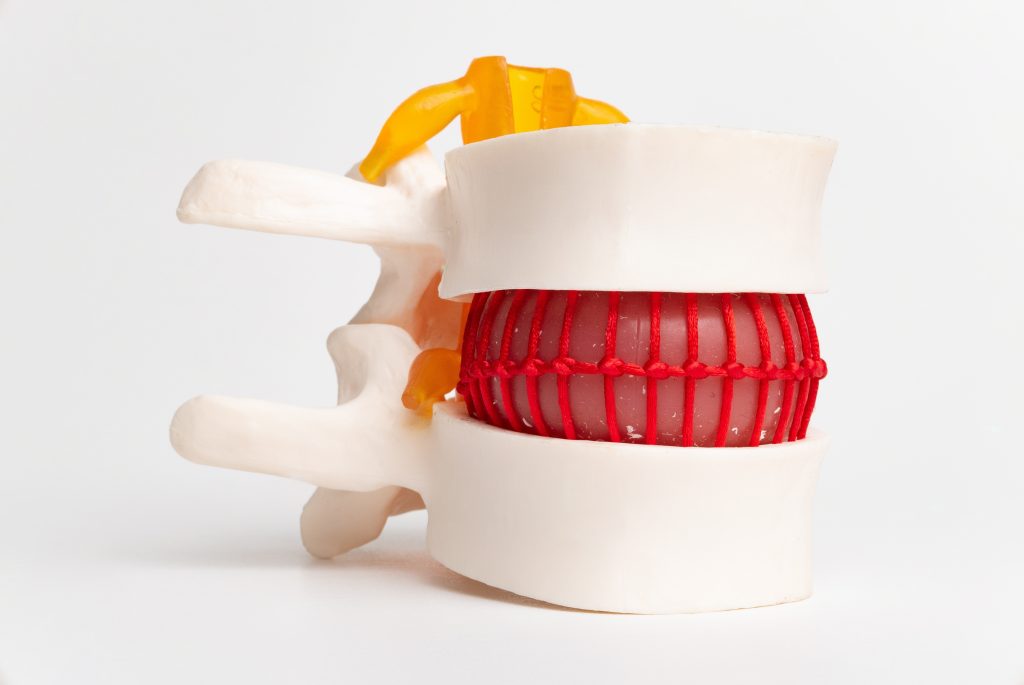
- Spinal intervertebral discs
- Nerves
- Spinal canal and openings for nerves to exit the spine (foramina)
- Muscles and ligaments
- Joints
- Soft-tissue inflammation
- Swelling, cysts and synovial changes inside joints
This level of detail makes MRI the gold standard for diagnosing spinal and musculoskeletal conditions.
How Does an MRI Machine Work?
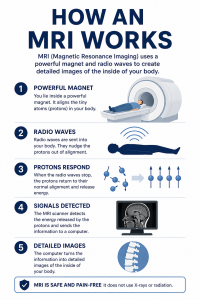
Although MRI scanners look complex, the science behind them is elegantly simple. They point big magnets at your body!
The tinniest particle in our body is an atom. These have a nuclues with a proton and neutron. Neutrons have no charge and protons have a postive charge. The protons inside us align with a magnetic field and an MRI picks up this hift in postion when a magnet is switched on. Clever stuff! In summary there are four elements to the process;
1. Magnetic Field Alignment
Your body contains millions of hydrogen atoms (mostly in water). When you lie inside the MRI scanner, a strong magnetic field lines up these hydrogen atoms in the same direction — like tiny compass needles.
2. Radio Wave Pulse
The machine sends a quick pulse of radio waves, causing the hydrogen atoms to temporarily move out of alignment.
3. Signal Release
When the pulse stops, the atoms snap back into their aligned position, releasing tiny signals.
4. Advanced Computer Imaging
These signals are detected and converted into incredibly detailed, slice-by-slice images of your body.
The images can be viewed from:
- Above
- Below
- Side-on
- Cross-sectional slices
- 3D reconstructions
This level of detail is what makes MRI so powerful for diagnosing disc problems, nerve compression, trapped nerves, sciatica, and joint issues.
When Should You Consider a Private MRI Scan?
We may suggest in a few cases that an MRI is a good idea after a clinical assessment. Many also people choose a private MRI scan when they want answers quickly, without long waiting times or a sense of uncertainty over when they will get one. Some of the most common reasons include:
1. Unexplained Back or Neck Pain
Persistent or recurring pain that doesn’t improve with early treatment may indicate a disc or nerve issue (sometimes nerve pain is difficult to differentiate from mechanical pain).
2. Sciatica or Trapped Nerves
MRI shows whether nerves exiting the spine are pinched, irritated or inflamed. This is essential for the right treatment plan.
3. Suspected Disc Bulge or Herniation
IDD Therapy is particularly effective for disc-related pain, but accurate diagnosis helps determine if it’s suitable.
4. Pins and Needles, Weakness, or Radiating Pain
Neurological symptoms often require imaging to identify the cause.
5. Ongoing Joint Pain
MRI provides excellent images of hips, knees, shoulders and ankles.
6. Post-Accident or Injury Assessment
MRI can identify soft-tissue damage not visible on X-ray.
7. When You Want a Clear Diagnosis Without Delay
Private MRI avoids long NHS waiting times and allows you to take control of your health.
How MRI Helps Diagnose Trapped Nerves
One of the greatest strengths of MRI is its ability to show nerve compression with really good quaity images.
Trapped nerves in the spine that often cause sciatica typically occur due to:
- Disc bulges
- Disc herniations
- Foraminal narrowing
- Arthritic changes
- Swollen facet joints
- Thickened ligaments
- Spinal stenosis
MRI can show:
- Which nerve is affected
- The location of compression
- The severity of the problem
- Whether inflammation is present
- Whether the issue is new or long-standing
This is crucial information for planning the right treatment. Without imaging, it’s often impossible to know the exact cause of nerve-related pain.
How MRI Supports IDD Therapy Treatment Planning
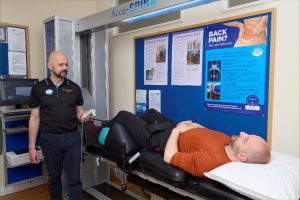
IDD Therapy (Intervertebral Differential Dynamics) is an advanced form of spinal decompression used to treat:
- Herniated discs
- Bulging discs
- Degenerative disc disease
- Trapped nerves
- Sciatica
- Chronic low back or neck pain
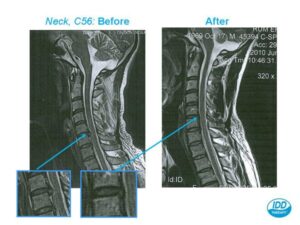
MRI plays a vital role in determining whether IDD Therapy is the right treatment. The image below shows a neck disc bulge before and after treatment.
MRI Helps Us Identify:
1. The Exact Level of Disc Damage
Whether it’s L4/L5, L5/S1 or another level — important for targeting treatment.
2. The Type of Disc Problem
Protrusion? Bulge? Herniation? Degeneration? MRI clarifies this.
3. Whether a Nerve Is Compressed
If the nerve root is pinched, IDD Therapy can relieve pressure.
4. The Severity of Compression
Not every disc bulge is significant; MRI helps avoid unnecessary treatment.
5. Any Red Flags or Contraindications
Such as fractures, tumours, infections or advanced stenosis.
Why MRI + IDD Therapy Works So Well Together
IDD Therapy gently distracts and decompresses the spine, reducing pressure inside the disc and allowing nutrients to flow in for healing. When combined with MRI findings, treatment becomes:
- More precise
- More targeted
- More effective
- Safer and clinically guided
In many cases, patients who thought they might need injections or surgery instead make excellent progress with IDD Therapy after their MRI confirms suitability.
Step-by-Step: How to Request a Private MRI Scan Through Our Clinic
We make the process simple, fast and stress-free.
1. Consultation & Screening
We assess your symptoms, medical history and decide whether MRI is appropriate.
2. We Arrange Your Scan
We work with Alliance Healthcare who offer:
- 1.5T or 3T scanners
- Fast appointments
- Clear reporting
- Comfortable scanning experience
3. Receive Your Results
You’ll receive:
- Full radiology report from us
- Key findings explained in plain English
- A plan for treatment or referral if needed
4. Treatment Planning
If MRI shows a disc problem or trapped nerve, we discuss whether:
…or a combination would be best for you.
How MRI Helps You Get Faster, More Accurate Treatment
Choosing to get a private MRI scan means:
✔ No more guessing the cause of your pain
MRI gives answers.
✔ A clear diagnosis in days, not months
This reduces worry and speeds recovery.
✔ Targeted treatment based on accurate imaging
Especially important for trapped nerves and disc issues.
✔ Avoiding unnecessary treatments
Sometimes the cause is not what it seems.
✔ Determining whether IDD Therapy is suitable
MRI ensures correct patient selection.
✔ Peace of mind
Nothing is more reassuring than knowing exactly what’s going on.
Why Patients in Buxton, Bakewell & the Peak District Choose Us
Many people come to us because they want:
- A fast diagnosis
- Expert explanation
- Clear treatment options
- A modern clinic offering IDD Therapy, Shockwave and Laser
- Clinicians experienced in interpreting MRI reports
- Local support without hospital wait times
Our location makes us easily accessible to patients from:
Buxton • Bakewell • Tideswell • Hope Valley • Castleton • Edale • Matlock • Chapel-en-le-Frith • Whaley Bridge • South Manchester
When You Might Not Need an MRI
Although MRI is incredibly useful, it’s not always required. You may not need a scan if:
- Your symptoms are mild and improving
- There are no signs of nerve compression
- Your movement is improving
- Pain is muscular rather than disc-related
We will always recommend scans responsibly, based on clinical need.
Book Your MRI Referral & Consultation
If you’re struggling with back pain, sciatica, a possible trapped nerve, or want clarity on your symptoms, booking an MRI through our clinic gives you:
- Fast access
- Clear answers
- Expert interpretation
- A personalised treatment plan
- Access to IDD Therapy if appropriate
📍 Buxton & Bakewell Osteopathy Clinic
📞 01298 214994
🌐 www.buxtonosteopathy.co.uk
Your recovery starts with the right diagnosis — and an MRI scan can provide the clarity you need.