Exercise and Rehabilitation for Sciatica in Buxton and the Peak District
If you have sciatica, one of the first questions you are likely to ask is, “Should I rest or should I keep moving?”
Years ago, bed rest (often two to six weeks) was the thing to do for sciatica. Perceived wisdom of the day suggested that less pressure on the spinal nerves would prevent further tissue inflammation.
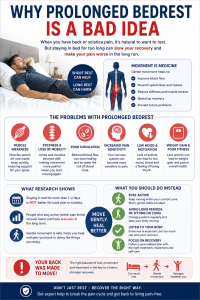
It was thought that any movement would cause more irritation by creating friction and that the body needed to be still to heal.
Before clinical trials shifted guidelines in the late 1990s and early 2000s, bed rest was seen as gold standard. One study that well known published in 2002 looked at 250 patients with sciatica. These were divided into three groups. One had bed rest, the second resumed their normal activities and the third had exercise rehabilitation.
Surprisingly there was was little or no difference in their outcomes by the end of the study.
Guidelines have now changed because we know that clinical evidence tells us that prolonged bed rest causes muscles to weaken, causes stiffness in the spine and limits circulation and blood flow. Today guidelines do not recommend prolonged bedrest and advise you to stay active within your pain limits.
At Buxton & Bakewell Osteopathy Clinic, we believe rehabilitation is far more than simply handing patients a sheet of exercises. Every rehabilitation programme should be based on an accurate diagnosis, your symptoms, your physical examination and, when appropriate, MRI findings.
The correct exercises can reduce pain, restore movement, improve confidence and help prevent future episodes. However, the wrong exercises, performed at the wrong time, can make symptoms significantly worse.
This guide explains how rehabilitation fits into your overall sciatica recovery and why a personalised approach delivers the best results.
Why Exercise Matters
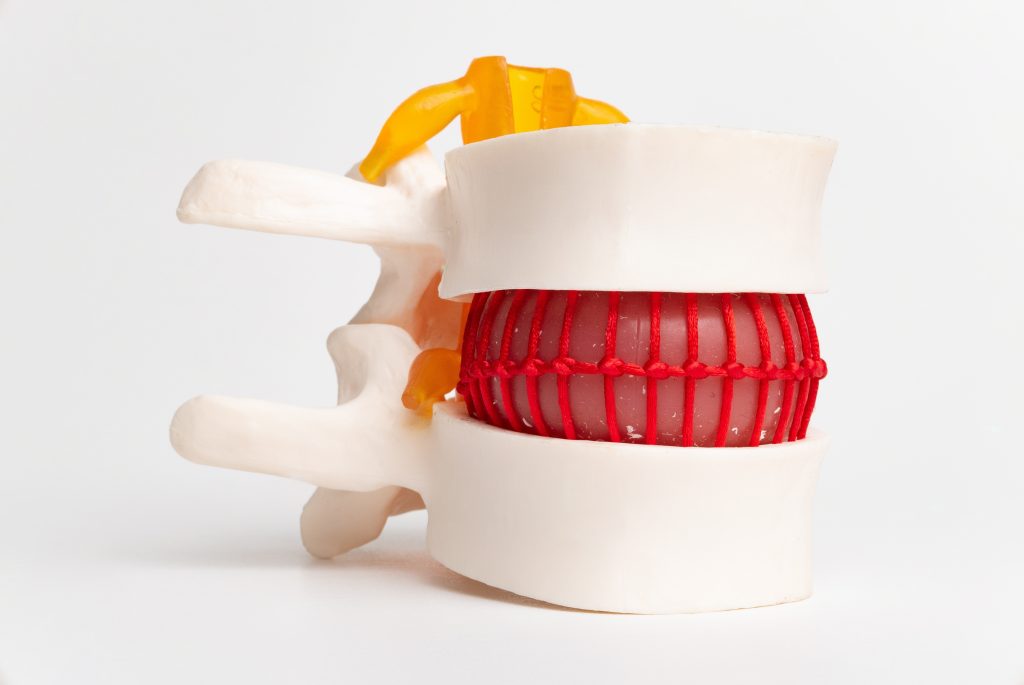
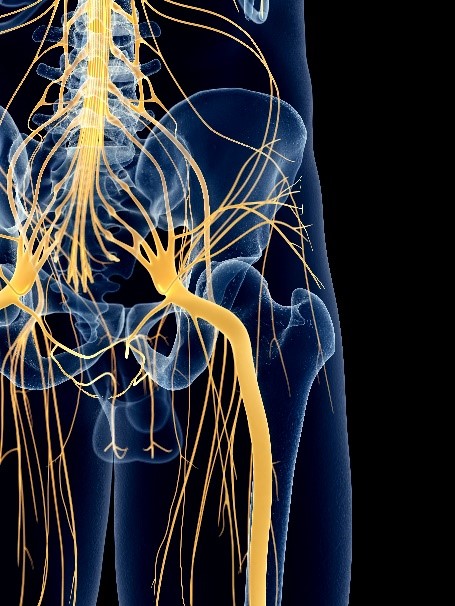
Sciatica occurs when one or more of the nerves that form the sciatic nerve become irritated or compressed.
This may occur because of:
- Spinal stenosis
- Degenerative disc disease
- Spondylolisthesis
- Piriformis syndrome
- Facet joint arthritis
- Trauma or injury
Each of these conditions requires a different management plan.
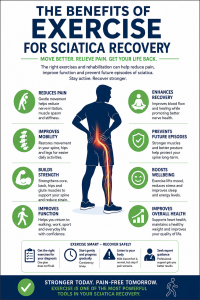
While exercise cannot “push a disc back into place,” it can influence many of the factors that contribute to pain and recovery.
Appropriate rehabilitation can:
- Improve spinal movement
- Reduce muscle spasm
- Increase blood flow
- Improve flexibility
- Strengthen muscles that support the spine
- Improve posture
- Reduce stiffness
- Improve balance
- Restore confidence in movement
- Reduce the likelihood of future episodes
Exercise Is Not the Same for Everyone
One of the biggest mistakes people make is following generic exercises found online.
Sciatica is a symptom and not a diagnosis.
The exercises that help one person may aggravate another.
For example:
A patient with a large lumbar disc prolapse often requires a completely different programme from someone with spinal stenosis.
Likewise, someone with nerve inflammation following an acute injury will need a different rehabilitation plan to someone recovering from surgery.
Good rehabilitation begins with identifying the cause of the nerve irritation.
The Different Stages of Rehabilitation
Most rehabilitation programmes progress through several stages.
Stage 1. Settling the Pain
Initially the priority is reducing irritation around the nerve.
This often involves:
- Gentle walking
- Short periods of movement
- Comfortable positioning
- Pain-relieving stretches where appropriate
- Avoiding prolonged sitting
- Learning how to move safely
At this stage the aim is not fitness.
The aim is calming the irritated nerve.
Stage 2. Restoring Movement
As pain improves, attention shifts towards restoring normal movement.
This may involve:
- Lumbar mobility exercises
- Hip mobility work
- Gentle stretching
- Pelvic movement exercises
- Controlled spinal motion
The goal is improving movement without increasing nerve symptoms.
Stage 3. Building Stability
Once movement has improved, rehabilitation focuses on strengthening the muscles that protect the spine.
These include:
- Deep abdominal muscles
- Multifidus muscles
- Gluteal muscles
- Hip stabilisers
- Pelvic muscles
Improving muscular control helps reduce unnecessary strain on the lower back.
Stage 4. Functional Strength
As symptoms settle, exercises become more practical.
These might include:
- Squats
- Step-ups
- Balance exercises
- Controlled lifting
- Functional bending
- Walking progression
The aim is returning to everyday activities safely.
Stage 5. Preventing Recurrence
Long-term rehabilitation focuses on reducing future risk.
This usually includes:
- Core strengthening
- Regular walking
- Flexibility work
- Hip strengthening
- Postural awareness
- Fitness training
This phase is often overlooked but may be the most important.
Walking – One of the Best Exercises
Walking is frequently one of the safest and most effective activities for sciatica.
Benefits include:
- Gentle spinal movement
- Improved circulation
- Reduced stiffness
- Better joint nutrition
- Improved confidence
- Maintenance of cardiovascular fitness
Many patients tolerate several short walks each day better than one long walk.
Core Stability
The term “core” refers to the muscles that support the spine.
These include:
- Transversus abdominis
- Multifidus
- Pelvic floor
- Diaphragm
- Oblique muscles
These muscles work together to stabilise the spine during movement.
Weakness or poor coordination may increase stress on the lower back.
Core rehabilitation focuses on improving muscle control rather than performing hundreds of sit-ups.
Hip Strength Is Often Overlooked
Weak hip muscles can increase the load placed on the lumbar spine.
Improving the strength of the:
- Gluteus maximus
- Gluteus medius
- Hip rotators
can improve walking mechanics and reduce strain on the lower back.
Flexibility Training
Tight muscles can alter movement patterns.
Depending on the diagnosis, stretching may target:
- Hamstrings
- Hip flexors
- Gluteal muscles
- Piriformis
- Calves
However, stretching should never reproduce severe leg pain or increasing nerve symptoms.
Nerve Mobility Exercises
Sometimes the sciatic nerve becomes sensitive and loses its ability to glide freely through surrounding tissues.
Your clinician may prescribe gentle nerve mobility exercises, often called neural mobilisation or nerve glides.
These are carefully controlled movements designed to encourage the nerve to move more comfortably without overstretching it. They should only be introduced when appropriate, as performing them too early or too aggressively may increase symptoms.
Should Exercise Hurt?
A common question is:
“Is it normal for exercises to hurt?”
Some mild discomfort or muscle fatigue is expected during rehabilitation.
However:
Stop and seek advice if exercises cause:
- Increasing leg pain
- Worsening numbness
- Increasing tingling
- New weakness
- Pain lasting several hours afterwards
- Significant deterioration the following day
Rehabilitation should produce gradual improvement rather than a flare-up of symptoms.
Activities That May Need Temporary Modification
During recovery it may be sensible to temporarily reduce:
- Heavy lifting
- Repeated bending
- High-impact running
- Contact sports
- Prolonged sitting
- Twisting while lifting
- Heavy gym exercises
These activities can often be reintroduced gradually as strength and control improve.
Returning to Sport
Many people with sciatica return to:
- Running
- Cycling
- Golf
- Tennis
- Hiking
- Gym training
- Swimming
The timing depends on:
- Diagnosis
- Pain levels
- Nerve recovery
- Muscle strength
- Functional movement
- Overall fitness
A staged return is usually safer than attempting to resume previous activity levels too quickly.
Rehabilitation Following IDD Therapy
Many patients undergoing IDD Therapy ask whether they should continue exercising.
In most cases, yes—but the programme should be tailored to the stage of treatment.
As pain settles, rehabilitation helps maintain the improvements achieved with spinal decompression. Stren
gthening the supporting muscles, improving movement patterns and gradually increasing activity can enhance long-term outcomes and reduce the likelihood of symptoms returning.
Rehabilitation Is More Than Exercises
Successful rehabilitation often includes education about:
- Sitting posture
- Standing posture
- Lifting technique
- Sleep positioning
- Workstation ergonomics
- Pacing activities
- Weight management
- Physical activity levels
These lifestyle factors are just as important as the exercises themselves.
Common Mistakes During Recovery
Some of the most frequent rehabilitation mistakes include:
- Resting for too long
- Returning to heavy activity too quickly
- Performing exercises found online without a diagnosis
- Ignoring worsening neurological symptoms
- Doing too much on good days
- Stopping exercises as soon as pain improves
- Expecting immediate results
Recovery is rarely perfectly linear. Some days will be better than others, and gradual progress over weeks is more realistic than day-to-day improvement.
When Exercise Should Be Stopped
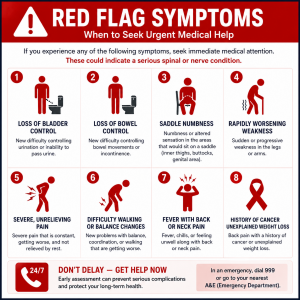
Seek urgent medical advice if exercise is associated with:
- Sudden leg weakness
- Foot drop
- Loss of bladder control
- Loss of bowel control
- Numbness around the saddle area
- Severe worsening of symptoms
These may indicate significant nerve compression requiring urgent assessment.
The Importance of a Personalised Rehabilitation Programme
Every patient is different.
The best rehabilitation programme takes into account:
- Your diagnosis
- MRI findings (where available)
- Pain pattern
- Nerve involvement
- Muscle weakness
- Lifestyle
- Occupation
- Sporting activities
- Recovery goals
A personalised programme can then be progressed safely as your condition improves.
How We Help at Buxton & Bakewell Osteopathy Clinic
At Buxton & Bakewell Osteopathy Clinic, rehabilitation forms an essential part of our comprehensive approach to treating sciatica. Following a detailed clinical assessment—and where appropriate, review of MRI findings—we develop an individual treatment and rehabilitation plan tailored to your diagnosis.
Depending on your needs, your programme may include osteopathic treatment, manual therapy, progressive rehabilitation exercises, postural advice, nerve mobility techniques, strengthening exercises and, for suitable patients, IDD Therapy
Our aim is not simply to reduce your current pain but to restore confidence, improve function and help minimise the risk of future episodes. We support patients from Buxton, Bakewell, the High Peak, the Peak District, North Derbyshire and surrounding areas, helping them return to work, sport and everyday life with greater confidence.