Why Finding the Root Cause Matters
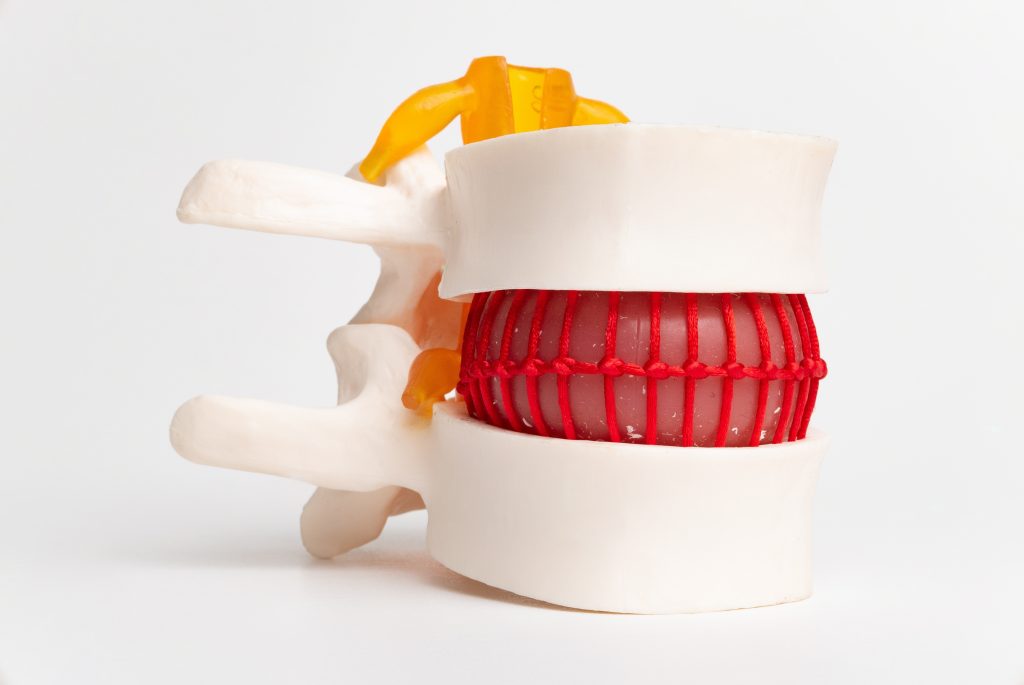
Sciatica is one of the most common causes of leg pain, but it is important to understand that sciatica is not a diagnosis. Instead, it is a symptom that occurs when one or more of the nerves that form the sciatic nerve become irritated or compressed.
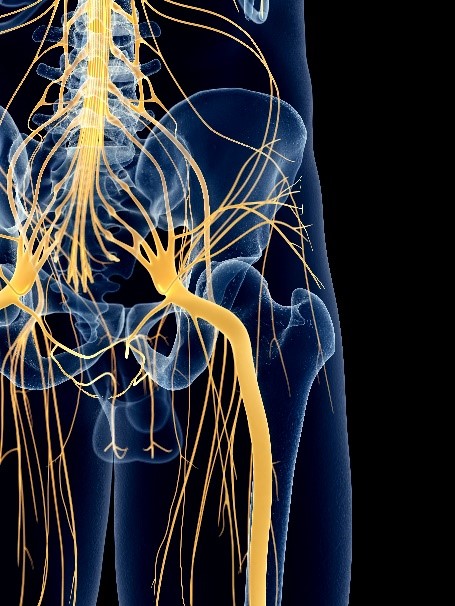
Think of the sciatic nerve as a river made up of many different streams.

Anything that blocks or narrows that contributing nerve or stream has a downstream effect. We need to identify where this restriction is so we can target our treatment. It will also allow us to assess how profound your issue is and whether it merits further investigation such as an MRI scan.
We can organise private MRI scans very quickly and at an affordable price.
To fix nerve pain for good, we need to accurately and precisely find out what is causing the irritation.
At Sciatica Hub in Buxton, we believe successful treatment starts with an accurate diagnosis. Rather than simply confirming that you have sciatica, our goal is to determine the underlying condition responsible for your symptoms so that treatment can be targeted appropriately.
Sciatica Is a Symptom, Not a Condition
The sciatic nerve is the largest nerve in the body. It is formed by several nerve roots or streams (as in the metaphor above) that leave the lower spine before joining together in the pelvis and travelling through the buttock and down the back of the leg.
When any one of these nerve roots becomes irritated or compressed, pain will refer and travel along the path of the sciatic nerve.
This is why people often experience:
- Sciatica
- Burning leg pain
- Tingling
- Pins and needles
- Numbness
- Muscle weakness
- Reduced reflexes
- Difficulty walking
However, these symptoms do not tell us exactly what is causing the nerve irritation.
Common Causes of Sciatica
Several different conditions can produce almost identical symptoms.
These include:
| Condition | How It Causes Sciatica |
|---|---|
| Herniated disc | Disc material presses on a spinal nerve root |
| Bulging disc | The disc narrows the space around the nerve |
| Spinal stenosis | Narrowing of the spinal canal compresses the nerves |
| Degenerative disc disease | Age-related changes reduce space for the nerves |
| Spondylolisthesis | One vertebra slips forwards, irritating the nerve |
| Piriformis syndrome | The sciatic nerve may be irritated as it passes through the buttock |
| Facet joint arthritis | Inflammation and swelling may affect nearby nerve roots |
| Trauma or injury | Disc damage or inflammation compresses the nerve |
| Sacroiliac joint dysfunction | May mimic sciatica or contribute to buttock pain |
Because treatment varies depending on the underlying condition, identifying the correct diagnosis is essential.
Why Symptoms Alone Are Not Enough
Two people may both have pain travelling down the leg, yet the cause of their symptoms may be completely different.
For example:
- One person may have a herniated disc.
- Another may have spinal stenosis.
- A third may have referred pain from the hip (and even a herniated disc as well…this can and does happen!!).
- Someone else may have piriformis syndrome.
Although the symptoms appear similar, the treatment required for each condition is very different.
Your Clinical Assessment
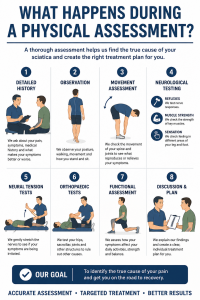
A detailed assessment provides the information needed to identify the source of your symptoms.
Your clinician will ask questions about:
- When the pain started
- Whether it followed an injury
- Where the pain travels
- What makes it worse
- What relieves it
- Whether you have numbness or tingling
- Whether you have weakness
- How the symptoms affect daily life
Even small details can provide valuable clues.

Physical Examination
Following your history, a comprehensive physical examination is carried out.
This may include:
- Assessment of posture
- Walking analysis
- Spinal movement
- Hip examination
- Muscle strength testing
- Reflex testing
- Sensation testing
- Neurological examination
- Straight Leg Raise Test
- Slump Test
These tests help determine which spinal nerve is affected and whether the problem is likely to originate from the spine or another structure.
When Are Scans Needed?
Many patients assume they need an MRI immediately. We have provide fast and affordable private MRI scans
In reality, not everyone requires imaging.
However, MRI may be recommended if:
- Symptoms are severe.
- Weakness is present.
- Symptoms persist despite treatment.
- Surgery is being considered.
- The diagnosis is uncertain.
MRI scans are particularly useful for identifying:
- Herniated discs
- Bulging discs
- Spinal stenosis
- Nerve compression
- Degenerative disc disease
When clinically appropriate, imaging can help confirm the diagnosis and guide treatment decisions. To find our more about how an MRI scan works click here.
Looking Beyond the Spine
Not every case of leg pain is caused by a spinal problem.
Other conditions that can mimic sciatica include:
- Hip osteoarthritis
- Greater trochanteric pain syndrome
- Hamstring injuries
- Peripheral nerve entrapments
- Vascular conditions
- Muscle strains
This is why a thorough examination should always consider the whole lower limb—not just the lower back.
Red Flag Symptoms
While most cases of sciatica are not medical emergencies, certain symptoms require urgent assessment.

These symptoms may indicate Cauda Equina Syndrome, which requires emergency treatment.
Why Accurate Diagnosis Improves Outcomes
Treating the symptoms without identifying the cause often leads to frustration and recurring episodes.
Once the underlying condition has been identified, treatment can be tailored to your specific needs.
Depending on your diagnosis, this may include:
- Osteopathy
- Rehabilitation exercises
- Activity modification
- Lifestyle advice
- Pain management strategies
- IDD Therapy for suitable disc-related conditions
- Referral for imaging when appropriate
The right diagnosis allows the right treatment to begin.
Why Choose Sciatica Hub in Buxton?
At Sciatica Hub in Buxton, we believe that every patient deserves an accurate diagnosis before treatment begins. We take the time to understand your symptoms, carry out a detailed physical examination and identify the underlying cause of your sciatica.
Whether your symptoms are caused by a herniated disc, spinal stenosis, degenerative disc disease or another condition, our aim is to provide clear answers, personalised treatment and expert guidance throughout your recovery.
Key Takeaways
- Sciatica is a symptom, not a diagnosis.
- Several different spinal conditions can cause sciatic nerve pain.
- Accurate diagnosis is essential for successful treatment.
- A comprehensive assessment includes your history, physical examination and neurological testing.
- MRI scans are useful in selected cases but are not always required.
- Identifying the root cause allows treatment to be targeted at the underlying problem rather than simply masking symptoms.
- Early assessment can improve outcomes and help prevent long-term problems.
If you’re experiencing pain travelling down your leg, don’t settle for simply treating the symptoms. Identifying the root cause of your sciatica is the first step towards effective treatment and a successful recovery.