Why do I get pins and needles in my legs?
A good metaphor for pins and needles when you have sciatica is an electrical cable with a faulty power supply.
Your spinal nerve is very much like an electric cable carrying electrical signals from your central nervous system to your limbs.
Normal nerve:
🧠 ━━━━━━━━━ 🦶
Clear signal → normal sensation
Irritated nerve:
🧠 ━━━⚡〰⚡━━ 🦶
Disturbed signal → tingling, buzzing, pins and needles
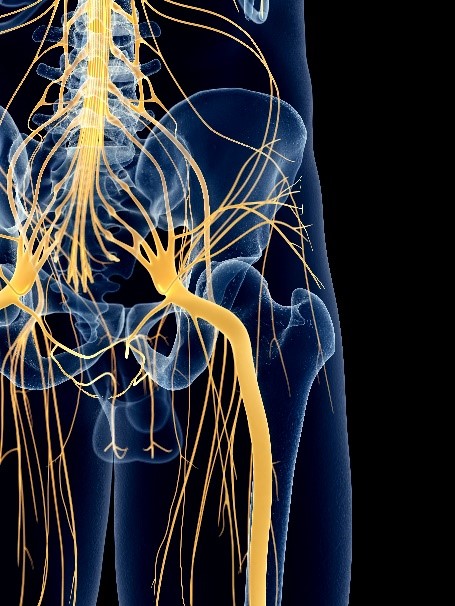
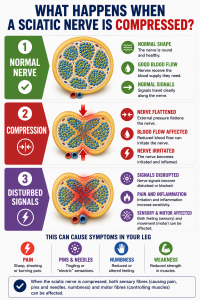
When a nerve root becomes irritated or compressed, electrical signals can become disturbed. The sciatic nerve is made up of both sensory (which innervate your skin) and motor fibres (which provide electricity to your muscles).
Sensory fibres allow us to detect temperature, touch, vibration and pain. If these fibres are affected by nerve compression they generate faulty signals and we feel this as pins and needles or, if the compression is more extreme, numbness. If the motor fibres are compressed we can experience weakness in our limbs.
Nerve root compressed in the back
↓
Inflammation + altered blood flow + mechanical irritation
↓
Nerve fibres become irritated
↓
Abnormal nerve signals are generated
Conditions such as sciatica, herniated discs , spinal stenosis are among the most frequent causes of ongoing pins and needles in one or both legs.
Understanding the underlying cause is essential because effective treatment depends on identifying where the nerve is being irritated.
What does pins and needles actually feel like?
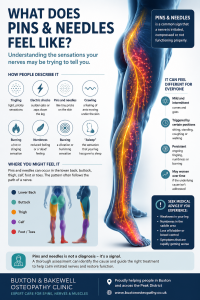
Common Causes of Pins and Needles in the Legs
For mobile, I’d keep this to two short columns:
| Common Cause | Why It Causes Tingling |
|---|---|
| ⚡ Sciatica | Irritation of a spinal nerve causes tingling down the leg |
| 💿 Herniated disc | Disc material may irritate or compress a nerve root |
| 🦴 Spinal stenosis | Narrowing reduces the space available for spinal nerves |
| 🔒 Trapped nerve | Pressure on a nerve can disturb normal sensory signals |
| 🪑 Prolonged pressure | Sitting or positioning can temporarily compress a nerve |
| 🩸 Poor circulation | Reduced blood flow can cause tingling or altered sensation |
| 🧠 Peripheral neuropathy | Damage to peripheral nerves can affect the feet and legs |
| 💊 Medical conditions | Diabetes, vitamin deficiencies and some medicines can affect nerves |
Sciatica – the most common cause
Sciatica occurs when the sciatic nerve becomes irritated.
Usually this irritation develops because one of the lumbar nerve roots has become compressed before it forms the sciatic nerve.
The most common reasons include:
Pain typically starts in the lower back or buttock before travelling down the leg.
Pins and needles often follow exactly the same route.
Patients frequently describe:
“It feels like electricity running down my leg.”
Others notice:
“My foot keeps going numb.”
The exact area affected depends upon which nerve root is involved.
Herniated Disc
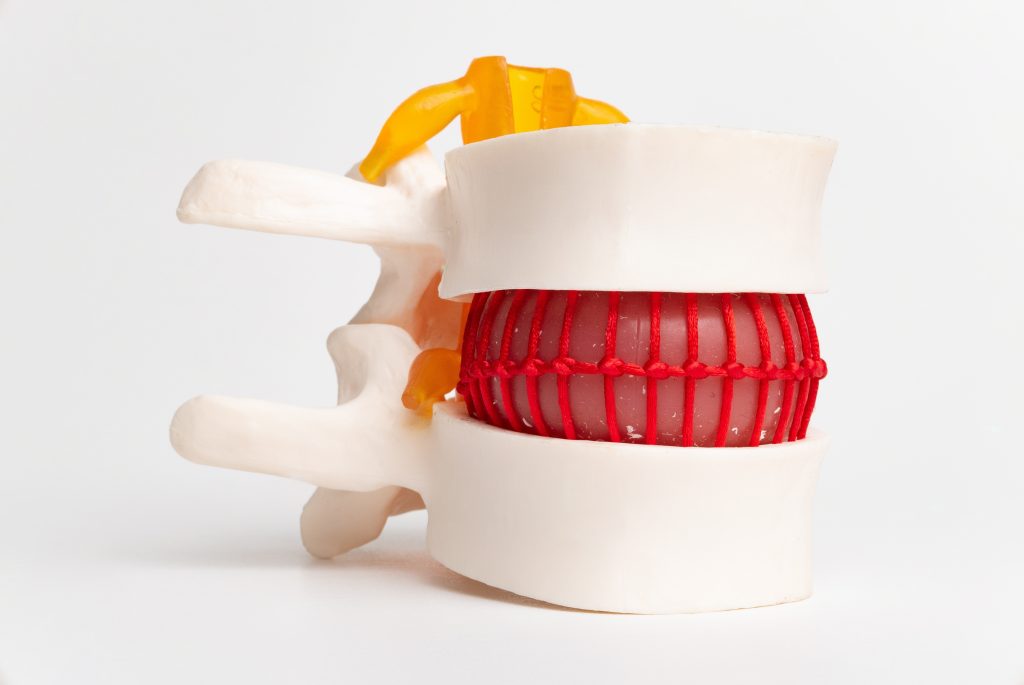
One of the commonest causes of persistent tingling is a lumbar disc prolapse or herniated disc.
When the jelly-like centre of the disc pushes backwards, it can press directly against a spinal nerve.
This pressure causes:
- Leg pain
- Tingling
- Numbness
- Weakness
- Altered reflexes
The larger the disc prolapse, the greater the likelihood of neurological symptoms developing.
Fortunately, many people respond well to conservative care when diagnosed early.
Spinal Stenosis
Spinal stenosis describes narrowing around the spinal nerves.
Instead of a single disc compressing the nerve, several age-related changes combine to reduce the available space.
Patients commonly notice:
- Tingling while walking
- Heavy legs
- Burning feet
- Numb toes
- Symptoms relieved by sitting down
Many find leaning forwards over a shopping trolley temporarily eases symptoms because this opens the spinal canal.
Degenerative Disc Disease
As discs lose height with age, less space becomes available for nerves leaving the spine. Hence the term degenerative disc disease.
Inflammation around these joints may also irritate nearby nerves.
Symptoms often fluctuate.
Some days patients feel almost normal.
Other days they experience persistent tingling down one leg.
Piriformis Syndrome
Sometimes the problem isn’t inside the spine.
The sciatic nerve passes underneath (or occasionally through) the piriformis muscle deep within the buttock.
If this muscle becomes tight or inflamed it may compress the sciatic nerve.
Symptoms include:
- Deep buttock pain
- Tingling into the leg
- Worse sitting
- Better walking
Peripheral Neuropathy
Peripheral neuropathy affects the nerves themselves.
Unlike sciatica, symptoms usually involve both feet equally.
Typical causes include:
- Diabetes
- Alcohol misuse
- Chemotherapy
- Vitamin deficiencies
- Autoimmune disorders
Patients often describe wearing an invisible sock.
Poor Circulation
Circulatory problems may occasionally produce tingling.
Unlike nerve problems, circulation issues often include:
- Cold feet
- Pale skin
- Leg cramps
- Colour changes
- Weak pulses
The sensation tends not to follow a nerve pattern.
Could it be diabetes?
Diabetes is one of the commonest causes of peripheral neuropathy.
Persistently raised blood sugar damages the smallest nerves first.
Symptoms usually begin:
- Toes
- Soles of feet
- Both feet together
Unlike sciatica, diabetes rarely starts with one leg alone.
Symptoms that suggest a trapped nerve
| Symptom | Suggests nerve involvement |
|---|---|
| Tingling below knee | ✔ |
| Electric shocks | ✔ |
| Burning foot | ✔ |
| Numb toes | ✔ |
| Weak ankle | ✔ |
| Foot drop | ✔ |
| Reduced reflexes | ✔ |
| Back pain | Often present |
When should you seek urgent medical attention?
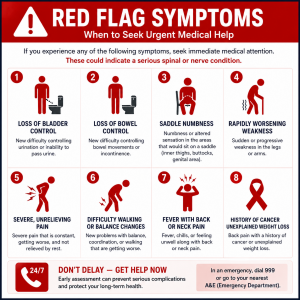
These symptoms may indicate Cauda Equina Syndrome, spinal infection or another serious neurological condition that requires urgent medical assessment.
How is the cause diagnosed?
At Buxton & Bakewell Osteopathy Clinic, diagnosis begins with a detailed clinical assessment rather than relying on symptoms alone.
Your clinician will ask:
- Where exactly does the tingling start?
- Does it travel below the knee?
- Is it constant or intermittent?
- Is it affected by sitting or walking?
- Are you experiencing weakness?
- Is there associated back pain?
A physical examination will assess posture, spinal movement, muscle strength, reflexes, sensation, and nerve tension. Special orthopaedic and neurological tests help determine whether the symptoms originate from the lumbar spine, pelvis, peripheral nerves, or another source.
Treatment for Pins and Needles in the Legs
Treatment depends on the underlying diagnosis rather than the symptom itself. Once the cause has been identified, a tailored treatment plan can be developed.
Depending on the diagnosis, treatment may include:
- Osteopathic manual therapy to improve spinal and joint movement
- IDD Therapy (non-surgical spinal decompression) for suitable cases of disc-related nerve compression
- Individualised exercise rehabilitation to restore strength and flexibility
- Postural and ergonomic advice to reduce nerve irritation
- Activity modification to prevent aggravation
- Referral for imaging or specialist assessment when indicated
For many people with sciatica caused by a lumbar disc injury, a combination of manual therapy, exercise, and IDD Therapy may help reduce nerve irritation, improve function, and support recovery without surgery.
Recovery
Recovery times vary depending on the underlying condition, the severity of nerve irritation, and how long symptoms have been present.
Many people notice gradual improvement over several weeks with appropriate conservative treatment, while more persistent or long-standing cases may require a longer rehabilitation programme.
Early assessment is important. Treating nerve irritation before it progresses to significant weakness or long-term numbness generally offers the best chance of recovery.
Why Choose Buxton & Bakewell Osteopathy Clinic?
At Buxton & Bakewell Osteopathy Clinic, we regularly assess patients with persistent pins and needles, numbness, and sciatica.
Our approach focuses on identifying why the nerve is irritated rather than simply treating the symptoms.
Patients benefit from:
- Comprehensive neurological assessment
- Expertise in spinal conditions and trapped nerves
- Osteopathic treatment tailored to the individual
- Access to private MRI referral where appropriate
- IDD Therapy for suitable disc-related conditions
- Exercise rehabilitation and self-management advice
- A clear diagnosis and treatment plan designed to help you return to normal activity safely
Whether your symptoms are caused by a herniated disc, spinal stenosis, piriformis syndrome, or another condition, our aim is to help you understand the cause and guide you towards the most appropriate treatment.
Frequently Asked Questions
Can pins and needles in the legs be caused by sciatica?
Yes. Sciatica is one of the most common causes of pins and needles that travel from the lower back or buttock down into one leg.
Should I worry about pins and needles?
Occasional tingling after sitting awkwardly is common. Persistent, worsening, or unexplained symptoms should be assessed by a healthcare professional.
Can a slipped disc cause pins and needles?
Yes. A herniated lumbar disc can compress a spinal nerve, leading to tingling, numbness, pain, or weakness in the leg.
Is pins and needles always caused by poor circulation?
No. Although circulation problems can contribute, persistent tingling is more commonly related to nerve irritation or compression.
Can osteopathy help?
If your symptoms are due to a mechanical spinal problem or trapped nerve, osteopathic assessment and treatment may form part of an appropriate management plan.
When should I seek emergency medical help?
Seek urgent assessment if pins and needles are accompanied by loss of bladder or bowel control, numbness around the saddle area, rapidly worsening weakness, or sudden foot drop.