Clinical Assessment for Sciatica
Sciatica is not actually a diagnosis. It’s a symptom.
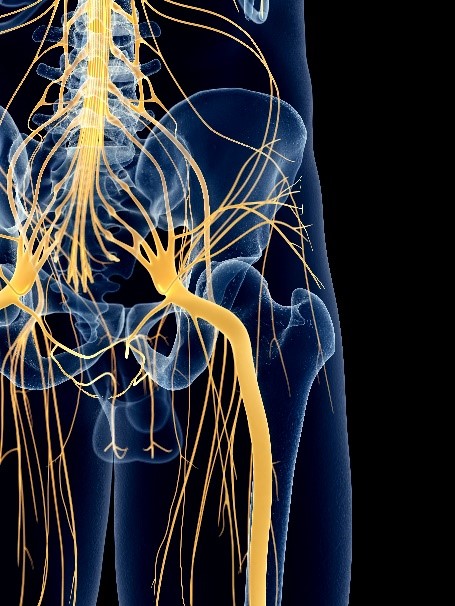
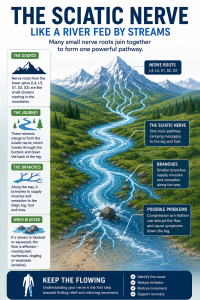
The sciatic nerve is like a river made up many different streams. If any of these streams is blocked or narrowed it affects everything downstream. Clinical assessment is very useful as it allows us to find out where this is.
Sciatica is in general a pain, tingling, numbness or weakness caused by irritation or compression of any nerves (or streams) that help form it.
Many different reasons can lead to a blocking or narrowing of the streams supplying the sciatic nerve yet they can all produce similar symptoms. The most important step before starting treatment is a thorough clinical assessment. Without identifying where the source of the blockage or impingement is, treatment may be ineffective, inappropriate or unnecessarily delayed.
At Buxton & Bakewell Osteopathy Clinic, every patient begins with a comprehensive clinical assessment designed to identify exactly what is causing their symptoms and which treatment is appropriate.
Why Clinical Assessment Is So Important
Leg pain is confusing because there are many reasons why it happens. Sciatica being one of them.
In reality, symptoms travelling down the leg can be caused by numerous different conditions, including:
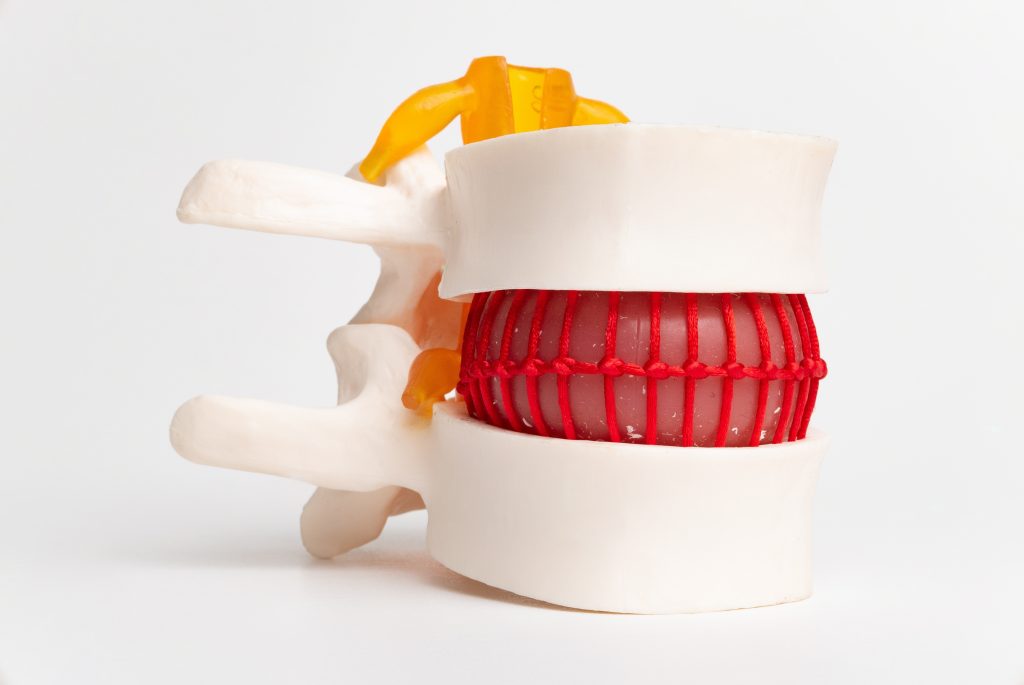
- Lumbar disc herniation
- Spinal stenosis
- Degenerative disc disease
- Piriformis syndrome
- Sacroiliac joint dysfunction
- Hip arthritis
- Peripheral nerve entrapment
- Vascular conditions
- Muscle injuries
Each requires a different management approach.
An accurate diagnosis allows treatment to be targeted at the real cause rather than simply trying to reduce symptoms.
What Happens During a Clinical Assessment?
A detailed assessment involves far more than simply asking where it hurts.
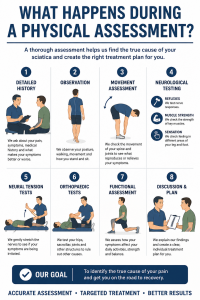
Each stage provides important information.
1. Taking a Detailed History
The consultation begins by us understanding your problem.
Questions may include:
- When did the pain begin?
- Was there an injury?
- Is the pain constant or intermittent?
- Where exactly does the pain travel dow the leg?
- Does coughing or sneezing increase symptoms?
- What activities make it worse?
- What relieves it?
- Is your sleep affected?
- Have you noticed numbness?
- Is there weakness in your foot?
- Have bowel or bladder symptoms changed?
The answers often provide valuable clues about which spinal structure may be involved.
Understanding Your Pain Pattern
The location of symptoms often helps us to identify the affected nerve.
Examples include:
- Buttock pain
- Pain down the back of the thigh
- Pain into the calf
- Pain into the foot
- Big toe symptoms
- Little toe symptoms
Different nerve roots create different symptom patterns.
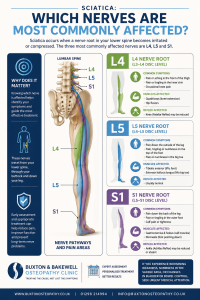
Severity Assessment
We will also establish:
- Pain intensity
- Functional limitations
- Walking distance
- Sitting tolerance
- Standing tolerance
- Ability to work
- Sporting activities
- Previous episodes
This helps measure progress throughout treatment.
We also use the Oswestry Pain Disability Index questionnaire. This has been designed to give us information as to how your back or leg pain is affecting your ability to manage in everyday life.
| Section | Area Assessed | What It Helps Measure |
|---|---|---|
| 1. Pain Intensity | Severity of pain | How significant the patient’s current pain is |
| 2. Personal Care | Washing, dressing and self-care | Whether back or leg pain interferes with basic daily activities |
| 3. Lifting | Lifting and carrying | How pain affects the ability to lift objects |
| 4. Walking | Walking ability | Whether symptoms restrict walking distance |
| 5. Sitting | Ability to sit comfortably | How long sitting can be tolerated before symptoms become limiting |
| 6. Standing | Ability to stand | Whether prolonged standing increases symptoms |
| 7. Sleeping | Sleep disturbance | How much back or leg symptoms interfere with sleep |
| 8. Social Life | Social and leisure activities | How symptoms affect normal social participation |
| 9. Travelling | Car and other journeys | Whether pain limits the ability to travel comfortably |
| 10. Employment / Homemaking | Work and everyday responsibilities | How symptoms affect normal occupational or household activities |
2. Observation
Simply watching someone walk and move can tell us a lot.
We may assess:
- Walking pattern
- Posture
- Pelvic position
- Spinal alignment
- Muscle spasm
- Guarding
- Foot position
- Limping
- Difficulty standing upright
Sometimes these observations immediately suggest the likely diagnosis.
3. Physical Examination
The spine is carefully examined.
This includes assessing:
- Flexion
- Extension
- Side bending
- Rotation
Certain movements may reproduce symptoms while others reduce them.
These responses provide important diagnostic information.
4. Neurological Examination
One of the most important parts of the assessment is checking how well the nerves are functioning during a neurological assessment.
This usually includes:
Reflexes
We may test:
- Knee reflex
- Ankle reflex
Reduced reflexes can suggest nerve root irritation.
Muscle Strength
Specific muscles supplied by different spinal nerves are tested.
For example:
- Lifting the foot
- Standing on tiptoes
- Big toe strength
- Knee extension
- Hip flexion
Weakness can indicate compression of particular nerve roots.
Sensation Testing
Light touch is assessed across different parts of the leg.
Areas checked include:
- Front of the thigh
- Inside of the leg
- Outside of the calf
- Top of the foot
- Sole of the foot
Changes in sensation often correspond with individual spinal nerves.
Dermatomes and Myotomes
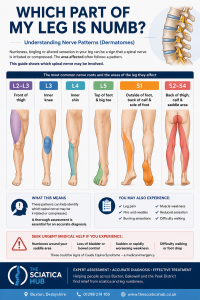
Every spinal nerve supplies:
- A specific area of skin (dermatome)
- Particular muscles (myotome)
Testing these allows clinicians to identify whether:
- L4
- L5
- S1
or another nerve root may be affected.
5. Neural Tension Tests
These tests gently stretch the irritated nerve to determine whether symptoms are coming from nerve tissue.
Common tests include:
Straight Leg Raise (SLR)
One of the best-known tests.
We raise your leg while you lie on your back.
Reproduction of familiar leg pain at certain angles may indicate sciatic nerve irritation.
Slump Test
This places the nervous system under gentle tension while sitting.
It can sometimes identify nerve irritation that does not appear during other tests.
Femoral Nerve Stretch Test
Used when symptoms affect the front of the thigh rather than the back of the leg.
6. Orthopaedic Testing
Additional tests help identify whether symptoms are coming from:
- Facet joints
- Sacroiliac joints
- Hip joints
- Muscles
- Tendons
- Ligaments
This prevents misdiagnosis.
7. Functional Assessment
Pain isn’t the only concern.
Your clinician also wants to know how symptoms affect daily life.
Activities assessed may include:
- Walking
- Climbing stairs
- Sitting
- Driving
- Sleeping
- Lifting
- Bending
- Working
- Sports
Treatment is designed around restoring these activities.
Looking for Red Flags
A vital part of every assessment is identifying symptoms that require urgent medical attention.
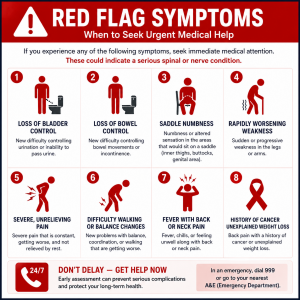
If these are suspected, immediate referral is arranged.
When Is MRI Recommended?
Not everyone with sciatica requires an MRI. We do offer a rapid and cheap MRI service
However, imaging may be appropriate when:
- Symptoms are severe
- Weakness is progressing
- Treatment is not helping
- Surgery is being considered
- Serious pathology is suspected
- Symptoms persist beyond expected recovery
MRI provides excellent visualisation of:
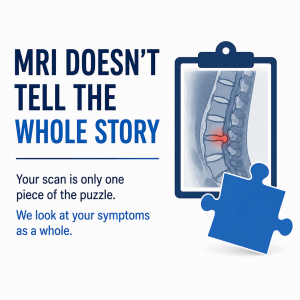
Imaging is interpreted alongside the clinical findings rather than in isolation.
Why Imaging Alone Isn’t Enough
Many people have MRI findings without pain.
Likewise, some patients experience severe symptoms despite only modest MRI changes.
This is why experienced clinicians always combine:
- Clinical history
- Physical examination
- Neurological testing
- Imaging (where appropriate)
to reach the most accurate diagnosis.
Developing Your Treatment Plan
Once the assessment is complete, an individual treatment plan can be developed.
Depending on the diagnosis, this may include:
- Osteopathic treatment
- IDD Therapy
- Exercise rehabilitation
- Advice on posture and activity
- Pain management strategies
- Lifestyle modification
- Referral for imaging
- Referral to your GP or spinal specialist if required
The aim is always to treat the underlying cause rather than simply masking symptoms.
Why Experience Matters
Sciatica can sometimes be straightforward, but complex cases require careful clinical reasoning.
Experienced clinicians recognise subtle differences between:
- True nerve root compression
- Referred pain
- Hip pathology
- Peripheral nerve entrapment
- Sacroiliac dysfunction
- Spinal stenosis
- Serious underlying conditions
Accurate diagnosis often leads to faster recovery and avoids unnecessary treatment.
Clinical Assessment at Buxton & Bakewell Osteopathy Clinic
Whether your symptoms are caused by a prolapsed disc, spinal stenosis, degenerative disc disease or another spinal condition, we aim to provide a clear diagnosis and an individualised treatment plan to help you recover safely and confidently.
If you are experiencing leg pain, numbness, tingling or weakness, early assessment can often prevent symptoms from becoming more severe and help you start the right treatment sooner.
Frequently Asked Questions
Can you diagnose sciatica without an MRI?
In many cases, yes. A detailed clinical assessment can often identify the likely cause. MRI is used when additional information is needed or when serious pathology is suspected.
How long does a clinical assessment take?
Most initial assessments take around 45–60 minutes, allowing time for history taking, examination, diagnosis and discussion of treatment options.
Is the examination painful?
Most tests are gentle and carefully performed. Some movements may briefly reproduce your familiar symptoms, but your clinician will avoid causing unnecessary discomfort.
What should I bring to my appointment?
Bring details of any previous scans, medications, referral letters and a list of your symptoms, including when they began and what makes them better or worse.
Can you tell if I have a slipped disc during the assessment?
A clinical assessment can often strongly suggest a lumbar disc herniation, but MRI may be recommended to confirm the diagnosis in some cases.
Links
- Sciatica Symptoms
- Pain Down the Leg
- Leg Numbness
- Pins and Needles in the Leg
- Leg Weakness and Foot Drop
- Herniated Disc
- Degenerative Disc Disease
- Spinal Stenosis
- Piriformis Syndrome
- Spondylolisthesis
- Trauma and Injury
- Cauda Equina Syndrome
- IDD Therapy
- Osteopathy
- Shockwave Therapy
- Private MRI Referral