Piriformis Syndrome Treatment in the Peak District
Piriformis Syndrome is the ‘joker in the pack’.
It is the most over-diagnosed condition I have come across.
People often diagnose themselves online (it is quite visible online as a condition) and confuse it for true sciatica.
The reality is that it accounts for 03%-6% of all lower back and radiating leg pain. In my clinical experience that appears to be about right.
I have treated over 1,700 people with radiating leg pain from the lower back over the last ten years and can count the number of people with piriformis syndrome on one hand!
For 90% of us the sciatic nerve steers clear of piriformis muscle but there are less than 10% of us who have a sciatic nerve that does run closer or even through the pirifomis muscle. But even within this subset of people piriformis sydrome is only a theoretical risk.
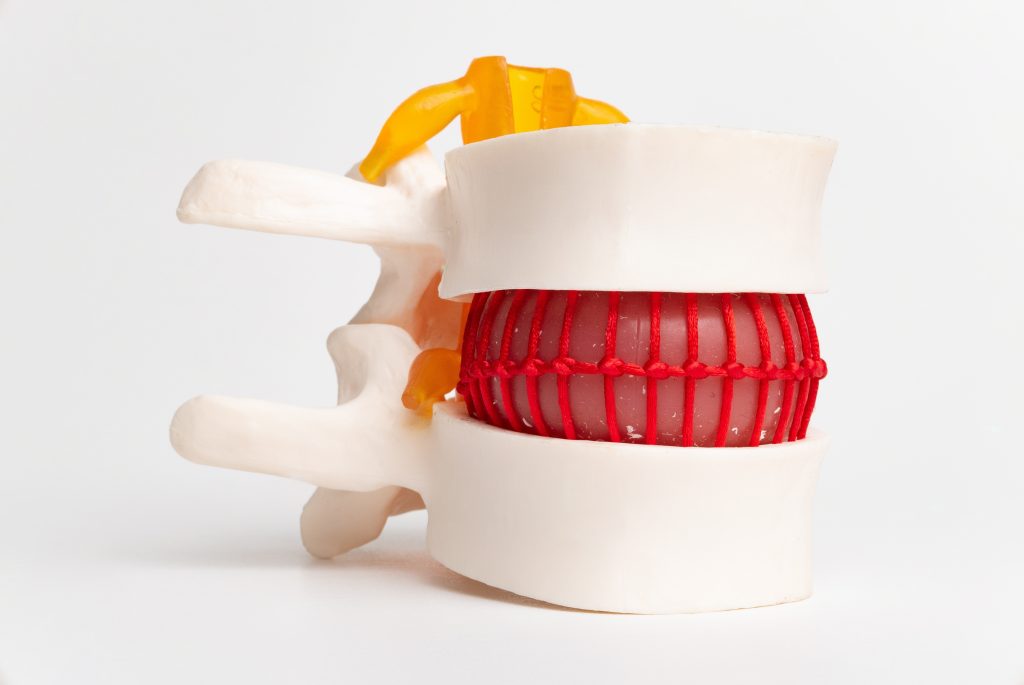
Piriformis syndrome can mimic sciatica, but it is much less common than irritation of the nerve roots in the lower spine. Before blaming the piriformis, it is important to exclude more common spinal causes such as a herniated disc or spinal narrowing.
What Is Piriformis Syndrome?
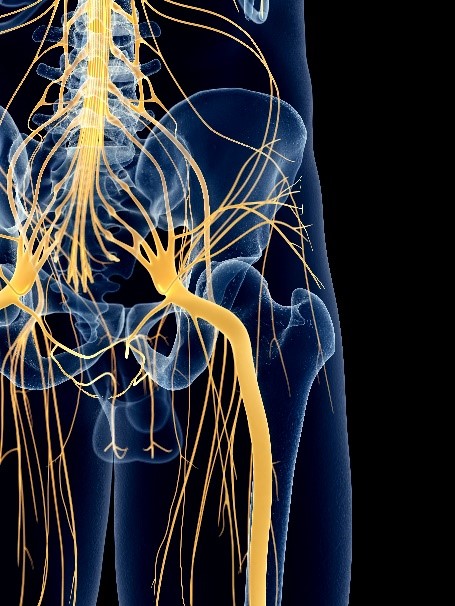
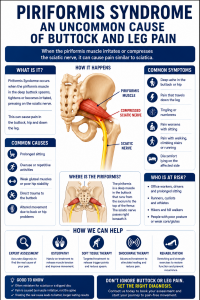
Piriformis Syndrome occurs when the piriformis muscle, a small but powerful muscle deep within the buttock, irritates or compresses the sciatic nerve.
The piriformis muscle helps:
- Rotate the hip
- Stabilise the pelvis
- Control leg movement when walking
- Assist balance
- Support standing and climbing stairs
Because the sciatic nerve passes immediately beneath (and occasionally through) this muscle, any tightening, inflammation or spasm can place pressure on the nerve.
This compression produces symptoms remarkably similar to lumbar sciatica.
Where Is the Piriformis Muscle?
The piriformis lies deep underneath the gluteal muscles.
It runs from:
- the front of the sacrum
- through the pelvis
- to the greater trochanter of the femur.
Its location means that inflammation cannot usually be seen externally, making expert clinical assessment particularly important.
What Does Piriformis Syndrome Feel Like?
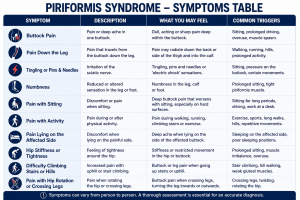
Piriformis Syndrome or Sciatica?
This is one of the biggest diagnostic challenges.
True sciatica usually results from:
- Herniated discs
- Spinal stenosis
- Degenerative discs
- Foraminal narrowing
- Nerve root compression
Piriformis Syndrome compresses the nerve after it has already left the spine.
The symptoms can overlap considerably.
This is why patients are frequently misdiagnosed.
What Causes Piriformis Syndrome?
| Risk Factor | Why It Increases Risk |
|---|---|
| Prolonged Sitting | Sitting for long periods can tighten the piriformis muscle and increase pressure on the sciatic nerve. |
| Long-Distance Driving | Continuous sitting with the hip flexed can irritate the piriformis muscle. |
| Running | Repetitive impact and hip rotation may overload the piriformis muscle. |
| Cycling | Extended time in a seated position and repetitive hip movement can contribute to muscle tightness. |
| Hill Walking & Hiking | Climbing steep terrain places greater demand on the gluteal muscles and piriformis. |
| Weak Gluteal Muscles | The piriformis compensates for weak hip muscles, increasing its workload. |
| Poor Core Stability | Reduced trunk stability can alter pelvic mechanics and overload the piriformis. |
| Hip Muscle Imbalances | Tight or weak muscles around the hip can place excessive strain on the piriformis. |
| Previous Lower Back Pain | Changes in movement patterns following back pain may increase stress on the piriformis muscle. |
| Previous Sciatica | Altered gait and protective muscle tension may contribute to piriformis irritation. |
| Falls onto the Buttock | Direct trauma can cause inflammation or spasm of the piriformis muscle. |
| Repetitive Twisting Activities | Sports involving frequent hip rotation (e.g. golf, tennis) may overload the muscle. |
| Heavy Manual Work | Frequent lifting, bending and carrying can increase stress on the pelvis and hip muscles. |
| Poor Posture | Sitting or standing with poor alignment may contribute to chronic muscle tension. |
| Leg Length Difference | Uneven loading of the pelvis can place extra strain on one piriformis muscle. |
| Hip Arthritis | Reduced hip mobility often causes the piriformis to work harder during movement. |
| Reduced Flexibility | Tight muscles around the hips and pelvis increase tension on the piriformis. |
| Pregnancy | Hormonal changes, altered posture and pelvic instability may increase strain on the muscle. |
| Inactive Lifestyle | Weakness and reduced flexibility can make the piriformis more susceptible to overload. |
| Increasing Age | Muscle stiffness and reduced flexibility become more common with age, increasing susceptibility to irritation. |
Why Is It Common in the Peak District?
The beautiful Peak District encourages outdoor activity.
Walking hills, trail running, mountain biking and climbing place significant demand upon the gluteal muscles.
When the piriformis becomes overloaded it can tighten and compress the sciatic nerve.
Many of our patients first notice symptoms after:
- Long walks
- Hiking weekends
- Cycling holidays
- Gardening
- Lifting heavy loads
- Decorating
- Moving house
How Is Piriformis Syndrome Diagnosed?
No single scan confirms Piriformis Syndrome.
Diagnosis depends upon:
- Detailed history
- Neurological examination
- Lumbar spine assessment
- Hip examination
- Muscle testing
- Orthopaedic testing
- Functional movement assessment
The aim is to exclude more serious causes including:
- Herniated discs
- Spinal stenosis
- Hip arthritis
- Sacroiliac dysfunction
- Fractures
- Cauda equina syndrome
Can an MRI Diagnose Piriformis Syndrome?
Usually not.
MRI is often used to rule out:
- Disc prolapse
- Nerve compression
- Arthritis
- Spinal tumours
Many patients are told their MRI is “normal.”
That does not mean the pain isn’t real.
Soft tissue dysfunction around the sciatic nerve often requires experienced clinical examination.
Why Patients Are Often Misdiagnosed
Many patients receive treatments aimed solely at the spine.
However, if the piriformis muscle is the source of compression:
- injections may fail
- spinal manipulation alone may help only temporarily
- medication may reduce symptoms without solving the problem.
Finding the true pain generator is essential.
Treatment for Piriformis Syndrome
Every patient is different.
Treatment should address both the irritated nerve and the underlying cause.
A comprehensive programme may include:
Expert Assessment
The correct diagnosis comes first.
Osteopathy
Gentle manual therapy can improve movement, reduce muscle tension and restore normal biomechanics.
Soft Tissue Therapy
Targeted treatment helps reduce excessive muscle spasm.
Trigger Point Therapy
Reduces tension within the piriformis muscle.
Stretching
Specific stretches improve flexibility without irritating the nerve.
Rehabilitation
Strengthening the gluteal muscles reduces overload.
Postural Advice
Small changes often make significant differences.
Ergonomic Advice
Improving sitting position can dramatically reduce symptoms.
Can Shockwave Therapy Help?
For chronic muscle tightness, some patients benefit from Focused Shockwave Therapy.
This advanced treatment stimulates healing, improves tissue quality and can reduce persistent muscular pain that has failed to respond to traditional care.
Shockwave is particularly useful where long-standing muscle dysfunction is contributing to ongoing symptoms.
When Is IDD Therapy Needed?
Sometimes patients believe they have Piriformis Syndrome when the real problem lies within the spine.
If examination identifies:
- herniated discs
- degenerative discs
- trapped nerves
- spinal stenosis
then IDD Therapy may be recommended instead.
This highlights why an accurate diagnosis is so important.
Treating the wrong condition delays recovery.
Self-Help Tips
You may benefit from:
- Regular walking
- Avoid prolonged sitting
- Gentle stretching
- Heat therapy
- Maintaining activity
- Improving posture
- Frequent movement breaks
- Glute strengthening
- Core exercises
Avoid aggressive stretching if symptoms worsen.
How Long Does Recovery Take?
Mild cases often improve within several weeks.
More persistent symptoms may require structured rehabilitation over several months.
Early diagnosis generally leads to faster recovery.
When Should You Seek Professional Advice?
Arrange an assessment if you have:
- persistent buttock pain
- pain travelling down your leg
- numbness
- tingling
- difficulty sitting
- recurring sciatica
- symptoms lasting more than two weeks
- repeated flare-ups.
Emergency Symptoms
Seek urgent medical attention immediately if you develop:

Why Choose The Sciatica Hub?
At Buxton Sciatica Hub, we focus specifically on diagnosing and treating conditions affecting the sciatic nerve.
Patients travel from throughout the Peak District because we offer:
- Comprehensive spinal assessment
- Detailed neurological examination
- Expert differential diagnosis
- Advanced osteopathic treatment
- Evidence-based rehabilitation
- Focused Shockwave Therapy
- IDD Therapy where appropriate
- Personalised treatment plans
- Clear explanations without medical jargon
Our aim is not simply to reduce pain but to identify why it developed and help reduce the risk of it returning.
Frequently Asked Questions
Is Piriformis Syndrome the same as sciatica?
No. Piriformis Syndrome is one possible cause of sciatic nerve pain.
Can Piriformis Syndrome occur without back pain?
Yes. Many people have pain only in the buttock and leg.
Can sitting make it worse?
Yes. Prolonged sitting is one of the most common aggravating factors.
Is walking good?
Usually yes, provided symptoms do not significantly increase.
Can Piriformis Syndrome come back?
Yes, particularly if muscle weakness and movement problems are not addressed.
Does everyone need an MRI?
No. Many patients can be accurately diagnosed through expert clinical assessment.
Book Your Assessment
If you’re struggling with persistent buttock pain, leg pain or symptoms that have been labelled as sciatica but aren’t improving, a detailed assessment can help identify the real cause.
At The Buxton Sciatica Hub, we provide expert assessment and personalised treatment for patients throughout the Peak District. Whether your symptoms are caused by Piriformis Syndrome, a trapped nerve, a herniated disc or another condition, our goal is to provide an accurate diagnosis and the most appropriate treatment pathway.
Don’t continue guessing the cause of your pain. Early diagnosis and targeted treatment can make a significant difference to your recovery and help you get back to walking, working and enjoying everything the Peak District has to offer.
At Buxton Sciatica Hub, we specialise in identifying the true cause of leg pain. Patients from across the Peak District, including Buxton, Bakewell, Matlock, Chapel-en-le-Frith, Whaley Bridge, Tideswell, New Mills, Ashbourne and surrounding Derbyshire villages, visit us for expert assessment when back pain or sciatica simply isn’t improving.
Unlike many clinics that focus solely on treating symptoms, we investigate whether your pain is coming from your lower back, your piriformis muscle, your hip or another structure entirely. Getting the diagnosis right is the first step towards lasting relief.