Gradual Return to Daily Life After Sciatica
This will happen at it’s own rate depending on your diagnosis. Remember that recovery depends on what type of sciatica you have. Some of the more severe causes will require treament to accelerate your healing, while some may be, if you are lucky, self-limiting.
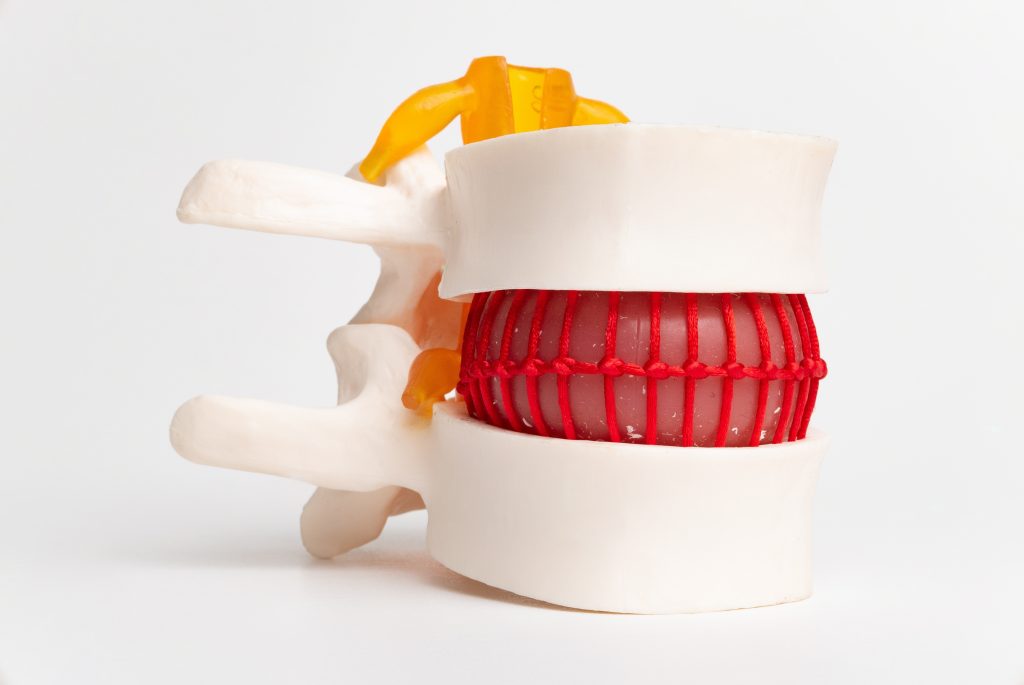
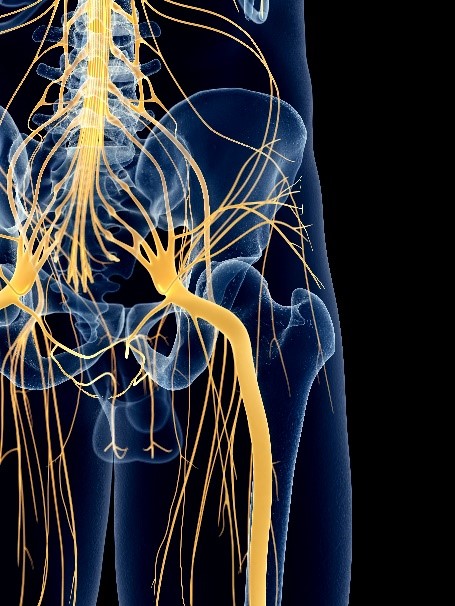
Sciatica can be caused by anything that comes into contact with the nerves which join together to form your sciatic nerve! There a lot of things that can do this.
There is no fixed number of causes for sciatica but there are roughly 15-20 common reasons that make up 90% of cases.
Each of these conditions requires a different management plan.
Your symptoms may be caused by:
- A herniated disc
- Spinal stenosis
- Degenerative disc disease
- Spondylolisthesis
- Piriformis syndrome
- Facet joint arthritis
- Trauma or injury
- Inflammation around the nerve
- Another spinal condition
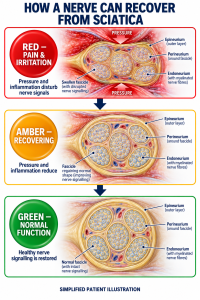
The best way to think of a gradual recovery from sciatica is like a traffic light system.
Red is when you are in acute pain, using ice and heat, limiting sudden movements to avoid pain. Sitting and standing can be limited and analgesics might be your best friend.
Amber is usually the point when you begin to have freedom of movement. You can take shorts walks and gentle stretching is now comfortable. This is the point when you need to be cautious and keep your ambitions reasonable without pushing yourself to your limits.
The aim is not to force yourself through severe pain. It is to rebuild your normal routine in small, manageable stages.
Green of course is the ability to do what you always do. Key at this point is to future proof yourself and spend time working on core stability and reconditioning your body. Perhaps think about your posture a little bit more carefully.
Why a Gradual Return Is Important
Sciatica can affect much more than your leg. It may change how you walk, sit, sleep, work and carry out everyday tasks. Even after the pain begins to settle, your body may remain sensitive and deconditioned.
A gradual return can help you:
- Restore movement and flexibility
- Rebuild strength and stamina
- Reduce stiffness
- Improve confidence in your back
- Prevent prolonged avoidance of normal activities
- Recognise which activities still require modification
- Return to work, exercise and hobbies more comfortably
Recovery is rarely completely linear. You may have good days and more uncomfortable days. A temporary increase in symptoms does not necessarily mean you have caused further damage.
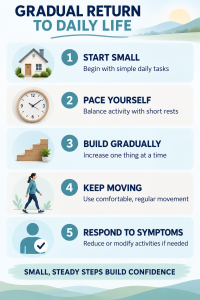
Start With Essential Small Necessary Tasks
Begin with simple activities that are integral to your day. These might include:
- Washing and dressing
- Preparing a meal
- Walking around the house
- Climbing a small number of stairs
- Completing light household jobs
- Taking a short walk outside
- Travelling short distances
Try to spread these activities throughout the day instead of doing everything at once. This helps prevent the cycle of doing too much on a good day and then needing several days to recover.
Use Pacing
Pacing means balancing activity and rest before symptoms become overwhelming.
Rather than waiting until the pain forces you to stop, decide in advance how much of an activity you can manage comfortably. Take a short break and then continue if appropriate.
For example, instead of attempting a 30-minute walk immediately, you might begin with two or three shorter walks. As your symptoms and confidence improve, the duration can be increased gradually.
Pacing should help you remain active without repeatedly provoking a major flare-up.
Change One Thing at a Time
When progressing an activity, change only one factor at a time:
- How long you perform it
- How often you perform it
- How far you travel
- How much weight you lift
- How quickly you move
- How difficult the activity is
If you increase several things simultaneously, it can be difficult to identify what caused an increase in symptoms.
Small, consistent improvements are usually more helpful than sudden large increases.
Returning to Walking
Walking is often one of the most useful activities during recovery from sciatica. It encourages general movement, maintains leg strength and can help rebuild confidence.
Start with a distance or duration you can manage without a significant increase in symptoms. Walk at a comfortable pace and choose a relatively flat route initially.
You can gradually increase the time or distance as your tolerance improves. If one long walk aggravates your symptoms, divide it into several shorter walks.
People with spinal stenosis may find that standing and walking upright increases their leg symptoms. Their walking programme may need to be adapted to their specific diagnosis and capabilities.
Sitting and Driving
Prolonged sitting can aggravate sciatica, particularly when the symptoms are associated with a disc problem.
During recovery:
- Avoid remaining in one position for too long
- Stand and move regularly
- Use a supportive chair
- Keep frequently used objects within easy reach
- Begin with shorter car journeys
- Take movement breaks during longer journeys
You should be able to control the vehicle safely and perform an emergency stop before returning to driving. Pain, weakness, altered sensation and certain medications can all affect driving ability.
Household Tasks
Activities such as vacuuming, gardening, carrying shopping and loading a washing machine can place additional demands on the back.
When returning to these jobs:
- Begin with lighter tasks
- Divide larger jobs into smaller sections
- Avoid rushing
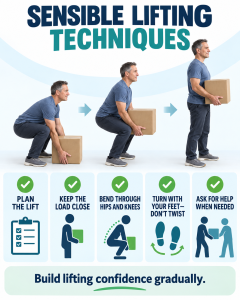
- Keep loads close to your body
- Use both hands when possible
- Ask for help with heavy or awkward objects
- Alternate physically demanding jobs with easier activities
Good technique can be helpful, but there is no single “perfect” posture that must be maintained throughout every task. Regularly changing position is often more important.
Returning to Work
You do not always have to be completely pain-free before returning to work. In many cases, a supported and carefully planned return can form part of the recovery process.
Temporary adjustments may include:
- Reduced hours
- A phased return
- More frequent movement breaks
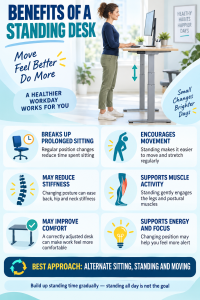
- Alternating between sitting and standing
- Avoiding heavy lifting temporarily
- Modified duties
- Working from home where appropriate
- Gradually increasing physical responsibilities
The appropriate plan will depend on your symptoms, diagnosis and type of employment. Someone working at a desk will have different requirements from someone performing repeated lifting or manual work.
Returning to Exercise and Hobbies
Begin with movements and activities that feel manageable. Depending on your condition, this may include walking, gentle mobility exercises, swimming, cycling or a personalised rehabilitation programme.
Return gradually to more demanding activities such as running, heavy gardening, gym training or competitive sport.
Your progress should be based on your individual response rather than an arbitrary deadline. Building capacity steadily is more important than trying to return to your previous level immediately
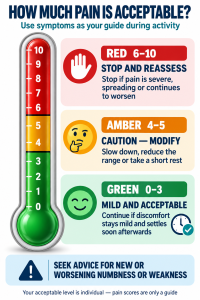
How Much Discomfort Is Acceptable?
A mild and temporary increase in discomfort can occur when you reintroduce an activity. This does not always mean the activity is harmful.
It may be reasonable to continue when:
- Symptoms remain mild
- They settle soon after the activity
- There is no progressive loss of movement or function
- You are not noticeably worse the following day
Your treatment or rehabilitation plan should be reviewed if progress repeatedly triggers significant symptoms.
Setbacks Are Not Always Failure
Sciatica symptoms can fluctuate. Sleep, stress, workload, prolonged sitting and sudden changes in activity can all influence how you feel.
If you experience a setback:
- Temporarily reduce the aggravating activity.
- Continue with comfortable movement where possible.
- Avoid returning to prolonged bed rest.
- Resume your progression when symptoms settle.
- Seek professional advice if symptoms are worsening or changing.
A setback may simply mean that the increase was too large or too soon.
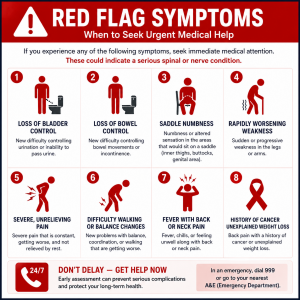
When to Seek Urgent Medical Help
A Personalised Approach to Recovery
There is no single recovery timetable that is suitable for everyone. Your return to daily life should reflect the cause of your sciatica, the severity of any nerve involvement, your general health and the demands of your work and hobbies.
At Buxton & Bakewell Osteopathy Clinic, we assess how your symptoms affect everyday movement and develop a personalised plan to help you return to the activities that matter to you.
The goal is not simply to reduce pain. It is to restore confidence, rebuild physical capacity and help you return to a full and active life safely.
Your Journey Starts With the Right Diagnosis
If you’re experiencing pain travelling down your leg, don’t settle for a generic approach. Understanding your personal diagnosis allows treatment to be tailored specifically to your condition, helping you recover more confidently and reducing the risk of future problems.
At Sciatica Hub in Buxton, we’re committed to helping you understand your condition and guiding you towards the most appropriate treatment for your individual needs.