Personalised Sciatica Treatment in Buxton and the Peak District
One of the biggest misconceptions about sciatica is that everyone can be treated in exactly the same way. We assume that our sciatica is the same as someone else’s and what was successful for them will be successful for us. I have heard this assumption many times during my career. The reality is very different, no two people are identical. While two people may both have pain travelling down the leg, the underlying cause, severity, lifestyle and recovery goals can be completely different.
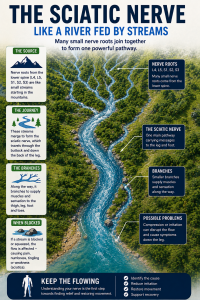
Sciatica is not actually a diagnosis. It’s a symptom.
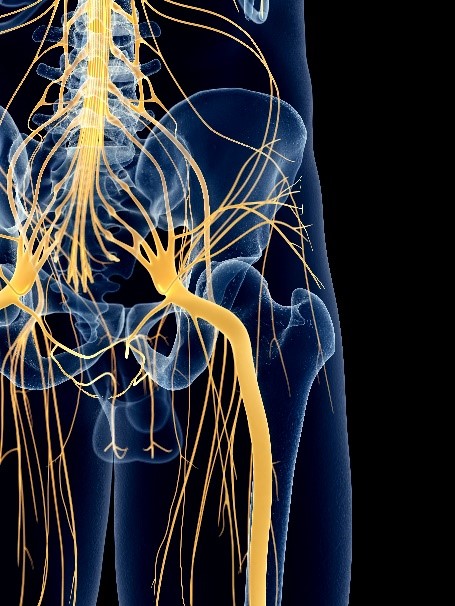
The sciatic nerve is like a river made up many different streams. If any of these streams is blocked or narrowed it affects everything downstream. There are 15-20 common causes that account of 90% of cases of sciatica. Each of these different reasons will need a different treatment plan.
Without identifying where the source of the blockage or impingement is, treatment may be ineffective, inappropriate or unnecessarily delayed.
At Buxton & Bakewell Osteopathy Clinic, we believe successful treatment begins with understanding the individual—not just the symptoms. A personalised treatment plan is designed specifically for you, taking into account the cause of your sciatica, how long you have had it, the severity of your symptoms and what you want to achieve.
Rather than simply treating the pain, our aim is to identify and address the underlying cause of your nerve irritation, helping you recover safely and reduce the risk of future episodes.
What Is a Personalised Treatment Plan?
A personalised treatment plan is a structured program of care that is tailored to you. Instead of following a standard set of treatments, we select the most appropriate combination of therapies based on your assessment findings.
Your plan may include:
- Detailed clinical assessment
- Neurological examination
- Movement and postural assessment
- MRI referral if clinically indicated
- Hands-on osteopathic treatment
- Rehabilitation exercises
- Lifestyle and ergonomic advice
- IDD Therapy (where appropriate)
- Ongoing review and progression
As your symptoms improve, your treatment plan evolves to match your stage of recovery.
Why Personalisation Matters
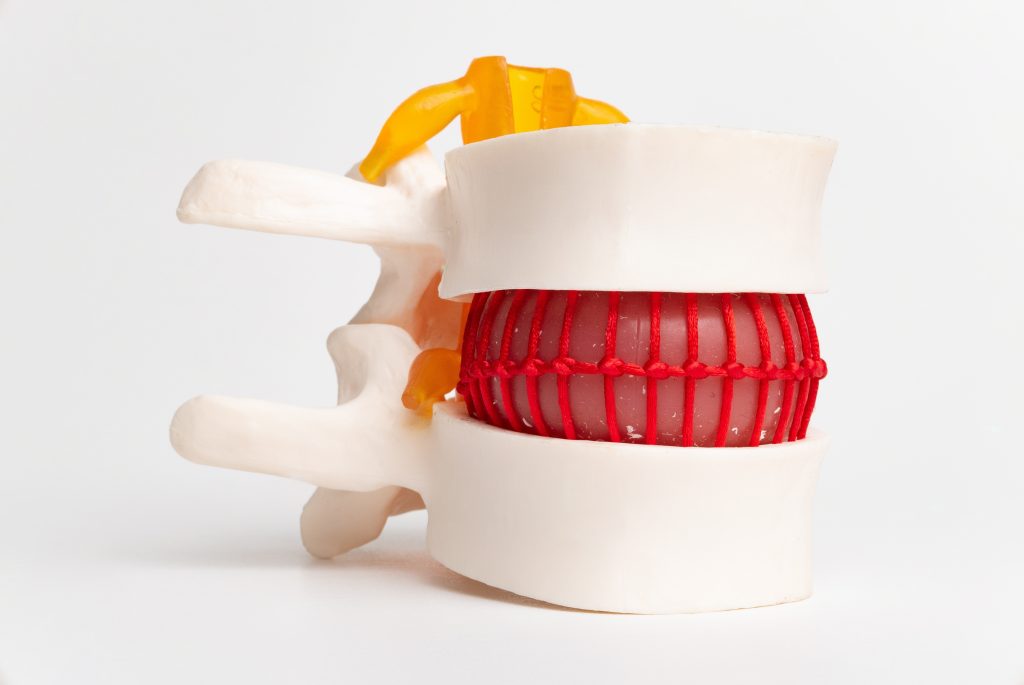
Sciatica is a symptom rather than a diagnosis. The pain may be caused by a number of different conditions, including:
- A herniated disc
- Spinal stenosis
- Degenerative disc disease
- Spondylolisthesis
- Piriformis syndrome
- Facet joint arthritis
- Trauma or injury
- Inflammation around the nerve
- Another spinal condition
Each of these conditions responds differently to treatment. A personalised plan helps ensure that the treatment you receive is appropriate for your specific diagnosis.

Your Assessment Comes First
Before recommending treatment, we carry out a comprehensive clincal and physical assessment to understand exactly what is happening.
This may include:
- A detailed medical history
- Questions about your symptoms
- Assessment of pain patterns
- Muscle strength testing
- Reflex testing
- Sensation testing
- Walking assessment
- Examination of your spine and hips
- Functional movement assessment
If your symptoms suggest a more complex problem, we may recommend further investigations such as an MRI scan.
What Influences Your Treatment Plan?
Several factors help determine the most appropriate course of treatment.
These include:
The Cause of Your Sciatica
A patient with a disc prolapse will usually require a different approach from someone with spinal stenosis or degenerative changes.
Duration of Symptoms
Acute sciatica often requires different management from long-standing or recurrent symptoms.
Severity
We assess:
- Pain intensity
- Leg pain versus back pain
- Numbness
- Tingling
- Muscle weakness
- Walking tolerance
- Sleep disturbance
Your Lifestyle
Your occupation, hobbies and daily activities all influence your rehabilitation programme.
A desk worker may require different advice from someone whose job involves heavy lifting or prolonged driving.
Your Goals
Everyone’s goals are different.
You may want to:
- Return to work
- Walk without pain
- Play golf
- Cycle again
- Care for grandchildren
- Sleep comfortably
- Avoid surgery
Your treatment plan should reflect what matters most to you.
Treatment Options That May Be Included
Every patient is different, but your personalised programme may include one or more of the following.
Gentle manual techniques can help improve movement, reduce muscle tension and restore normal joint function.
For suitable patients with disc-related sciatica, degenerative disc disease or some cases of spinal stenosis, IDD Therapy may help reduce pressure on irritated nerves as part of a wider rehabilitation programme.
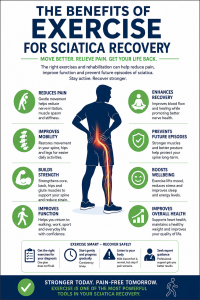
Specific exercises are introduced gradually to improve mobility, strengthen supporting muscles and restore confidence in movement.
Nerve Mobility Exercises
Where appropriate, gentle neural mobilisation techniques may help improve the movement of the sciatic nerve through surrounding tissues.
Education
Understanding your condition is an important part of recovery. We explain what is causing your symptoms and provide practical advice on posture, lifting, sitting, sleeping and activity modification.
Monitoring Your Progress
A treatment plan should never remain static.
As your symptoms improve, we regularly review:
- Pain levels
- Leg symptoms
- Walking ability
- Strength
- Flexibility
- Daily function
- Exercise progression
- Treatment response
If your progress is slower than expected, your treatment plan can be adjusted to better suit your needs.
Preventing Future Episodes
Recovery is not just about getting rid of pain.
A personalised programme also aims to reduce the likelihood of future flare-ups.
This may include:
- Core strengthening
- Hip strengthening
- Flexibility exercises
- Walking programmes
- Weight management advice
- Workplace ergonomics
- Lifting techniques
- Long-term exercise plans
Building resilience is often just as important as treating the current episode.
When a Different Approach Is Needed
Occasionally, symptoms do not improve as expected, or new neurological signs develop.
If this happens, we may recommend:
- Further imaging
- Referral to your GP
- Referral to a spinal specialist
- Review by an orthopaedic or neurosurgical consultant
- Additional investigations where appropriate
Recognising when further assessment is needed is an important part of providing safe and effective care.
Why Individualised Care Delivers Better Results
There is no single treatment that works for every patient with sciatica. Lasting improvement usually comes from combining the right treatments at the right time and progressing them according to your recovery.
A personalised treatment plan allows us to focus on your diagnosis, symptoms, goals and lifestyle rather than relying on a generic approach. This often leads to better engagement, greater confidence and more meaningful improvements in day-to-day life.
How We Help at Buxton & Bakewell Osteopathy Clinic
At Buxton & Bakewell Osteopathy Clinic, every patient receives a thorough assessment before treatment begins. We use the information gathered during your consultation to create a tailored treatment plan designed around your diagnosis and individual needs.
Depending on your condition, your programme may include osteopathic treatment, rehabilitation exercises, lifestyle advice, neurological monitoring and, where appropriate, IDD Therapy for suitable disc-related conditions.
We regularly review your progress and adapt your programme as you recover, ensuring your treatment continues to meet your needs. Our goal is not simply to relieve pain but to help you return to work, hobbies, sport and everyday activities with greater confidence.
We are proud to help patients from Buxton, Bakewell, the High Peak, the Peak District, North Derbyshire and surrounding areas receive evidence-informed, personalised care for sciatica and related spinal conditions.
Final Thoughts
Every case of sciatica is unique. The cause of your symptoms, your overall health, your daily activities and your personal goals all influence the most appropriate treatment.
A personalised treatment plan provides a structured, flexible approach that evolves as you recover. By combining an accurate diagnosis with targeted treatment and rehabilitation, it offers the best opportunity to reduce pain, restore function and help prevent future episodes.
If you are struggling with sciatica, seeking a professional assessment is the first step towards developing a treatment plan that is tailored specifically to you.