Spondylolisthesis: Understanding a Slipped Vertebra and Its Link to Sciatica
In 1732 a medical doctor noticed something.
During childbirth examinations he noticed a bony prominence at the bottom of the spine that acted as an obstacle in the birth canal.
It was the first time this condition had been identified but we have a German doctor to thank for this extremely difficult word. In 1854 Hermann Kilian came up with the term spondylolisthesis. Why? You may well ask! He had his reasons.
Spondylos in Greek mean ‘spine’ and Olistesis means ‘slide’.
That is pretty much what it is.
If you imagine a tower of Jenga blocks, when one block loses alignment it sticks out.
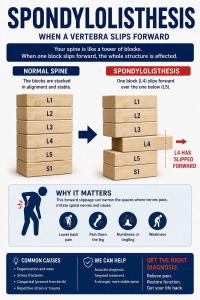
It loses secure contact with the block above and below, becomes unstable. Worse still is that because it has slipped forwards it narrows the gap for spinal nerves to exit the spinal cord. This can be a reason for sciatic pain.
For some people this causes very little discomfort (it may be stable) , while for others it can lead to persistent lower back pain, sciatica, nerve compression and difficulty walking.
The amount of movement can vary considerably. Some slips measure only a few millimetres and never become problematic, whereas larger slips can narrow the spaces where nerves travel, leading to irritation or compression.
The condition most commonly affects the lower lumbar spine, particularly:
- L4-L5
- L5-S1
These are the most mobile segments of the spine and therefore experience the greatest mechanical stress during everyday activities.
Is Spondylolisthesis the Same as a Slipped Disc?
No.
Many people confuse these two conditions.
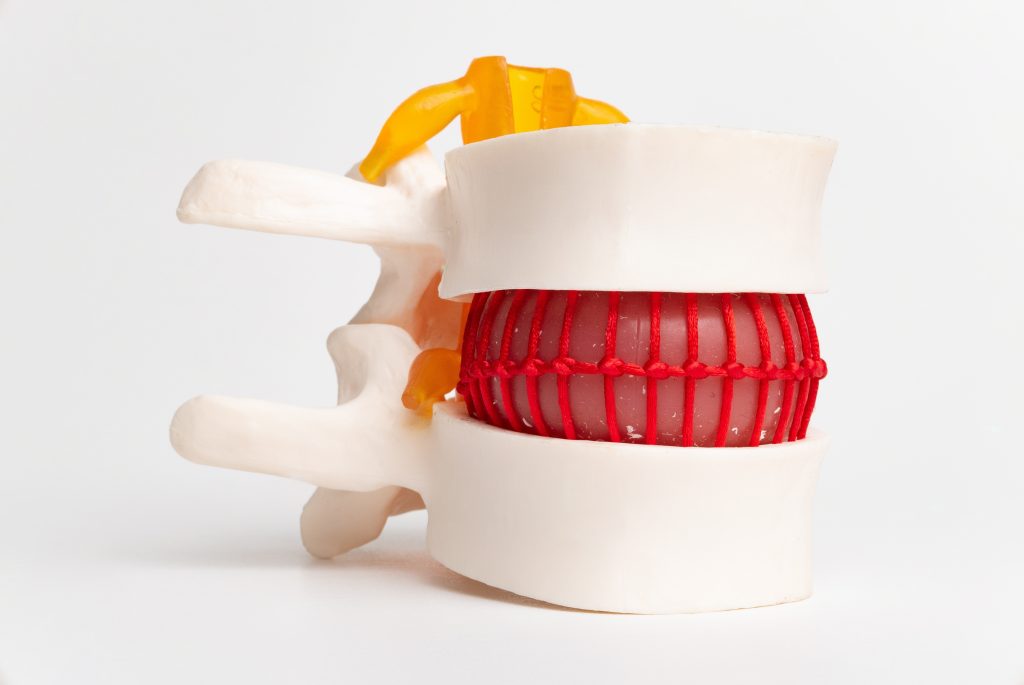
A slipped disc (disc prolapse or herniated disc) involves damage to the cushioning disc between the vertebrae.
Spondylolisthesis involves movement of the vertebra itself.
However, the two conditions can occur together.
As a vertebra slips forwards, additional stress may be placed upon the intervertebral disc. Over time this may contribute to:
- Disc degeneration
- Bulging discs
- Herniated discs
- Narrowing around spinal nerves
This is one reason why patients with spondylolisthesis frequently develop sciatica.
How Common Is It?
Spondylolisthesis is actually much more common than many people realise.
Research suggests:
- around 5-10% of adults have some degree of vertebral slipping
- many never experience symptoms
- degenerative spondylolisthesis becomes increasingly common with age
- many MRI scans identify mild slips that do not require treatment
This highlights an important point.
MRI findings should always be interpreted alongside your symptoms and clinical examination.
Treating the scan rather than the patient can lead to unnecessary worry.
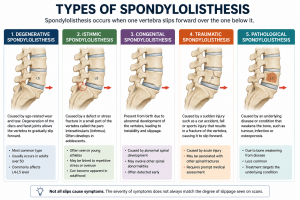
Causes of Spondylolisthesis
Several factors can contribute.
Ageing
The discs lose water.
Ligaments become less elastic.
Facet joints develop arthritis.
These changes reduce spinal stability.
Disc Degeneration
Healthy discs help keep vertebrae aligned.
As discs wear, they become thinner, reducing support between spinal bones.
Arthritis
Wear within the facet joints allows excessive movement between vertebrae.
Repetitive Stress
Repeated bending backwards places stress on the vertebra.
This explains why athletes participating in extension-based sports are more susceptible.
Trauma
Falls and accidents may destabilise the spine.
Why Does It Cause Sciatica?
This is one of the most important questions patients ask.
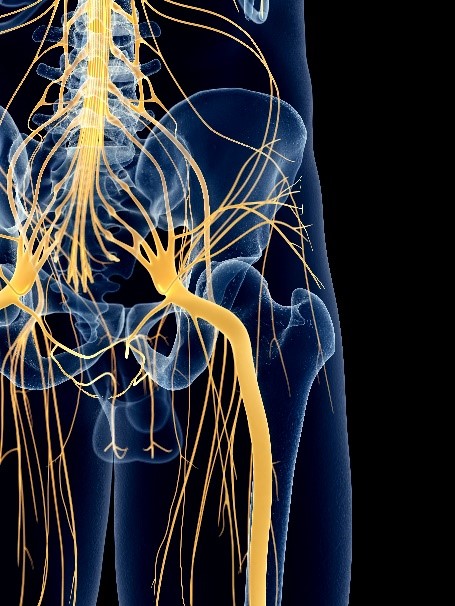
Sciatica develops when the sciatic nerve—or one of the nerve roots that forms it—becomes irritated or compressed.
With spondylolisthesis, the forward movement of one vertebra can narrow the openings where nerves leave the spine, known as the foramina. At the same time, age-related changes such as disc degeneration, thickened ligaments or arthritic facet joints may further reduce the available space.
As a result, the nerve root can become compressed, producing symptoms such as:
- pain travelling into the buttock
- pain down the back or side of the leg
- pins and needles
- numbness
- burning pain
- weakness
- altered reflexes
Because the sciatic nerve is formed from several nerve roots in the lower spine, compression at the L4-L5 or L5-S1 levels can create the classic symptoms many people recognise as sciatica.
Unlike ordinary back pain, nerve pain often travels below the knee and may even reach the foot or toes.
How Is Spondylolisthesis Diagnosed?
| Test | What it shows |
|---|---|
| Your Symptoms | Back pain, leg pain, numbness or weakness |
| Medical History | How the problem started and previous injuries |
| Physical Examination | Posture, spinal movement and areas of pain |
| Neurological Tests | Muscle strength, reflexes and sensation |
| X-ray | Shows if a vertebra has slipped forward |
| MRI Scan | Shows discs, nerves and any nerve compression |
Simple takeaway:
X-rays show the slip. MRI scans show how the nerves may be affected.
Grading Spondylolisthesis
Doctors classify spondylolisthesis according to how far one vertebra has slipped forwards.
| Grade | Amount of Slip |
|---|---|
| Grade I | Up to 25% |
| Grade II | 26–50% |
| Grade III | 51–75% |
| Grade IV | 76–100% |
| Grade V (Spondyloptosis) | Vertebra has slipped completely off the bone below |
Fortunately, most patients have Grade I or Grade II slips, which are often suitable for conservative treatment.
Importantly, the severity of symptoms does not always match the grade. Some people with a Grade I slip experience severe sciatica, while others with a Grade III slip have very little discomfort.
Treatment focuses on:
- reducing pain
- calming irritated nerves
- improving spinal stability
- restoring movement
- strengthening supporting muscles
- helping patients return to normal activities
Activity Modification
During the early stages, avoiding activities that aggravate symptoms can help reduce irritation.
This does not mean prolonged bed rest.
In fact, remaining as active as possible is generally encouraged.
Patients are usually advised to temporarily reduce:
- repetitive heavy lifting
- prolonged standing
- repeated backward bending
- high-impact sports
Walking, gentle movement and appropriately prescribed exercises are usually beneficial.
Pain Relief
Depending on your individual circumstances, your GP may recommend:
- anti-inflammatory medication
- simple pain relief
- short-term muscle relaxants
Medication can help control symptoms but does not address the underlying mechanical problem.
Osteopathy
Osteopathy can be an effective part of a comprehensive treatment programme for suitable patients with spondylolisthesis.
Treatment aims to improve how the spine and surrounding tissues function rather than attempting to “push the vertebra back into place.”
Depending on your symptoms, treatment may include:
- gentle joint mobilisation
- soft tissue techniques
- stretching
- muscle energy techniques
- postural advice
- movement education
- rehabilitation exercises
By improving spinal mobility above and below the affected segment, reducing muscle tension and restoring more efficient movement patterns, many patients experience significant improvements in pain and function.
Treatment is always adapted to the individual, taking into account the grade of the slip, associated nerve symptoms and overall spinal stability.
Can IDD Therapy Help?
For some patients, particularly those experiencing persistent sciatica due to associated disc degeneration, disc bulging or nerve compression, IDD Therapy may form part of a comprehensive treatment plan.
IDD Therapy (Intervertebral Differential Dynamics Therapy) is a computer-controlled form of spinal decompression designed to gently apply distraction forces to a targeted spinal segment.
Unlike manual traction, IDD Therapy allows clinicians to focus treatment at a specific lumbar level while carefully controlling the amount of force applied.
The aim is to:
- reduce pressure within the affected spinal segment
- encourage muscle relaxation
- improve mobility
- reduce mechanical loading on irritated structures
- create a more favourable environment for recovery
Although IDD Therapy does not reposition a slipped vertebra, it may help relieve symptoms in carefully selected patients where associated disc pathology or nerve irritation is contributing to their pain.
At The Sciatica Hub in Buxton, every patient undergoes a detailed assessment before IDD Therapy is recommended. We consider your symptoms, examination findings and imaging results to determine whether spinal decompression is likely to be appropriate.
Because every case of spondylolisthesis is different, treatment should always be tailored to the individual rather than applying a one-size-fits-all approach.
Lifestyle Changes That Can Help
Small lifestyle adjustments can make a significant difference to long-term spinal health.
These include:
- Maintaining a healthy body weight
- Remaining physically active
- Improving core strength
- Avoiding smoking
- Using good lifting techniques
- Taking regular breaks from prolonged sitting
- Staying flexible through regular stretching
These measures help reduce unnecessary stress on the spine and support long-term recovery.
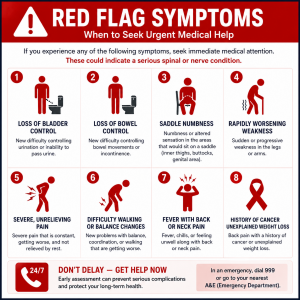
When Should You Seek Urgent Medical Attention?
Frequently Asked Questions
Can spondylolisthesis cause sciatica?
Yes. A slipped vertebra can narrow the spaces where spinal nerves leave the spine, causing irritation or compression of the sciatic nerve roots.
Is spondylolisthesis the same as a slipped disc?
No. Spondylolisthesis involves one vertebra slipping forwards over another, while a slipped disc occurs when part of an intervertebral disc bulges or herniates.
Does everyone with spondylolisthesis have pain?
No. Many people have mild vertebral slippage without experiencing any symptoms at all.
Can exercise make it worse?
Appropriately prescribed exercise is usually beneficial. However, certain activities—particularly repeated heavy lifting or excessive backward bending—may temporarily aggravate symptoms.
Is walking good for spondylolisthesis?
For most people, yes. Walking helps maintain mobility, improves circulation and supports recovery. Distances may need to be increased gradually depending on symptoms.
Can I continue working?
Many people continue working throughout treatment, although temporary modifications to lifting, prolonged standing or repetitive bending may be recommended.
Will I always have a slipped vertebra?
The vertebra usually remains in its slipped position, but this does not mean symptoms will continue. Many people become pain-free despite the vertebral alignment remaining unchanged.
Can osteopathy help?
For appropriately selected patients, osteopathy may help reduce pain, improve mobility, decrease muscle tension and support rehabilitation as part of a comprehensive treatment programme.
Can IDD Therapy help spondylolisthesis?
IDD Therapy is not designed to move the slipped vertebra back into position. However, for some patients with associated disc problems or nerve compression, spinal decompression may help reduce symptoms as part of a carefully planned treatment programme following a full assessment.
Do I need an MRI scan?
Not everyone does. If symptoms suggest nerve compression, persistent sciatica or other spinal pathology, an MRI scan can provide valuable information to guide treatment.
Is surgery always necessary?
No. Most patients improve without surgery.
Can I still play sport?
In many cases, yes. Returning to sport should be gradual and based on your symptoms, strength and spinal stability.
Can spondylolisthesis return after treatment?
The vertebral slip itself usually remains, but symptoms can return if the spine becomes overloaded or supporting muscles weaken. Continuing your rehabilitation programme helps reduce the risk of recurrence.
Is spondylolisthesis hereditary?
Some people may inherit spinal anatomy that makes them more susceptible, although lifestyle and age-related changes also play important roles.
Conclusion
Being diagnosed with spondylolisthesis can sound alarming, but for most people it is a condition that can be managed successfully without surgery.
While the vertebra itself may remain slightly displaced, symptoms often improve significantly through the right combination of education, rehabilitation and appropriate treatment.
If you have persistent lower back pain, sciatica, numbness or weakness, obtaining an accurate diagnosis is the first step towards recovery.
At Buxton Sciatica Hub in Buxton, we regularly assess patients who have been told they have spondylolisthesis on an X-ray or MRI scan. Some have lived with the condition for years without symptoms, while others arrive after months of severe leg pain, numbness or weakness that has dramatically affected their quality of life.
The important thing to understand is that having spondylolisthesis does not automatically mean you need surgery. Many patients respond well to the correct combination of diagnosis, activity modification, rehabilitation, osteopathic care and, in appropriate cases, advanced spinal decompression techniques such as IDD Therapy.
This guide explains everything you need to know about spondylolisthesis, from why it develops to the latest non-surgical treatment options available.