What Is Hip Osteoarthritis?
Hip osteoarthritis is one of the most common causes of hip pain, stiffness and reduced mobility in adults. Although it is often associated with ageing, it is not simply a normal part of getting older. Many people with arthritis remain active and mobile for years with the right advice and treatment.
Osteoarthritis (OA) is a condition in which the smooth cartilage covering the ends of the bones gradually wears away. As the cartilage becomes thinner, the joint loses its natural cushioning, allowing the bones to move less smoothly against one another. Over time, the body attempts to repair the joint by laying down extra bone, known as osteophytes or bone spurs, which can further reduce movement and contribute to stiffness.
The hip is one of the body’s largest weight-bearing joints, so even relatively small arthritic changes can have a significant impact on walking, climbing stairs and everyday activities.
At Buxton & Bakewell Osteopathy Clinic, we regularly assess patients with hip pain to determine whether osteoarthritis is the cause of their symptoms or whether another condition, such as bursitis, referred spinal pain or a muscle injury, may be responsible
Understanding the Hip Joint
The hip is a ball-and-socket joint.
The rounded head of the femur (thigh bone) fits into a cup-shaped socket in the pelvis called the acetabulum. Both surfaces are covered by a layer of smooth articular cartilage that allows the joint to move with very little friction.
Healthy cartilage acts as a natural shock absorber. It distributes forces evenly across the joint, allowing you to walk, run, climb stairs and exercise comfortably.
Unlike many other tissues in the body, cartilage has a very limited blood supply. This means that once it has become damaged, it has only a limited ability to repair itself.
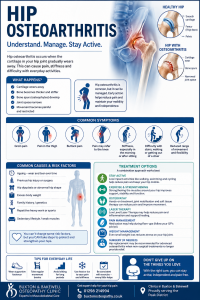
As osteoarthritis progresses:
- The cartilage gradually becomes thinner.
- The underlying bone becomes harder and thicker.
- Bone spurs (osteophytes) may develop.
- The joint space narrows.
- The capsule surrounding the joint becomes stiffer.
- The muscles around the hip often weaken.
These changes explain why the hip gradually becomes painful and less mobile.
What Causes Hip Osteoarthritis?
Hip osteoarthritis usually develops gradually over many years.
In many people there is no single cause. Instead, several factors combine to increase stress on the joint until the cartilage begins to deteriorate.
Common causes include:
- Age-related wear of the joint
- Previous hip injuries
- Childhood hip disorders
- Hip dysplasia
- Previous fractures
- Obesity
- Repetitive heavy manual work
- Sporting injuries
- Genetic predisposition
- Previous hip surgery
While age is the strongest risk factor, younger adults can also develop hip osteoarthritis, particularly following significant injury or abnormal joint development.
Risk Factors for Hip Osteoarthritis
| Risk Factor | Why It Increases the Risk |
|---|---|
| Increasing age | Cartilage gradually loses resilience over time |
| Previous hip injury | Trauma can damage cartilage and alter joint mechanics |
| Excess body weight | Increases the load placed through the hip joint |
| Family history | Genetics can influence cartilage quality |
| Hip dysplasia | An abnormal joint shape increases wear |
| Repetitive heavy lifting | Places greater forces through the hip |
| Sedentary lifestyle | Weak muscles provide less support for the joint |
| Previous hip surgery | May alter normal joint mechanics |
Having one or more of these risk factors does not necessarily mean you will develop osteoarthritis, but they can increase the likelihood over time.
Common Symptoms of Hip Osteoarthritis
Symptoms often develop slowly and become more noticeable over several months or years.
Typical symptoms include:
- Pain deep in the groin
- Pain in the front of the hip
- Buttock pain
- Pain radiating into the thigh
- Pain referred to the knee
- Morning stiffness
- Difficulty putting on socks or shoes
- Pain when climbing stairs
- Difficulty getting out of a chair
- Limping
- Reduced walking distance
- Hip stiffness after sitting
- Clicking or grinding sensations
Many patients notice that symptoms gradually worsen as the day progresses or after periods of increased activity.
One of the most common signs is groin pain, which often distinguishes hip arthritis from lower back pain.
Where Is Hip Osteoarthritis Pain Felt?
Although the problem lies within the hip joint, the pain is not always felt directly over the hip itself.
Pain may occur in several areas.
| Pain Location | Why It Happens |
|---|---|
| Groin | The most common location due to irritation within the hip joint |
| Front of the thigh | Pain is referred along shared nerve pathways |
| Buttock | Deep joint irritation can refer pain backwards |
| Outer hip | Secondary muscle irritation may develop |
| Knee | Hip arthritis frequently refers pain to the knee, even when the knee is healthy |
Diagnosing Hip Osteoarthritis
Obtaining an accurate diagnosis is the first step towards successful treatment. Although hip osteoarthritis is extremely common, several other conditions can produce very similar symptoms. Pain in the groin, buttock or thigh may also originate from the lower back, sacroiliac joint, muscles or tendons surrounding the hip.
At Buxton & Bakewell Osteopathy Clinic, we believe that treatment should always be guided by a thorough assessment rather than relying solely on an X-ray or scan.
Your Clinical Assessment
Your appointment begins with a detailed discussion about your symptoms.
Your osteopath will ask questions such as:
- When did your pain begin?
- Has it developed gradually or after an injury?
- Where exactly is your pain?
- Does it spread into your thigh or knee?
- Is it worse first thing in the morning?
- Does walking improve or worsen your symptoms?
- How far can you comfortably walk?
- Are stairs becoming more difficult?
- Is your sleep disturbed by hip pain?
- Have you noticed increasing stiffness?
- Have you had previous hip injuries or surgery?
These questions provide valuable clues and help determine whether your symptoms are likely to be caused by osteoarthritis or another condition.
Physical Examination
A comprehensive physical examination allows us to assess how your hip is functioning and identify the structures responsible for your pain.
Your examination may include:
- Standing posture assessment
- Walking (gait) analysis
- Hip range of movement
- Muscle strength testing
- Balance assessment
- Functional movement testing
- Leg length assessment
- Examination of the lower back
- Examination of the pelvis
- Palpation of the surrounding muscles and joints
Hip osteoarthritis typically causes a gradual reduction in movement, particularly when rotating the hip or bringing the knee towards the chest.
Assessing Hip Movement
One of the earliest signs of hip osteoarthritis is a loss of joint mobility.
During your assessment, we will examine movements such as:
- Hip flexion
- Hip extension
- Internal rotation
- External rotation
- Abduction
- Adduction
Restricted internal rotation is often one of the first movements affected by hip arthritis and is an important clinical finding.
Muscle Strength Testing
Pain often causes the muscles around the hip to become weaker over time.
Your clinician may assess the strength of:
- Gluteal muscles
- Hip flexors
- Hip abductors
- Quadriceps
- Hamstrings
Weakness in these muscle groups can affect walking, climbing stairs and getting up from a chair.
Strengthening these muscles often forms an important part of treatment.
Functional Assessment
Rather than simply looking at the hip while you are lying on a couch, we also assess how your hip performs during everyday activities.
You may be asked to:
- Walk across the room
- Stand on one leg
- Sit down and stand up
- Climb a step
- Squat (where appropriate)
- Balance on each leg
These functional tests help us understand how your hip affects your daily life and guide your rehabilitation programme.
Can Hip Arthritis Cause Knee Pain?
Yes.
Many people are surprised to discover that hip osteoarthritis commonly causes pain in the knee.
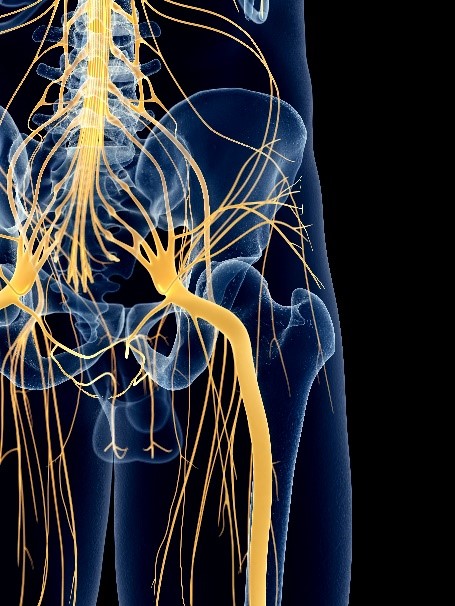
This happens because the nerves supplying the hip also supply parts of the thigh and knee, allowing pain to be “referred” away from the source.
Some patients undergo repeated investigations of their knee before the hip is identified as the real cause.
This is one reason why a comprehensive examination is so important.
X-rays and Hip Osteoarthritis
The most common imaging test used to diagnose hip osteoarthritis is an X-ray.
An X-ray shows the bones of the joint and can identify several typical features of arthritis, including:
- Narrowing of the joint space
- Bone spurs (osteophytes)
- Thickening of the bone beneath the cartilage
- Changes in the shape of the joint
- Loss of the smooth joint contours
These findings help confirm the diagnosis and assess the severity of the condition.
Do I Always Need an X-ray?
No.
Many patients can be diagnosed following a detailed history and physical examination.
If your symptoms and examination are typical of hip osteoarthritis, further imaging may not be necessary immediately.
However, X-rays are often recommended if:
- The diagnosis is uncertain.
- Symptoms are severe.
- Surgery is being considered.
- Symptoms fail to improve.
- Another condition needs to be excluded.
Your clinician will advise whether imaging is appropriate in your individual case.
Is an MRI Better Than an X-ray?
MRI scans (we do offer affordable and fast private MRI scans) provide much more detailed information about the soft tissues around the hip, including:
- Cartilage
- Muscles
- Tendons
- Ligaments
- The labrum
- Bone marrow
However, MRI is not routinely required to diagnose hip osteoarthritis.
For most patients, a standard X-ray provides sufficient information.
MRI is usually reserved for situations where another condition is suspected, such as:
- A labral tear
- Stress fracture
- Tendon injury
- Avascular necrosis
- Persistent unexplained hip pain
Other Conditions That Can Mimic Hip Osteoarthritis
Not all hip pain is caused by arthritis.
Several other conditions can produce similar symptoms, including:
| Condition | Symptoms May Include |
|---|---|
| Greater Trochanteric Pain Syndrome (Hip Bursitis) | Pain over the outside of the hip, especially when lying on that side |
| Gluteal Tendinopathy | Pain when walking, climbing stairs or standing on one leg |
| Referred pain from the lower back | Hip, buttock or thigh pain originating from the spine |
| Hip Labral Tear | Groin pain, clicking and catching sensations |
| Femoroacetabular Impingement (FAI) | Pain during twisting, squatting or prolonged sitting |
| Sacroiliac Joint Dysfunction | Buttock pain that can mimic hip arthritis |
| Inflammatory Arthritis | Morning stiffness affecting multiple joints |
Distinguishing between these conditions is essential because treatment strategies differ significantly.
Why an Accurate Diagnosis Matters
Many people assume that all hip pain is caused by arthritis, but this is not always the case.
Receiving the correct diagnosis allows treatment to focus on the true cause of your symptoms rather than simply trying to relieve pain.
At Buxton & Bakewell Osteopathy Clinic, our goal is to provide a clear explanation of your condition, answer your questions and develop a personalised treatment plan that supports both pain relief and long-term mobility.
In Part 3, we’ll explore the most effective treatment options for hip osteoarthritis, including lifestyle changes, exercise, osteopathy, rehabilitation, pain management and when surgery may be considered.
Treatment Options for Hip Osteoarthritis
Receiving a diagnosis of hip osteoarthritis does not mean you have to stop doing the things you enjoy. Although osteoarthritis cannot currently be reversed, there are many effective treatments that can reduce pain, improve mobility and help you maintain an active and independent lifestyle.
At Buxton & Bakewell Osteopathy Clinic, our aim is not simply to relieve your symptoms but to improve the way your hip functions, helping you move more comfortably and reducing the impact arthritis has on your everyday life.
Treatment is always tailored to your individual needs and depends upon:
- The severity of your arthritis
- Your age and activity level
- Your general health
- Your lifestyle and work
- Your personal goals
For most people, the most successful approach involves combining several treatments rather than relying on a single intervention
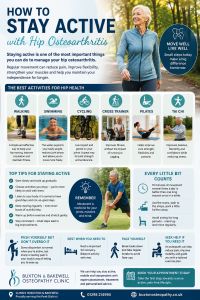
Staying Active Is One of the Best Treatments
Years ago, people with arthritis were often advised to rest their joints.
Weight Management
The hip is one of the body’s major weight-bearing joints.
Even modest weight loss can significantly reduce the forces passing through the hip during walking.
Maintaining a healthy body weight can:
- Reduce pain
- Improve mobility
- Slow progression
- Improve fitness
- Reduce stress on other joints
Weight management should never be viewed as the only treatment but can be an important part of a comprehensive management programme.
Exercise Therapy
Exercise is one of the most effective evidence-based treatments for hip osteoarthritis.
A personalised exercise programme aims to:
- Improve hip flexibility
- Strengthen weak muscles
- Improve balance
- Increase walking tolerance
- Improve confidence
- Maintain independence
Common exercises include:
- Hip strengthening
- Gluteal strengthening
- Core stability exercises
- Stretching exercises
- Balance training
- Functional movement exercises
The programme should be progressed gradually according to your symptoms and goals.
Osteopathy for Hip Osteoarthritis
Many people with hip osteoarthritis develop stiffness not only within the hip joint but also in the surrounding muscles, pelvis and lower back.
Osteopathic treatment aims to improve the way these structures move together.
Treatment may include:
- Gentle joint mobilisation
- Soft tissue techniques
- Muscle stretching
- Movement advice
- Exercise prescription
- Postural advice
- Activity modification
While osteopathy cannot replace worn cartilage, it may help improve joint mobility, reduce muscle tension and make everyday movement more comfortable.
Treatment is always adapted to the stage of arthritis and your level of symptoms.
Rehabilitation
One of the biggest mistakes people make is stopping treatment once the pain begins to settle.
Successful rehabilitation focuses on restoring:
- Muscle strength
- Joint mobility
- Walking pattern
- Balance
- Confidence
- Endurance
This reduces the risk of losing further mobility and helps maintain independence for longer.
Pain Relief
Some patients benefit from medication to help control symptoms.
Depending on your medical history, your GP or pharmacist may recommend:
- Paracetamol
- Anti-inflammatory medication (NSAIDs)
- Topical anti-inflammatory gels
- Other prescription medication where appropriate
Medication should be viewed as one part of a broader treatment programme rather than the sole solution.
Heat or Ice?
Many patients ask whether they should use heat or ice.
In general:
Heat may help:
- Morning stiffness
- Muscle tightness
- Chronic aching
Ice may help:
- After increased activity
- During flare-ups
- Following minor injury
- When inflammation is more noticeable
Your clinician can advise which approach is most suitable for your symptoms.
Can Shockwave Therapy Help Hip Osteoarthritis?
Focused Shockwave Therapy is very useful to treat conditions affecting the soft tissues around the hip, such as Greater Trochanteric Pain Syndrome (GTPS) or gluteal tendinopathy.
If your pain is coming from inflamed tendons or bursae rather than the joint, Shockwave Therapy may form part of your treatment programme.
Following a thorough assessment, we can determine whether your symptoms are arising from the hip joint, the surrounding soft tissues or a combination of both.
Can Laser Therapy Help?
Low Level Laser Therapy (LLLT) may be recommended as part of a broader treatment plan for some people with hip osteoarthritis.
Research suggests laser therapy may help to:
- Reduce pain
- Calm inflammation
- Improve local circulation
- Support tissue healing
Laser therapy is generally used alongside exercise, manual therapy and lifestyle advice rather than as a standalone treatment.
Lifestyle Advice
Small changes can often make everyday life easier.
Helpful strategies include:
- Breaking tasks into manageable stages
- Avoiding prolonged sitting
- Using supportive footwear
- Taking regular movement breaks
- Warming up before exercise
- Continuing to stay active
Remaining active is one of the most important ways to maintain hip function.
When Is Hip Replacement Surgery Considered?
Most people with hip osteoarthritis do not require immediate surgery.
However, if symptoms become severe and significantly affect your quality of life despite appropriate conservative treatment, your consultant may discuss a total hip replacement.
This involves replacing:
- The damaged ball at the top of the femur.
- The worn socket within the pelvis.
Hip replacement surgery has an excellent success rate and can dramatically reduce pain and improve mobility in carefully selected patients.
Your specialist will discuss the benefits and risks if surgery becomes appropriate.
Can Hip Osteoarthritis Be Prevented?
Not every case can be prevented, but several lifestyle choices may help reduce the risk or slow progression.
These include:
- Maintaining a healthy body weight.
- Staying physically active.
- Strengthening the muscles around the hip.
- Treating injuries promptly.
- Avoiding prolonged inactivity.
- Wearing appropriate footwear.
- Keeping flexible with regular stretching.
Looking after your overall health also benefits your joints.
Living Well With Hip Osteoarthritis
A diagnosis of hip osteoarthritis does not mean you have to give up an active lifestyle.
Many people continue to:
- Walk regularly.
- Travel.
- Garden.
- Play golf.
- Cycle.
- Swim.
- Enjoy holidays.
- Spend time with family and friends.
The key is understanding your condition, managing flare-ups effectively and following a structured treatment and exercise programme.
Why Choose Buxton & Bakewell Osteopathy Clinic?
At Buxton & Bakewell Osteopathy Clinic, we understand that every patient experiences hip osteoarthritis differently. Our approach begins with a comprehensive assessment to determine the true source of your pain and identify any contributing factors, such as weakness, reduced mobility, altered walking patterns or referred pain from the lower back.
Treatment is always tailored to your individual needs and may include expert osteopathic care, personalised rehabilitation exercises, lifestyle advice and, where appropriate, supportive therapies such as Low Level Laser Therapy. If your symptoms suggest another condition, or further investigation is required, we can also advise on appropriate imaging or referral pathways.
Our goal is simple: to help you reduce pain, improve mobility and remain as active and independent as possible for years to come.
Key Takeaways
- Hip osteoarthritis is a common cause of pain and stiffness but can often be managed successfully without surgery.
- Regular exercise is one of the most effective treatments.
- Maintaining a healthy weight helps reduce stress on the hip joint.
- Osteopathy may improve joint mobility and reduce muscle tension.
- Rehabilitation focuses on long-term function, not just pain relief.
- Shockwave Therapy may help surrounding tendon conditions but is not a primary treatment for arthritis inside the hip joint.
- Laser Therapy may be beneficial as part of a comprehensive treatment programme.
- Hip replacement surgery is generally reserved for advanced arthritis that significantly affects quality of life.
- Early assessment and personalised treatment can help you stay active and maintain your independence.
Next Steps
If hip pain is affecting your daily life, don’t assume it’s simply “old age” or something you have to live with. An expert assessment can identify the cause of your symptoms and help you understand the most appropriate treatment options.
Whether your pain is caused by hip osteoarthritis or another condition, our experienced team is here to help you move more comfortably, stay active and get back to doing the things you enjoy.