Shockwave Therapy and Sciatica: How It Can Support Recovery
Experience matters when it comes to sciatica.
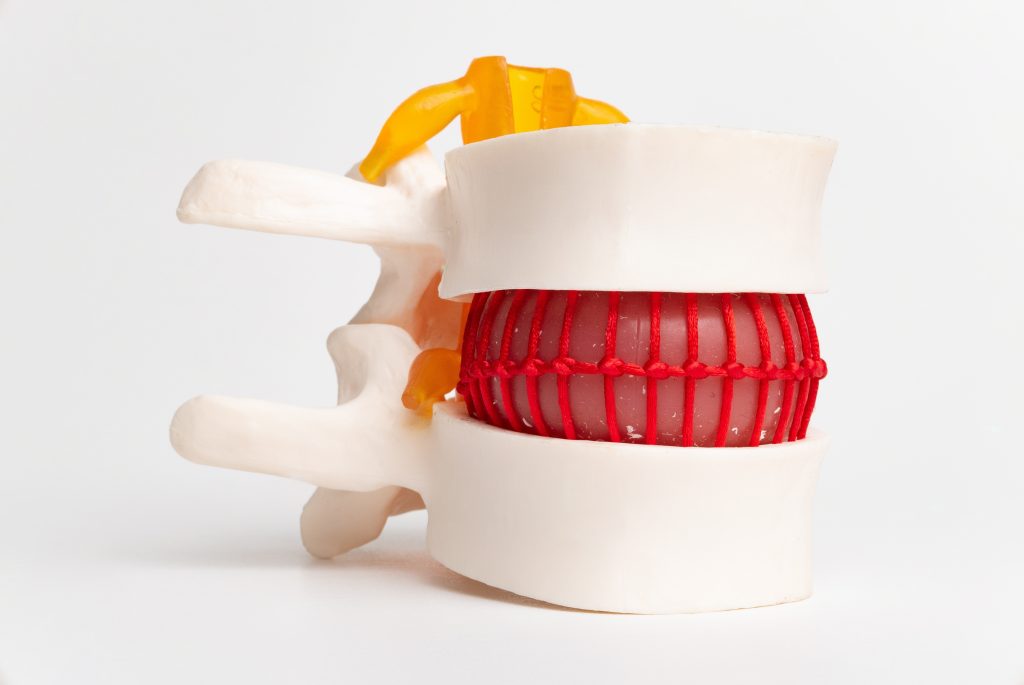
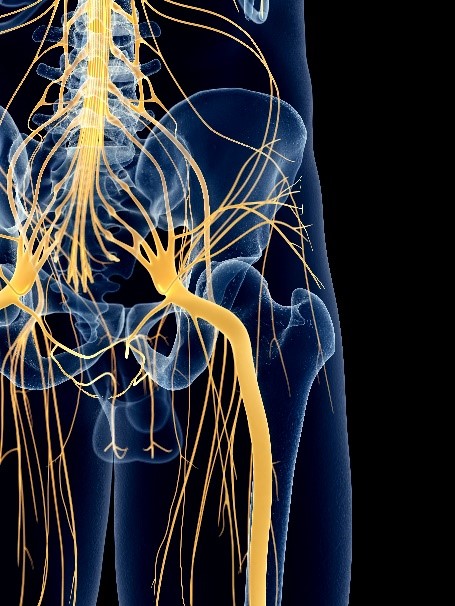
There are many nerves that are involved in forming the largest nerve in our body (the sciatic nerve) any of which can be pinched and compressed. There are overall between 15-20 common reasons for having sciatica and these make up roughly 90% of cases.
Many of these nerves run through or alongside anatomy that may cause compression or anatomy that may be busy compensating due to the effect of the trapped nerve.
When sciatica persists, the muscles and soft tissues of the lower back, pelvis, buttock and hip can become painful, tight and sensitive. Changes in movement, limping and guarding can also place additional stress on tendons and muscles around the hip.
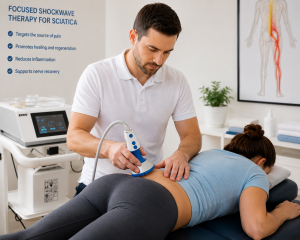
This is where Shockwave Therapy has a really useful supporting role.
Buxton and Bakewell Osteopathy Clinic is the only clinic in Derbyshire (at the time of writing in 2026) to offer both cutting-edge non-invasive Focused Shockwave and Radial Shockwave.
Focused Shockwave treatment (a recent innovation) has been a game changer in the healthcare industry allowing the treatment of intricate orthopaedic conditions. It can be directed with great precision deep inside joint space (knee or shoulder or hip joint) or with a high level of accuracy onto tendons or ligaments.
Radial Shockwave, on the other hand, treats a broader shallower area, it is very effective for less stubborn superficial tendinopathies and ligament problems . Radial Shockwave, and especially Focused Shockwave, treatments are the most advanced treatment therapies that are available on the market for musculoskeletal issues allowing us to be a go-to destination for tendinopathies.
At Buxton & Bakewell Osteopathy Clinic, Shockwave Therapy is not generally used as a treatment to directly decompress a spinal nerve or repair a prolapsed disc. Instead, it may be considered when there is a significant muscular, tendon or soft-tissue component contributing to the patient’s symptoms or slowing their recovery.
For selected patients, Shockwave Therapy can therefore form part of a wider sciatica treatment programme alongside osteopathy, rehabilitation and, where appropriate, IDD Therapy .
What Is Shockwave Therapy?
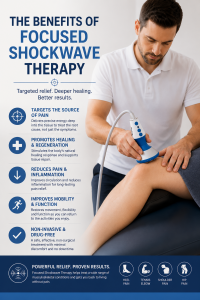
Shockwave Therapy uses externally generated acoustic pressure waves that are delivered into targeted areas of the body.
Shockwave Therapy works by increasing blood flow to the injured area, stimulating cell regeneration and healing and decreasing local factors which can cause pain.
It is particularly well established as a treatment option for a range of persistent musculoskeletal and tendon problems.
At our Buxton clinic, we use both Focused Shockwave Therapy and Radial Shockwave Therapy. These work differently and allow treatment to be adapted according to the tissue and depth being targeted.
Can Shockwave Therapy Treat Sciatica?
This requires an important distinction.
Shockwave Therapy does not directly decompress a spinal nerve.
If sciatica is being caused by a prolapsed or bulging disc compressing a nerve root, firing shockwaves into the buttock does not remove that compression.
Similarly, Shockwave Therapy should not be presented as a treatment that can reverse spinal stenosis or directly correct significant nerve compression.
Its role is different.
Shockwave Therapy may be useful when muscles, tendons or other soft tissues are contributing to the overall pain picture alongside the sciatica.
This is why obtaining an accurate diagnosis is so important.
Sciatica Can Become More Than a Nerve Problem
You can develop sciatica because of irritation of a nerve root in the lower back. However it has woder implications for you over time.

Piriformis Syndrome and Deep Buttock Pain
One situation where Shockwave Therapy may be considered is persistent muscular pain around the buttock.
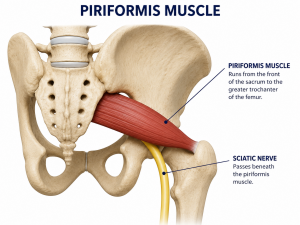
The piriformis muscle lies deep within the buttock and is closely related anatomically to the sciatic nerve.
Problems in this region can sometimes produce pain that resembles sciatica, including:
- deep buttock pain
- pain when sitting
- discomfort around the hip
- pain extending into the back of the thigh
- symptoms aggravated by particular hip movements
The term piriformis syndrome is sometimes used to describe irritation of the sciatic nerve around the piriformis region, although diagnosing the exact source of deep gluteal pain can be difficult.
This is one reason we do not automatically assume that pain travelling down the leg originates from the lumbar spine.
A proper clinical assessment is essential.
Where muscular or soft-tissue dysfunction around the buttock is considered clinically relevant, Shockwave Therapy may sometimes be incorporated into treatment.
Gluteal Tendinopathy and Sciatica
Another condition that can coexist with sciatica is gluteal tendinopathy which is often associated with hip osteoarthritis.
The gluteal tendons attach around the outside of the hip and can become painful, particularly when walking, climbing stairs, standing on one leg or lying on the affected side.
Typical symptoms include:
| Feature | Gluteal Tendon Pain |
|---|---|
| Pain location | Outside of the hip |
| Lying on affected side | Often painful |
| Walking | May aggravate symptoms |
| Stairs | Frequently uncomfortable |
| Standing on one leg | Can reproduce pain |
| Tenderness | Often present over the outside of the hip |
Someone recovering from sciatica may alter the way they walk for weeks or months. This can change the forces passing through the hip and surrounding muscles.
Consequently, some patients may have sciatica and a separate hip tendon problem at the same time.
Shockwave Therapy has a much clearer potential role in treating the tendon component than it does in treating the spinal nerve compression itself.
Shockwave Therapy and IDD Therapy
For some patients, Shockwave Therapy may complement IDD Therapy.
The two treatments have very different purposes.
| Treatment | Main Role |
|---|---|
| IDD Therapy | Targets selected spinal segments using computer-controlled decompression |
| Osteopathy | Addresses mobility, mechanical function and associated muscular tension |
| Shockwave Therapy | Targets selected painful soft tissues and tendons |
| Rehabilitation | Restores movement, strength and tolerance to activity |
For example, a patient may have MRI-confirmed lumbar disc pathology associated with nerve-root irritation.
IDD Therapy may be considered as part of the treatment strategy directed towards the spinal component.
However, if the same patient has developed significant secondary gluteal or hip soft-tissue problems, Shockwave Therapy might be considered separately for those tissues.
This is a good example of why we favour a personalised treatment plan rather than a one-treatment-fits-all approach.
Shockwave Therapy and Osteopathy
Shockwave Therapy can also be combined with osteopathic treatment.
Osteopathy allows us to assess how the lumbar spine, pelvis, hips and surrounding muscles are functioning.
Treatment may be directed towards improving movement and reducing unnecessary mechanical stress where clinically appropriate.
Shockwave Therapy can then be used more specifically when an identifiable tendon or soft-tissue problem is present.
The combination may therefore address different aspects of the patient’s presentation.
The Importance of Identifying the Root Cause
Before deciding whether Shockwave Therapy is appropriate, we first need to understand why the patient has pain travelling into the leg.
Possible causes include:
- lumbar disc herniation or bulging
- nerve-root irritation
- degenerative changes
- spinal stenosis
- spondylolisthesis
- deep gluteal pain
- hip disorders
- sacroiliac joint problems
- muscular pain
- tendon problems
- referred pain from the lower back
These conditions do not all require the same treatment.
This is why our approach to sciatica starts with a detailed clinical assessment and physical examination.
Depending upon the findings, neurological examination may include testing:
- reflexes
- muscle strength
- sensation
- nerve tension
- walking
- lower-limb function
If we believe further investigation is necessary, an MRI scan may be recommended.
When Shockwave Therapy May Be Considered
Shockwave Therapy may be worth considering when assessment suggests that a significant musculoskeletal problem is accompanying the patient’s sciatica.
Examples may include persistent:
- gluteal tendon pain
- muscular pain around the hip and buttock
- secondary soft-tissue pain
- pain associated with altered walking mechanics
- tendon problems that are preventing rehabilitation
It should therefore be viewed as a supporting treatment rather than a universal treatment for sciatica.
When Shockwave Therapy Is Not the Priority
If examination suggests significant neurological compromise, treating painful muscles with Shockwave Therapy is not the priority.
Particular attention needs to be paid to symptoms such as:
- progressive leg weakness
- significant loss of sensation
- new foot drop
- changes in bladder or bowel control
- numbness around the saddle or genital region
- rapidly worsening neurological symptoms
Some of these symptoms require urgent medical assessment.

The first question should always be:
What is causing the symptoms?
Only once that has been established should the most appropriate treatment options be considered.
A Personalised Approach to Sciatica Treatment
There is no single treatment that is appropriate for every person with sciatica.
A very recent episode associated mainly with mechanical restriction and muscular spasm may respond well to conservative management and osteopathy.
Someone with persistent disc-related sciatica may require a different approach.
Another patient may have a combination of nerve irritation, altered movement and secondary hip or gluteal tendon pain.
Their treatment programme might therefore include a combination of:
Osteopathy → IDD Therapy → Shockwave Therapy → Rehabilitation
Not everyone needs every treatment.
The purpose of assessment is to determine which elements are relevant to the individual patient.
Supporting Recovery, Not Simply Treating Pain
Successful recovery from sciatica is not simply about making pain disappear temporarily.
We also need to consider why the problem developed, how the body has adapted and what needs to happen for the patient to return confidently to normal activity.
This may involve:
- restoring movement
- gradually rebuilding strength
- improving walking tolerance
- reducing fear of movement
- improving hip and spinal function
- progressively increasing activity
- treating secondary tendon or muscular problems
- developing an individual exercise programme
Shockwave Therapy can sometimes contribute to this process by addressing a persistent musculoskeletal problem that is limiting progress.
Shockwave Therapy for Sciatica in Buxton and the Peak District
At Buxton & Bakewell Osteopathy Clinic, our approach is based around identifying the underlying cause of sciatica rather than simply treating the painful area.
For patients with persistent or complicated symptoms, we can combine different treatment approaches where clinically appropriate, including:
- Osteopathy
- IDD Therapy spinal decompression
- Focused Shockwave Therapy
- Radial Shockwave Therapy
- Exercise and rehabilitation
- Private MRI referral where required
Shockwave Therapy is not a replacement for appropriate treatment of nerve compression. However, when tendon, muscle or other soft-tissue problems are contributing to the patient’s symptoms, it can provide a useful additional treatment option.
This ability to assess the spine, nerve, hip and surrounding soft tissues together can be particularly valuable in patients whose symptoms have persisted despite previous treatment.
Frequently Asked Questions
Does Shockwave Therapy cure sciatica?
Not usually. True sciatica involves irritation or compression of a nerve, and Shockwave Therapy does not directly decompress that nerve. Its role is more commonly to address associated muscular, tendon or soft-tissue problems.
Can Shockwave Therapy help piriformis-related pain?
It may be considered in selected cases where assessment indicates that muscular or soft-tissue dysfunction around the deep gluteal region is contributing to symptoms. Accurate diagnosis is important because not all buttock and leg pain originates from the piriformis muscle.
Can Shockwave Therapy help gluteal tendinopathy?
Shockwave Therapy is used for a range of persistent tendon disorders and may form part of a treatment and rehabilitation programme for selected patients with gluteal tendinopathy.
Can Shockwave Therapy be combined with IDD Therapy?
Yes, when clinically appropriate. They perform different roles: IDD Therapy is directed towards selected spinal problems, while Shockwave Therapy may be used for associated musculoskeletal tissues.
Do all patients with sciatica need Shockwave Therapy?
No. Many do not. Treatment should be determined by the underlying diagnosis and the findings from clinical examination.
Do I need an MRI before Shockwave Therapy?
Not routinely for every musculoskeletal condition. However, where symptoms suggest significant spinal or neurological involvement, further investigation such as MRI may be appropriate before deciding on the overall treatment strategy.
The Key Message
Shockwave Therapy should not be viewed as a direct treatment for a compressed sciatic nerve.
Its value lies in recognising that persistent sciatica can become a more complicated musculoskeletal problem.
Pain, limping, guarding and altered movement can place additional strain on the muscles and tendons around the pelvis and hip. When these tissues become part of the problem, treating them may help support the wider recovery process.
At Buxton & Bakewell Osteopathy Clinic, Shockwave Therapy can therefore be used alongside osteopathy, IDD Therapy and rehabilitation when appropriate, giving us several different ways of addressing the individual components of a patient’s condition.
The most important step is always the same:
Identify the cause first — then choose the treatment that best matches it.
If you are experiencing persistent sciatica, buttock pain or pain travelling into the leg, a detailed assessment can help determine whether the problem is coming primarily from the spine, the nerve, the hip, the surrounding soft tissues — or a combination of these factors.
Buxton & Bakewell Osteopathy Clinic
Specialist assessment and treatment for sciatica, trapped nerves and persistent spinal pain across Buxton, Bakewell and the Peak District.