Assessing Nerve Function in Patients with Sciatica
Neurological testing is essential for an accurate diagnosis for your sciatica. It gives us useful and essential information.
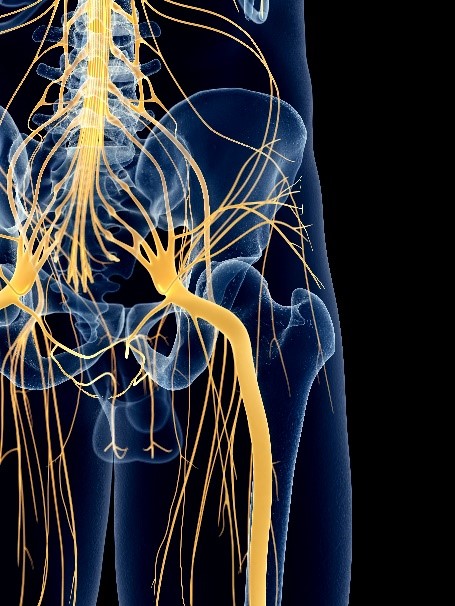
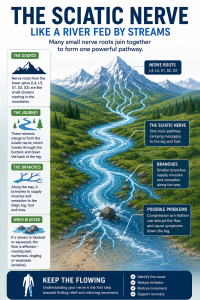
Sciatica is not a condition. The sciatic nerve is like a river made up many different streams. If any of these streams is blocked or narrowed it affects everything downstream. Neurlogical testing is a key part of finding out where this is.
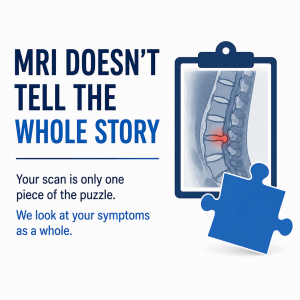
Neurological testing is a key part of a jigsaw that allows us to correlate your symptoms to the nerve that is causing your problems. It will also allow us to assess how profound your issue is and whether it merits further investigation such as an MRI scan (not always necessary).
It is worth mentioning that we can organise private MRI scans very quickly and at an affordable price.
While an MRI scan does produce clear pictures of all the spinal anatomy it can often show changes that are harmless and asymptomatic. These changes may not be related to your physical pain. The value of a neurological examination is that it does allow us to match our examination with imaging if necessary.
We begin a neurological test by checking your reflexes in your knee and ankle (elbow and wrist in the arm) we can check your nerve function. We’d also check your muscle strength as sometimes muscles can become weak because of trapped nerves. This also gives us an indication of which nerves are impinged. We also checked the sensation of your skin in your legs as well and this also allows us to form a clinical correlation.
At Buxton & Bakewell Osteopathy Clinic, neurological testing forms part of every comprehensive spinal examination. It helps us determine which nerve root may be affected, how severe the nerve irritation is, and whether further investigations such as an MRI scan or urgent medical referral are required
What Is Neurological Testing?
Neurological testing is a series of simple clinical examinations used to assess how well the nerves supplying your legs are working.
These tests examine three key areas:
- Sensation (feeling)
- Muscle strength
- Reflexes
Together, these provide valuable information about the health of your lumbar nerve roots.
Why Is Neurological Testing Important?
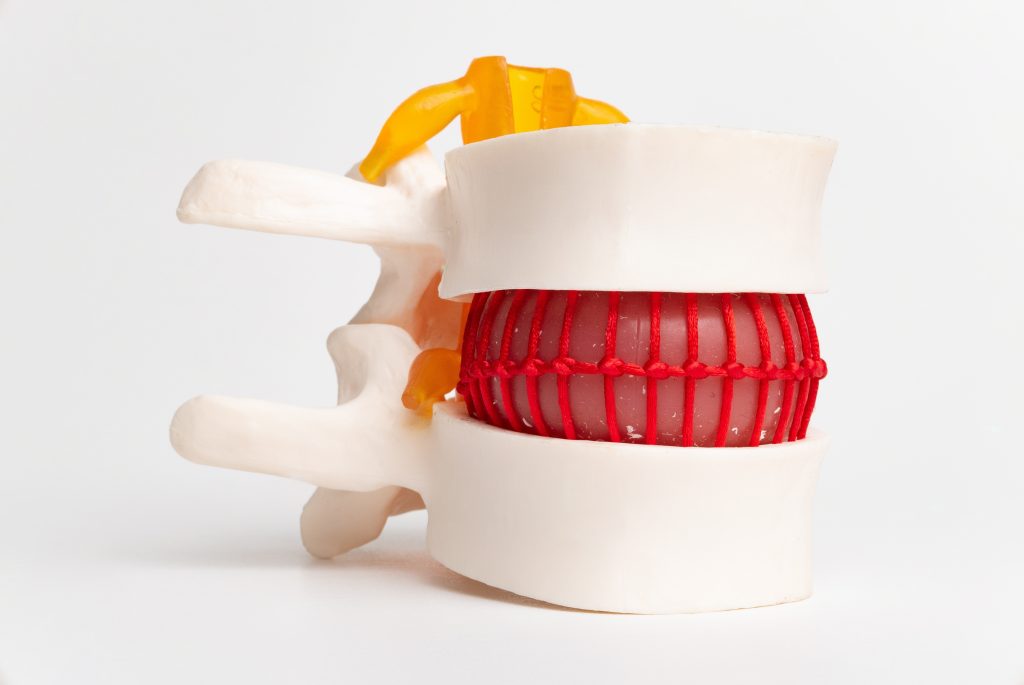
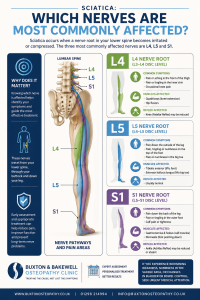
Sciatica usually develops because one of the lumbar nerve roots becomes compressed.
Common causes include:
- Herniated (slipped) disc
- Lumbar spinal stenosis
- Degenerative disc disease
- Spondylolisthesis
- Foraminal narrowing
If the nerve is only mildly irritated, pain may be the only symptom.
As compression increases, the nerve may begin to lose function, leading to:
- Numbness
- Tingling
- Weakness
- Loss of reflexes
Neurological testing helps identify these changes before they become more severe.
The Three Main Parts of Neurological Testing
1. Sensory Testing
Each spinal nerve supplies sensation to a specific area of skin called a dermatome.
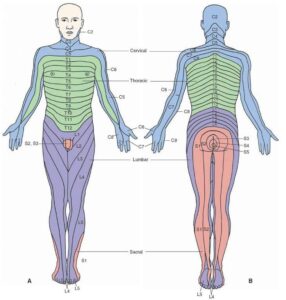
When we look at you during our exaimination we will:
- Lightly touch different areas of the leg
- Compare both legs
- Test sharp versus dull sensation
- Assess altered feeling
You may notice:
- Numbness
- Pins and needles
- Burning sensations
- Reduced feeling
- Increased sensitivity
The location of altered sensation often tells us which nerve root is involved.
For example:
- Big toe numbness often suggests the L5 nerve
- Outer foot numbness commonly suggests the S1 nerve
- Front of the shin may indicate L4 involvement
2. Muscle Strength Testing
Every lumbar nerve controls specific muscles.
We will ask you to push or pull against resistance.
Common movements tested include:
- Lifting the foot upwards
- Standing on tiptoes
- Standing on heels
- Straightening the knee
- Lifting the big toe
Weakness in these movements helps identify which nerve root may be compressed.
For example:
L4
May weaken:
- Knee extension
- Quadriceps muscle
L5
May weaken:
- Big toe lifting
- Foot dorsiflexion
- Heel walking
S1
May weaken:
- Calf muscles
- Tiptoe standing
- Ankle push-off
3. Reflex Testing
Reflexes are automatic muscle responses controlled by specific spinal nerves.
The two most commonly tested are:
Knee Reflex (Patellar Reflex)
Tests mainly:
- L3
- L4 nerve roots
Ankle Reflex (Achilles Reflex)
Tests mainly:
- S1 nerve root
Reduced or absent reflexes may indicate nerve root compression.
Which Nerves Are Usually Affected?
Most sciatica involves one of three nerve roots.
| Nerve Root | Common Symptoms | Weakness | Reflex |
|---|---|---|---|
| L4 | Front of thigh, inner shin | Knee extension | Reduced knee reflex |
| L5 | Outside leg, top of foot, big toe | Lift big toe and foot | Usually normal |
| S1 | Back of calf, outer foot | Tiptoe standing | Reduced ankle reflex |
What Does Normal Neurology Mean?
Normal neurological findings are reassuring.
It usually suggests:
- Mild nerve irritation
- No significant nerve damage
- Conservative treatment is appropriate
However, it is important to remember that many patients with painful sciatica have completely normal neurological testing, particularly during the early stages.
This is why neurological testing is always interpreted alongside your history and physical examination.
What Does Abnormal Neurology Mean?
Abnormal findings suggest the nerve is no longer simply irritated but beginning to lose function.
Possible findings include:
- Reduced sensation
- Muscle weakness
- Absent reflexes
- Foot weakness
- Difficulty walking
- Altered coordination
These findings often indicate more significant nerve compression.
What Is Foot Drop?
One of the most important neurological findings is foot drop.
This occurs when the muscles that lift the foot become weak.
Patients may notice:
- Catching the toes
- Tripping
- Difficulty climbing stairs
- Difficulty heel walking
- Slapping the foot on the floor
Foot drop usually indicates significant compression of the L5 nerve root and should be assessed urgently.
Can Neurological Testing Change Over Time?
Yes.
Symptoms may improve or worsen over days or weeks.
For this reason neurological testing is often repeated during treatment.
We may monitor:
- Muscle strength
- Reflexes
- Sensory changes
- Walking pattern
- Functional improvement
Improving neurological findings usually suggest the nerve is recovering.
Is Neurological Testing Painful?
No.
Most neurological tests are gentle and painless.
Some movements may temporarily reproduce your familiar leg pain, but the examination should not damage the nerve.
When Is Urgent Assessment Needed?
Certain neurological findings require immediate medical assessment.
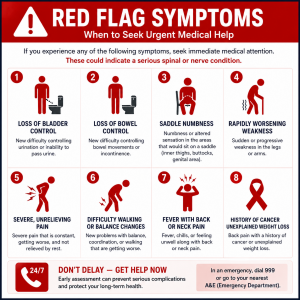
These symptoms could indicate Cauda Equina Syndrome, a medical emergency requiring urgent hospital assessment.
Does Everyone With Sciatica Need an MRI?
Not always.
Many patients recover without imaging.
However, MRI may be recommended when:
- Neurological deficits are present
- Symptoms are severe
- Weakness develops
- Symptoms fail to improve
- Surgery is being considered
- Red flag symptoms are suspected
We do offer fast and affordable MRI scans. MRI findings are always interpreted alongside the neurological examination rather than in isolation.
How Neurological Testing Helps Guide Treatment
Neurological examination provides valuable information that helps us decide your best treatment plan.
If neurological testing is normal, treatment may focus on reducing inflammation, improving movement, relieving muscle tension, and helping the irritated nerve settle.
If mild neurological changes are present, treatment may still be conservative but with closer monitoring to ensure the nerve is recovering rather than deteriorating.
More significant neurological findings, such as progressive weakness or loss of reflexes, may indicate the need for further investigation with MRI or referral to a spinal specialist.
By combining neurological testing with your medical history, physical examination, and, where appropriate, imaging results, clinicians can make a more accurate diagnosis and recommend the safest and most effective treatment.
Why Choose Buxton & Bakewell Osteopathy Clinic?
At Buxton & Bakewell Osteopathy Clinic, every patient with suspected sciatica receives a comprehensive neurological assessment as part of their examination. We carefully evaluate muscle strength, sensation, reflexes, walking pattern, and nerve tension tests to identify the affected nerve root and determine the severity of nerve involvement.
Where clinically appropriate, we can also arrange private MRI referrals to confirm the diagnosis and help guide treatment planning.
Whether your symptoms are caused by a herniated disc, spinal stenosis, degenerative disc disease, or another spinal condition, our experienced clinicians use detailed neurological testing alongside a full clinical assessment to provide an accurate diagnosis and a personalised treatment plan.
Frequently Asked Questions
Can neurological testing diagnose sciatica?
Neurological testing cannot diagnose sciatica on its own, but it provides important evidence of nerve root irritation or compression when combined with your history and physical examination.
Does everyone with sciatica have abnormal neurological findings?
No. Many people, especially in the early stages, have normal sensation, strength, and reflexes despite significant leg pain.
What is the most important sign of nerve damage?
Muscle weakness, particularly foot drop, is one of the most significant neurological findings and should always be assessed promptly.
Can neurological changes improve?
Yes. As pressure on the nerve reduces, sensation, strength, and reflexes often improve over time, although recovery can take weeks or months depending on the severity of the compression.
Will neurological testing be repeated?
Yes. Repeating the examination during your recovery helps monitor progress and identify any changes that may require further investigation or referral.