Understanding Lower Back Pain and Its Connection to Sciatica
Walking on two legs has its good points and bad points.
The key issue is that in evolutionary terms we evolved from being quadrupeds so quickly our bodies did not adapt as well as they could have done. We put most our body weight through our lower backs in the form of a constant downward pressure.
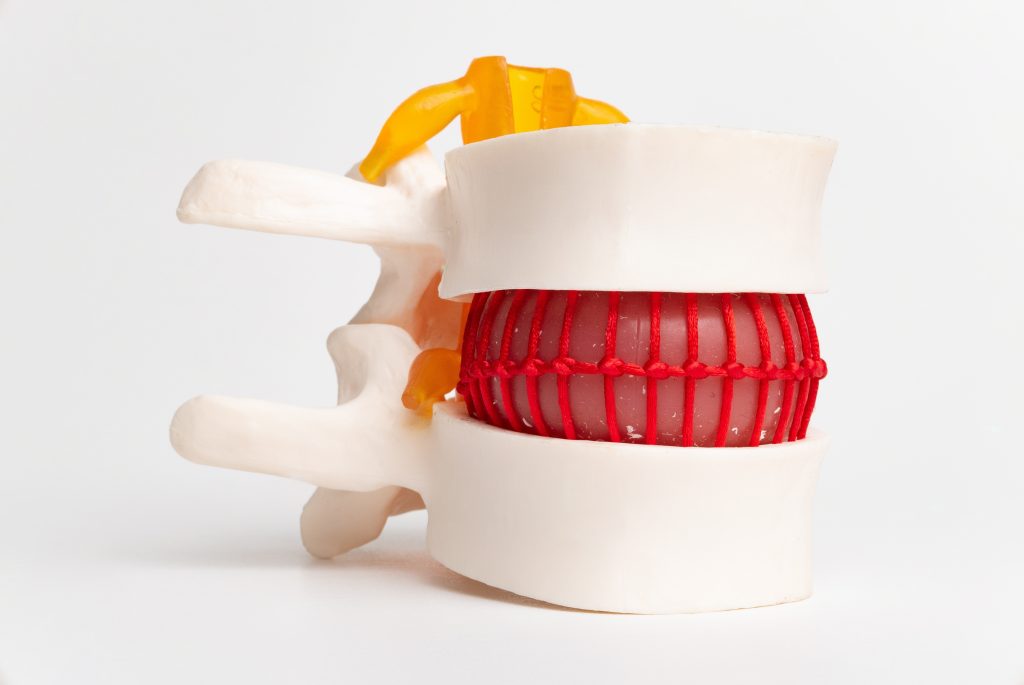
Our 23 intervertebral discs are our shock absorbers with tough round rings of fibrocartilage surrounding a fluid ball bearing in the middle.
When we exercise in whatever form that may come in, we create a downward force. The soft fluid centre of the disc acts as a dampener which helps cushion and redistribute the force across the spine while the tough outer rings of cartilage keep it stable and contained.
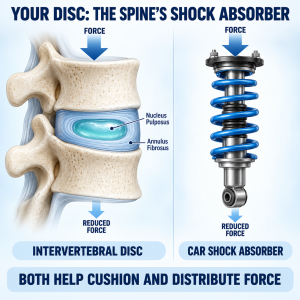
The parts of our spine where most movement comes from the most have the biggest intervertebral discs because they absorb the most force. This is the neck and lower back.
The pressure that we put on the discs during the day means that we squeeze the fluid out of discs as the day progresses. Then at nighttime the discs rehydrate like a sponge. During our lives there is a very slow nett loss as we gradually lose more fluid than we put back.
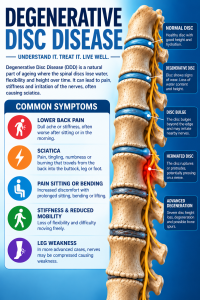
The discs narrow and shrink, loose flexibility very slowly making them less stable and prone to damage and microtears. This why sciatica is such a common conditon.
This process puts a lot of pressure on other sructures in the spine such as joints, ligaments and muslces.
Lower back pain is one of the most common reasons for disability. It affects us all. For some of us, it is a mild inconvenience that settles within a few days. For others, it becomes persistent, limiting work, sleep, hobbies and quality of life.
This guide explains the most common causes of lower back pain, how they relate to sciatica, what symptoms you should never ignore and the modern treatment options available.
What Is Lower Back Pain?
| Structure | 🔢 Number | Main Job |
|---|---|---|
| 🦴 Vertebral segments | 33 | Support & protection |
| 🔵 Spinal discs | 23 | Cushion & absorb load |
| 💪 Muscles | @120 | Movement & support |
| 🔗 Ligaments | @220 | Stability & control |
| 🔄 Facet joints | 48 | Guide spinal movement |
| ⚡ Spinal nerve pairs | 31 | Carry nerve signals |
| 🧠 Spinal cord | 1 | Connects brain & body |
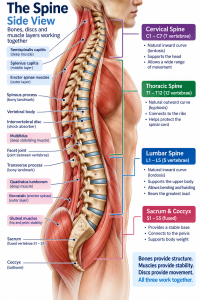
Lower back pain refers to pain arising from the lumbar spine—the lowest five vertebrae of the back (L1-L5)—or from the surrounding muscles, joints, ligaments, discs or nerves.
Although many people think of the spine as a single structure, it is actually made up of numerous tissues working together.
This explains why two people with “lower back pain” may experience completely different symptoms.
The Vertebrae
The lumbar spine contains five large bones called vertebrae.
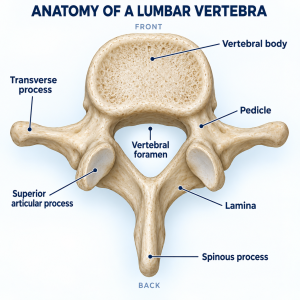
These provide:
- Stability
- Protection for the spinal cord
- Attachment points for muscles and ligaments
The vertebrae become progressively larger lower down the spine because they bear increasing body weight.
The Intervertebral Discs
Between each vertebra sits a shock absorber known as an intervertebral disc.
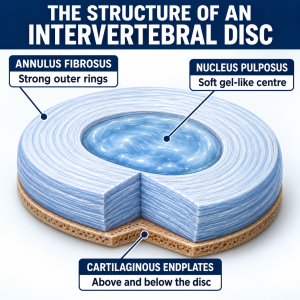 Each disc consists of:
Outer Annulus
A strong ring of collagen fibres that contains the disc.
Inner Nucleus
A softer gel-like centre designed to absorb compressive forces.
Healthy discs behave rather like hydraulic cushions.
Over time, however, they may:
- Lose water
- Develop small tears
- Bulge
- Herniate
- Degenerate
When this occurs they may irritate nearby nerves and produce sciatica.
Facet Joints
Each vertebra connects with the next via small joints called facet joint
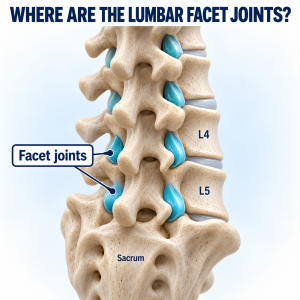
These guide movement and provide stability.
Like any other joint, they can become:
- Arthritic
- Inflamed
- Stiff
- Painful
Facet joint pain often produces aching lower back pain without symptoms travelling far down the leg.
Muscles
Numerous muscles support the spine but these are they the ones worth knowning.
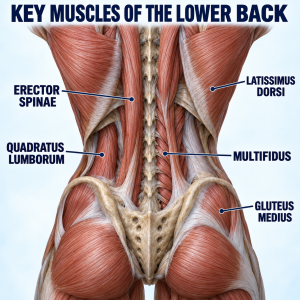
Muscles may become strained through:
- Heavy lifting
- Sport
- Gardening
- Poor posture
- Prolonged sitting
Fortunately muscular injuries usually recover more quickly than disc injuries.
Ligaments
Strong ligaments connect each vertebra.
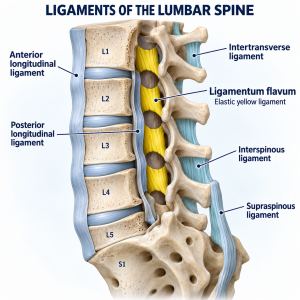
These prevent excessive movement while allowing normal flexibility.
Sudden twisting injuries or falls can overstretch these structures causing localised pain and stiffness.
Nerves
The spinal cord finishes around the level of the first lumbar vertebra
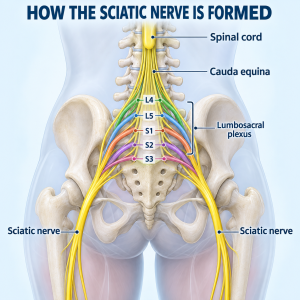
Below this point numerous nerve roots continue down through the spinal canal before exiting between the vertebrae.
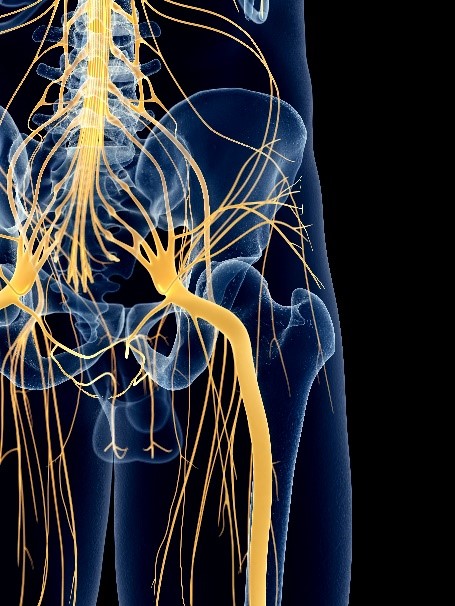
These nerve roots eventually form the sciatic nerve, the largest nerve in the body.
If one of these nerve roots becomes compressed or inflamed, pain may radiate into the leg.
This is known as sciatica.
Is Lower Back Pain the Same as Sciatica?
No.
This is a common misconception..
Many patients believe that all lower back pain is sciatica.
Most lower back pain is not sciatica
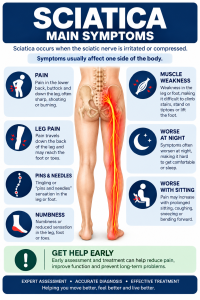
Someone with muscular lower back pain may have severe back pain but absolutely no leg symptoms.
Conversely, someone with a disc prolapse may have surprisingly little back pain but severe leg pain.
Understanding this distinction is crucial when deciding the most appropriate treatment.
Why Does Lower Back Pain Sometimes Become Sciatica?
Sciatica develops when one of the nerve roots leaving the lower spine becomes irritated.
This irritation may occur because of:
- Mechanical compression
- Chemical inflammation
- Swelling
- Reduced space around the nerve
The nerve then sends pain signals along its entire length.
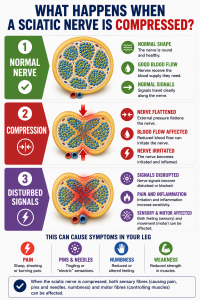
This explains why a problem in your lower back can produce symptoms in your:
- Buttock
- Hip
- Thigh
- Calf
- Ankle
- Foot
- Toes
🩺 Common Causes of Lower Back Pain
| Cause | Typical features |
|---|---|
| 💪 Muscle strain | Localised pain after lifting, twisting, sport, DIY or gardening. No neurological symptoms. |
| 🟠 Disc bulge | The disc extends outwards and may reduce the space around nearby nerves. Small bulges are often painless. |
| 🔴 Herniated disc | The soft centre pushes through the disc’s outer wall. It may cause leg pain, tingling, numbness or weakness. |
| 🕰️ Degenerative disc disease | Age-related loss of disc height and flexibility. May cause aching, morning stiffness and recurrent episodes. |
| 🦴 Facet joint syndrome | Lower-back or buttock pain, often aggravated by leaning backwards. It rarely travels below the knee. |
| 🚶 Spinal stenosis | Leg pain, tingling or heaviness when walking. Symptoms often improve with sitting or bending forwards. |
| ↪️ Spondylolisthesis | One vertebra moves forwards, potentially narrowing nerve exits and causing back pain or sciatica. |
| 🔗 Sacroiliac joint dysfunction | Pain on one side of the lower back, buttock or groin. It can sometimes resemble sciatica. |
| ⚙️ Osteoarthritis | Arthritic changes may cause stiffness, aching and reduced spinal movement. |
| ⚠️ Trauma or injury | Falls, accidents or sports injuries may affect muscles, ligaments, discs, joints or vertebrae. |
Lower back pain can have several possible causes. A clinical assessment is needed to identify the most likely source of your symptoms.
🩺 Lower Back Pain Symptoms and Possible Causes
Lower back pain presents differently from person to person.
Common symptoms include:
| Symptom | Possible cause |
|---|---|
| 📍 Localised lower back pain | Muscle strain or facet-joint irritation |
| 📦 Pain after lifting | Disc injury or muscle strain |
| 🌅 Morning stiffness | Arthritis or disc degeneration |
| 🪑 Pain when sitting | Disc irritation or injury |
| 🧍 Pain when standing | Facet joints or spinal stenosis |
| ↘️ Pain when bending | Disc irritation or injury |
| 🍑 Buttock pain | SI joint, disc or muscles |
| 🦵 Pain below the knee | Sciatica |
| ⚡ Pins and needles | Nerve irritation |
| 🧊 Numbness | Nerve compression |
| 📉 Leg weakness | Nerve compression |
| 🦶 Foot drop | Significant nerve compression—urgent assessment needed |
Symptoms can have several possible causes. A clinical assessment is needed for an accurate diagnosis.
How Does Lower Back Pain Affect Everyday Life?
Persistent lower back pain can have a profound impact on daily activities. Simple tasks such as putting on socks, lifting shopping bags, getting out of the car or sitting through a meeting may become difficult. Many people also find that disturbed sleep, reduced physical activity and the frustration of ongoing pain begin to affect their mood and confidence.
Over time, fear of movement can develop. People may avoid exercise or activities they once enjoyed because they worry about making the pain worse. Unfortunately, this can lead to muscle weakness, reduced fitness and greater stiffness, creating a cycle that becomes increasingly difficult to break.
Diagnosis, MRI Scans and Modern Treatment Options
If your lower back pain has persisted for more than a few weeks, keeps returning, or is accompanied by leg pain, numbness or weakness, it is important to determine the underlying cause rather than simply treating the symptoms.
Many patients who visit Buxton & Bakewell Osteopathy Clinic have already tried painkillers, massage, exercises or even several courses of physiotherapy without lasting improvement. Often, this is because treatment has focused on relieving pain rather than identifying the structure responsible for it.
A thorough assessment is the foundation of successful treatment.
Why Getting the Correct Diagnosis Matters
Not all lower back pain is the same.
Two patients may both complain of severe pain, yet one may have a simple muscular strain while the other has a prolapsed disc compressing the sciatic nerve.
Likewise, someone with severe MRI findings may have very little pain, while another patient with only minor changes may experience debilitating symptoms.
Treating the correct diagnosis (not simply the scan) is one of the most important principles of modern spinal care.
Your Initial Assessment
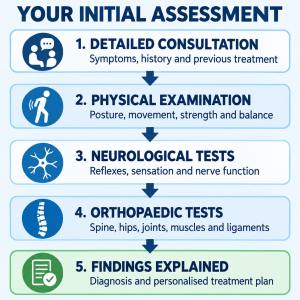
At Buxton & Bakewell Osteopathy Clinic, your assessment begins with a detailed consultation. We ask when your pain started, what aggravates or relieves it, whether it travels into your leg and whether you have experienced numbness, tingling or weakness. We also discuss previous episodes, treatments and relevant medical history.
This information helps us identify possible causes before beginning the physical examination.
Many people believe everyone with back pain should have an MRI. We do provide fast and affordable private MRI Scans
🧲 When Is an MRI Scan Helpful?
| Situation | Is MRI usually needed? |
|---|---|
| 🙂 Uncomplicated back pain | Usually not—most episodes improve without imaging |
| ⏳ Symptoms persist despite treatment | MRI may help identify the underlying cause |
| ⚡ Severe sciatica | Can show whether a nerve root is compressed |
| 🦵 Weakness develops | Important for checking significant nerve compression |
| 🏥 Surgery is being considered | Helps specialists plan appropriate treatment |
| 🔄 IDD Therapy is being planned | Helps confirm the spinal level and assess suitability |
| 🚩 Serious pathology is suspected | May help exclude infection, fracture, tumour or other disease |
🔍 What Can an MRI Show?
| Structure | What MRI can examine |
|---|---|
| 🔵 Intervertebral discs | Bulging, herniation and degeneration |
| ⚡ Nerve roots | Irritation or compression |
| 🔗 Ligaments | Thickening, injury or abnormality |
| 🦴 Facet joints | Arthritis and joint changes |
| ⭕ Spinal canal | Narrowing or spinal stenosis |
| 🩻 Bone marrow | Inflammation, fracture or unusual changes |
✅ MRI does not use X-ray radiation.
We provide fast and affordable private MRI scans when clinically appropriate.
MRI Findings Must Be Interpreted Carefully
One of the biggest misconceptions is that every MRI abnormality explains pain.
Research has shown that many people with no symptoms have:
- Disc bulges
- Disc degeneration
- Arthritis
For this reason, MRI findings should always be interpreted alongside:
- Symptoms
- Examination findings
- Medical history
Treating MRI pictures instead of patients often leads to poor outcomes.
🩺 Conservative Treatments for Lower Back Pain
| Treatment | How it may help |
|---|---|
| 🙌 Osteopathy | Uses mobilisation, soft-tissue techniques, stretching and exercise to improve movement and reduce pain. |
| 🏋️ Exercise rehabilitation | Restores movement, flexibility and strength while improving confidence and reducing recurrence. |
| 🚶 Remaining active | Gentle activity is usually more helpful than prolonged bed rest. Activity should increase gradually as symptoms allow. |
| 🔄 IDD Therapy® | Targeted spinal decompression for suitable disc problems, persistent sciatica and nerve compression. |
| 🎯 Focused Shockwave Therapy | May help selected cases involving persistent muscular pain, trigger points or tendon attachments. |
| 🌊 Radial Shockwave Therapy | May help muscle tightness, fascial restriction and chronic soft-tissue pain. |
| 🔴 Low Level Laser Therapy | Uses light energy to support pain reduction, inflammation control and tissue repair. |
🔄 When Might IDD Therapy Be Considered?
| Condition | Relevant treatment option |
|---|---|
| ⚡ Chronic sciatica | Buxton Sciatica Program |
| 🦵 Trapped nerve in the lower back | Lower-Back Trapped Nerve Program |
| 🧠 Trapped nerve in the neck | Neck Trapped Nerve Program |
| 🔵 Herniated or bulging disc | Targeted IDD Therapy following assessment |
| 🕰️ Degenerative disc disease | Spinal Stenosis and Degenerative Disc Program |
| 🚶 Spinal stenosis | Assessment is required to confirm suitability |
Treatment should always be selected following an individual assessment and tailored to the diagnosis, symptoms and recovery goals.
Lifestyle Advice
Recovery often depends on small changes made every day.
Patients may benefit from advice regarding:
- Sitting posture
- Home working
- Lifting technique
- Sleep position
- Walking
- Exercise progression
- Weight management
These simple measures can reduce strain on the spine and help prevent recurrence.
When Should You Seek Urgent Medical Attention?
Most episodes of lower back pain are not medical emergencies.
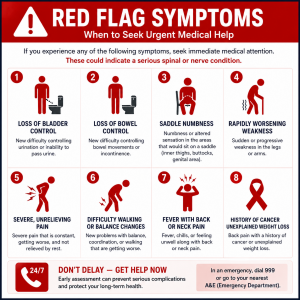
These symptoms require immediate medical assessment and should never be ignored.
Looking Ahead
Accurate diagnosis is the cornerstone of successful treatment. By combining a detailed history, clinical examination and imaging where appropriate, it is usually possible to identify the underlying cause of lower back pain and tailor treatment accordingly. Whether the problem arises from a muscle strain, a prolapsed disc or nerve compression causing sciatica, an evidence-informed plan offers the best chance of recovery.
Recovery, Prevention, When to Seek Urgent Help and Why Choose Buxton & Bakewell Osteopathy Clinic
Recovering from lower back pain is rarely about simply waiting for symptoms to disappear. Successful recovery involves understanding the cause of the problem, following an appropriate treatment plan and gradually restoring confidence in movement. Although many people improve within a few weeks, others experience recurring episodes because the underlying cause has never been properly addressed.
At Buxton & Bakewell Osteopathy Clinic, we believe recovery should focus on restoring function, improving resilience and helping patients return to the activities they enjoy, whether that is walking in the Peak District, gardening, playing golf or simply sitting comfortably at work.
Staying Active During Recovery
Years ago, prolonged bed rest was commonly recommended for lower back pain. Research now shows that, in most cases, remaining gently active leads to better outcomes.
This does not mean exercising through severe pain, but rather maintaining sensible movement wherever possible.
Activities that often help include:
- Gentle walking
- Light stretching
- Swimming
- Controlled mobility exercises
- Individual rehabilitation programmes
Movement improves circulation, reduces stiffness and helps maintain muscle strength, all of which contribute to recovery.
Returning to Work
Many patients worry that returning to work too soon will make their back worse. In reality, returning to normal activities in a controlled way is often beneficial.
Depending on your occupation, you may need temporary adjustments such as:
- More frequent breaks
- Altered lifting techniques
- A phased return
- Improved workstation ergonomics
- Reduced heavy manual tasks
The aim is to keep you active while protecting healing tissues.
Returning to Exercise and Sport
One of the most common questions we hear is, “When can I get back to the gym, running or golf?”
The answer depends on:
- Your diagnosis
- Pain levels
- Strength
- Movement quality
- Confidence
Returning too quickly may increase the risk of recurrence, while waiting too long can lead to deconditioning.
A gradual progression is usually safest.
Preventing Future Episodes
Lower back pain often returns because the original contributing factors remain unchanged.
Simple preventative measures include:
- Maintaining a healthy weight
- Keeping physically active
- Strengthening your core muscles
- Improving hip flexibility
- Avoiding prolonged sitting
- Using good lifting technique
- Taking regular movement breaks
- Managing stress
- Getting adequate sleep
Small lifestyle changes can significantly reduce the likelihood of future episodes.
Looking After Your Spine
Your spine is remarkably strong and designed for movement.
Many people become fearful after experiencing lower back pain and begin avoiding bending, lifting or exercise altogether.
In most cases, this is neither necessary nor helpful.
Instead, the goal should be to gradually rebuild confidence while improving strength and movement quality.
Why Choose Buxton & Bakewell Osteopathy Clinic?
For over 20 years, Buxton & Bakewell Osteopathy Clinic has helped patients across Buxton, Bakewell and the Peak District overcome lower back pain, sciatica and trapped nerves.
Our approach combines detailed assessment with evidence-informed treatment and modern technology to provide personalised care.
Our specialist services include:
- Expert osteopathic assessment and treatment
- IDD Therapy® Spinal Decompression
- Focused Shockwave Therapy
- Radial Shockwave Therapy
- Low Level Laser Therapy
- Individual rehabilitation programmes
- Exercise prescription
- Private MRI referral where appropriate
Rather than treating symptoms alone, we aim to identify the underlying cause of your pain and develop a treatment plan tailored to your goals.
Whether your symptoms are due to a muscle strain, a prolapsed disc, spinal stenosis or chronic sciatica, our focus is helping you move with confidence again.
Frequently Asked Questions
Can lower back pain cause sciatica?
Yes. If a lumbar nerve root becomes compressed or irritated, pain may travel from the lower back into the buttock, leg and foot.
Do all disc bulges cause pain?
No. Many people have disc bulges without symptoms. Treatment is based on your symptoms and examination rather than MRI findings alone.
Is walking good for lower back pain?
For most people, gentle walking is beneficial as it encourages movement, improves circulation and helps reduce stiffness.
Should I stay in bed?
Extended bed rest is rarely recommended. Remaining gently active usually leads to a quicker recovery.
When do I need an MRI scan?
MRI is generally recommended when symptoms persist, neurological signs develop or further investigation is needed.
Can osteopathy help lower back pain?
Many patients benefit from osteopathic treatment as part of a comprehensive rehabilitation programme.
What is IDD Therapy®?
IDD Therapy® is a computer-controlled spinal decompression treatment used for selected patients with disc-related lower back pain and sciatica.
Can sciatica improve without surgery?
Yes. Most cases improve with appropriate conservative management.
How can I reduce the risk of lower back pain returning?
Regular exercise, good posture, maintaining strength and addressing the underlying cause all reduce recurrence.
When should I seek urgent help?
Immediately if you develop bladder or bowel problems, saddle numbness or rapidly worsening leg weakness.
Conclusion
Lower back pain is one of the most common musculoskeletal conditions, but it should never be dismissed as something you simply have to live with. Whether the cause is a muscular strain, a prolapsed disc, degenerative changes or nerve compression, identifying the underlying problem is the first step towards effective treatment.
At Buxton & Bakewell Osteopathy Clinic, we combine over 20 years of clinical experience with advanced technologies including IDD Therapy®, Focused Shockwave Therapy, Radial Shockwave Therapy and Low Level Laser Therapy to provide personalised, evidence-informed care for patients across Buxton, Bakewell and the Peak District.
If lower back pain is limiting your work, sleep, hobbies or quality of life, early assessment can make a significant difference. Our aim is not simply to reduce pain but to help you regain confidence, restore movement and return to the activities that matter most.