Identifying the Root Cause of Lower Back Pain
You bend to put on your shoes and feel a sharp pain across your waist. A few days later, the ache spreads into your buttock.
You might wonder if a disc has slipped, a nerve is trapped, or a muscle is still recovering. Those are reasonable questions.
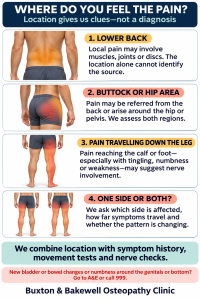
The first clues often come from what you were doing when the pain began, where you feel it now, and which movements bring it on or ease it.
At Buxton & Bakewell Osteopathy Clinic, we use your history and physical examination to work out what is most likely contributing to your lower back pain.
Sometimes the findings point towards a particular condition, such as a spinal nerve root problem. In other cases, several factors explain the symptoms better than a single injured structure. Either way, the assessment should give you a clearer idea of what’s happening and what to do next.
1. What do we mean by the root cause?
Many episodes of lower back pain are described as non-specific.
This means the assessment has not identified a single condition or structure that accounts for the pain.
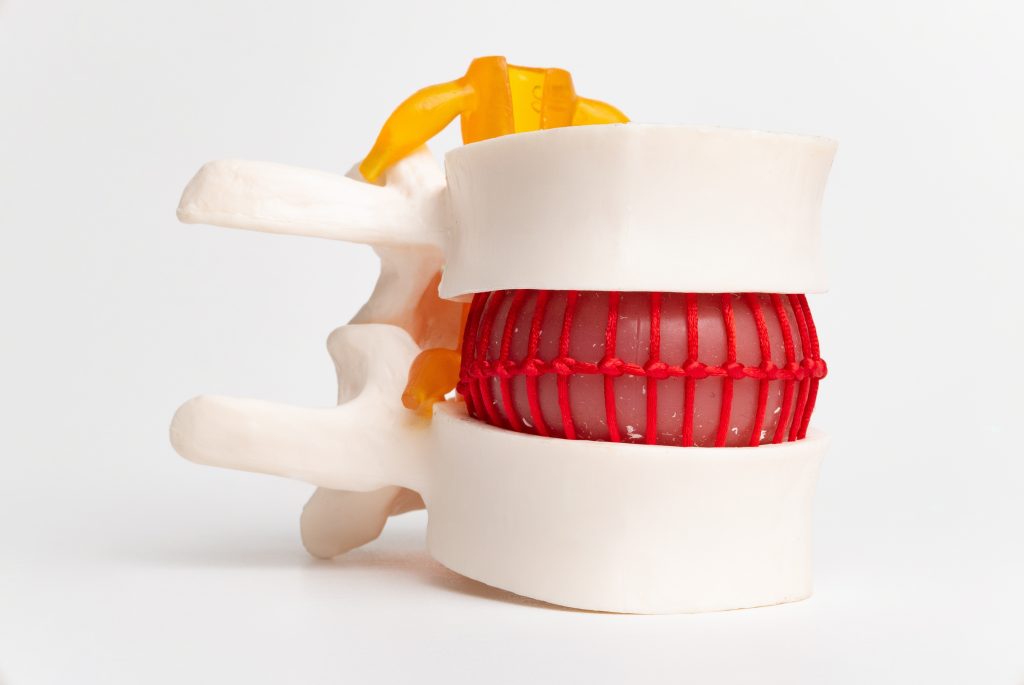
The spine is complex and there is a lot to go wrong in an effort to keep us upright.
| Structure | 🔢 Number | Main Job |
|---|---|---|
| 🦴 Vertebral segments | 33 | Support & protection |
| 🔵 Spinal discs | 23 | Cushion & absorb load |
| 💪 Muscles | @120 | Movement & support |
| 🔗 Ligaments | @220 | Stability & control |
| 🔄 Facet joints | 48 | Guide spinal movement |
| ⚡ Spinal nerve pairs | 31 | Carry nerve signals |
| 🧠 Spinal cord | 1 | Connects brain & body |
You can still have a clear pattern. You might be comfortable walking and find that repeated bending or long periods of sitting bring on an ache.
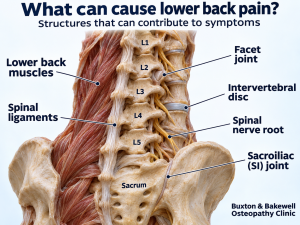
That pattern gives us somewhere to start, even when we can’t say which tissue is responsible.
We also consider what started the pain .
A weekend of lifting and carrying may have triggered a flare-up.
A fortnight later, you might be sitting for longer because you’re wary of moving, sleeping poorly because turning in bed hurts, or cutting walks short because you’re unsure what’s safe.
Those details help us choose an approach that fits your current symptoms and what you want to get back to.
2. Your history gives us the first clues
We’ll ask how your symptoms began.
Did you notice them immediately after lifting, twisting or falling?
Did the stiffness build gradually over several weeks?
Did the pain start in your lower back and later move into your leg, or was the leg pain there from the beginning?
It helps to describe your symptoms in your own words. Point to where the pain starts and trace how far it travels. Tell us if the leg feels heavy, if your toes go numb, or if your foot has started catching on the ground. We’ll also ask about previous episodes, relevant medical conditions, recent injuries, and what you’ve already tried.
| What we ask | Why it matters |
|---|---|
| Where does the pain travel? | Pain around the buttock, groin, thigh or foot can point us towards different structures to examine. |
| Which activities bring it on? | Sitting, lifting, standing and walking can reveal different patterns. |
| What eases it? | We may ask whether simply stopping helps, or whether you need to sit down or change position. |
| Has anything changed? | New numbness, weakness or difficulty walking may change which checks you need and how quickly. |
| What do you want to get back to? | Your goals help us choose what to assess and measure at follow-up. |
Real examples are useful. If your back feels fine on the flat around the Pavilion Gardens in Buxton but your legs become heavy when you stand in a queue, tell us.
If it’s putting on your socks after a walk near Bakewell that bothers you most, that matters too. The details help us choose which movements to examine.
3. What we look for during your physical examination
We begin with movements relevant to you.
We may watch how you walk, stand up from a chair, bend or turn.
We note where symptoms appear, whether the movement feels restricted, and whether it reproduces the same pain you experience in daily life.
A movement can feel tight during an examination and still have little to do with the problem that brought you in.
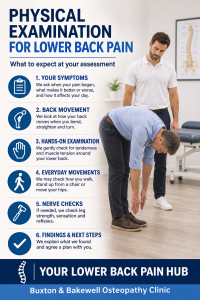
We may also compare how your hips move. For instance, if turning your hip reproduces your familiar groin or thigh pain, we’ll consider whether the hip joint is contributing.
If you mainly feel pain on the outside of your hip when lying on that side, we may examine the tissues around the outer hip. Lower back and hip problems can overlap, so checking both may explain why symptoms seem to move between areas. Clinical review of conditions that can mimic sciatica
An individual test can suggest a possibility.
We look for several findings that fit together before drawing a conclusion.
If your history points towards one explanation and the examination points towards another, we may review how symptoms change over time or discuss whether you need another opinion.
4. How we check whether a nerve root is involved
Sciatica often causes pain that travels from the buttock down the leg, sometimes as far as the foot.
It can feel sharp, burning or electric.
You may also notice pins and needles, numbness or weakness. Pain in the buttock or leg can also come from the hip or nearby muscles and tendons, so the location is one part of the assessment.
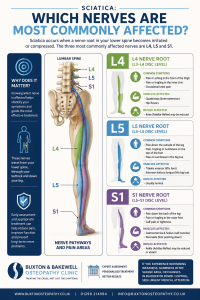
When your symptoms suggest possible nerve involvement, we may check and perform some neurological tests:
- Strength. We might ask you to straighten your knee, lift your foot or big toe, or rise onto your tiptoes. We compare how each side performs.
- Sensation. We check whether the same touch feels different on one leg or foot.
- Reflexes. We use a reflex hammer to compare the responses at the knee and ankle.
- Response to movement. We may gently raise your leg while you lie down and ask whether that brings on your familiar leg symptoms.
A pattern of reduced feeling, weakness or changed reflexes can help us identify which nerve root might be involved. You can also have painful sciatica with normal strength, sensation and reflexes. We interpret the results alongside your symptoms and how they are changing. Clinical review of the neurological examination
5. Why two people with leg pain may need different assessments

Pain into the foot after lifting
Imagine you’ve lifted a heavy bag of compost and developed back pain that later travels down one leg. Sitting during the drive home makes it worse and you notice tingling near your big toe.
We would check whether the pain pattern and examination suggest irritation of a spinal nerve root. We might ask whether the foot feels weaker when you climb stairs and compare how well you can lift each big toe. The combination of findings helps guide the next step.
Heavy legs when standing or walking
Another person may describe aching or heavy legs after standing for a while, with relief when they sit or lean forward.
This pattern can occur with lumbar spinal stenosis, where the spaces around the spinal nerves narrow.
Reduced circulation can also cause leg symptoms during walking. We may ask what happens when you stop and remain standing, how quickly the symptoms settle, and whether the same symptoms occur with other activities. If circulation is a concern, we’ll advise you to seek medical assessment.
Groin pain and difficulty putting on shoes
Someone else may report groin pain when getting out of the car, lifting their leg to put on socks, or walking uphill.
They might also feel an ache towards the knee. This could be hip osteoarthritis.
That pattern gives us a reason to check the hip as well as the lower back. If moving the hip brings on their familiar pain, we can use that finding alongside their history to decide whether the hip needs further assessment.
6. When does an MRI help identify the cause?
An MRI can show structures inside the lower back, including discs, the spinal canal and nearby nerve roots.
It can help answer a specific question, such as whether a nerve root is compressed at a level that fits your examination.
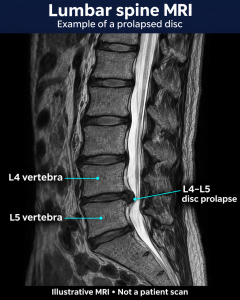
Disc bulges and other age-related changes also appear on scans of people who have no back pain. If a report mentions a disc bulge, we consider where it is, which side it affects, and whether it fits your symptoms and examination. A finding on the left, for example, may need a closer look if all your symptoms are on the right.
If you’ve already had an MRI, bring the written report if you have it. Mention any symptoms that started after the scan, or any that have changed sides. That helps us put the findings in context.
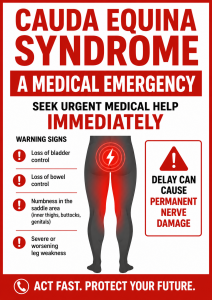
7. When to seek urgent medical help
Go to A&E or call 999 if you have back pain or sciatica with new numbness around the genitals or bottom, new difficulty passing urine, or new loss of bladder or bowel control. This is quite rare but it is important to know
8. How the assessment guides your next steps
At the end of the appointment, we’ll explain what best fits your symptoms, which findings led us there and whether anything needs further assessment.
If your symptoms are suitable for conservative care, we can agree a starting point based on what you can manage and what you need to do in everyday life. That may involve adjusting a few activities that repeatedly flare the pain, finding comfortable ways to stay active, or building up exercise gradually.
Progress is often easiest to judge against a task you care about.
Perhaps you want to walk to the shops without stopping, get through a shift more comfortably, or get back to gardening.
We might ask how long you can stand before symptoms start, how far the leg pain travels, or how easily you can get in and out of the car. At a follow-up, those details help us decide whether to progress your plan, adapt it or revisit the initial explanation.
If your recovery is slower than expected, we’ll ask what has changed since the first visit.
Has the pain moved further down the leg? Are you walking further even though the ache is still there? Has a new symptom appeared? We may repeat part of the examination to see whether strength, movement or sensation has changed. Those comparisons can help us decide whether your plan still fits or whether another assessment would be helpful.
Frequently asked questions
Can you identify the cause at the first appointment?
Often we can identify the most likely explanation and agree on a next step. Sometimes two possible causes overlap, or the symptoms are still changing. In those cases, a review can show whether the original explanation still fits, particularly if new symptoms develop. NICE guidance on reviewing new or changed symptoms
Can the place where it hurts tell you what is wrong?
It gives us a starting point. Pain felt in the thigh, for example, can come from several places, including the hip or lower back. We look at where it travels, what brings it on and what we find during examination. Clinical review of conditions that can mimic sciatica
Can more than one thing be causing my pain?
Yes. Someone with back stiffness may also have a hip problem that makes walking or getting dressed difficult. We try to work out which finding explains each symptom, so your care reflects what’s limiting you most. Clinical review of overlapping causes of leg pain
Book a lower back pain assessment in Buxton or Bakewell
If lower back pain or leg symptoms are affecting how you work, sleep or walk, we can help you understand what may be contributing and discuss the next step. Bring a short description of when the symptoms started, where you feel them and one or two activities you’d like to get back to.
Book an assessment at Buxton & Bakewell Osteopathy Clinic