Your Personalised Diagnosis for Lower Back Pain
What your symptoms, physical examination and, when needed, scans can tell us about your back pain.
Two people can point to the same spot in their lower back and need very different next steps.
One might feel stiff after a weekend in the garden but loosen up as they move. The other might notice tingling down one leg, or find that they have to sit down after a short walk.

Where it hurts is a useful starting point. What happens when you move, how the symptoms began and whether you have noticed changes in your leg all help us decide what to check.
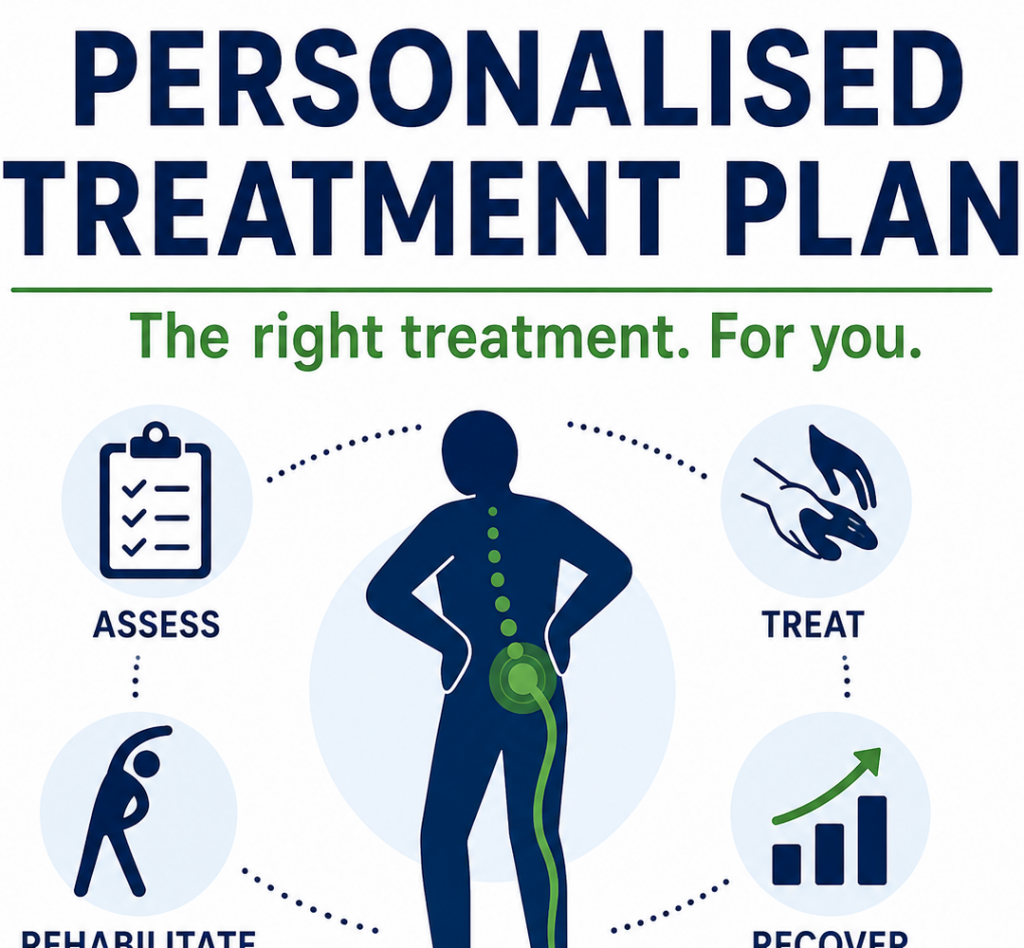
At Buxton & Bakewell Osteopathy Clinic, your personalised diagnosis brings together your account of the problem and the findings from your examination.
We explain what seems most likely, what is still uncertain and what we recommend doing next. Sometimes we can identify a specific condition.
Often the most accurate explanation is that you have lower back pain without a clear single source. Either way, you should leave with a practical understanding of your symptoms and a plan for what to do if they change.
Your story guides the examination
We start by asking when your symptoms began and what was happening around that time.
Did the pain come on after a fall, after lifting something or gradually over several weeks?
Does it stay across your lower back, spread into the buttock or travel down to the calf or foot?
What happens when you sit, walk, cough or turn in bed? Have you noticed tingling, numbness or weakness?
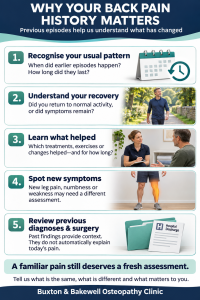
We also ask about previous episodes, other health conditions and any recent changes in your general health.
The details of your day can be as helpful as the location of the pain.
Saying “walking hurts” gives us a starting point.
Saying “after ten minutes on flat ground, both calves feel heavy and I need to sit before I can carry on” gives us a clearer pattern to investigate.
If your main difficulty is getting out of the car after a commute or bending to put on your socks, that tells us which movements are worth looking at and gives us something concrete to review later.
It’s fine if you can’t remember the precise day it started or describe the pain in medical terms.
Tell us what you notice in your own words. If symptoms fluctuate, it can help to describe both a good day and a bad one. We’ll also ask what you want to get back to, whether that’s finishing a shift comfortably, gardening again or walking with friends in the Peak District.
What the physical examination adds
With your consent, we choose movements and tests that are relevant to your symptoms. We might ask you to bend, straighten or turn, and note where you feel symptoms, how easily you move and whether a movement reproduces the problem you recognise. We may watch you walk, stand from a chair or move your hips. You can tell us if something feels uncomfortable or ask to pause at any time.
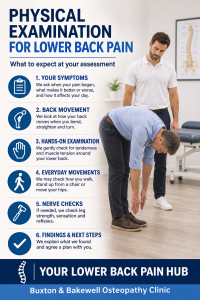
A gentle hands-on examination can help us locate tenderness and see where the muscles tighten as you move. Tenderness is one piece of the picture. For example, there may be sore muscles beside the spine even when the main problem you describe is pain running down the leg. We consider both findings before deciding what best explains your symptoms.
What your diagnosis might be
Non-specific lower back pain
This is the term clinicians use when the assessment points to lower back pain without identifying one specific condition or structure as its source.
Lower Back Pain may cause stiffness, local tenderness or pain when bending and lifting.
Several tissues can produce similar symptoms, so trying to name one muscle, joint or disc can give a misleading impression of certainty.
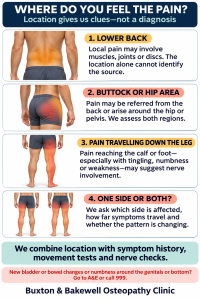
A diagnosis of non-specific lower back pain can still be quite personal.
For example, we might explain that bending repeatedly brings on your familiar pain, that your leg tests are reassuring and that getting up from a low chair is your biggest day-to-day difficulty. Those findings help us choose a starting point and give us a way of judging progress, even when we can’t identify the exact tissue responsible.
Sciatica or a possible nerve root problem
If pain travels down your leg, especially with pins and needles, altered sensation or weakness, we consider whether a nerve root in your lower back may be irritated or compressed.
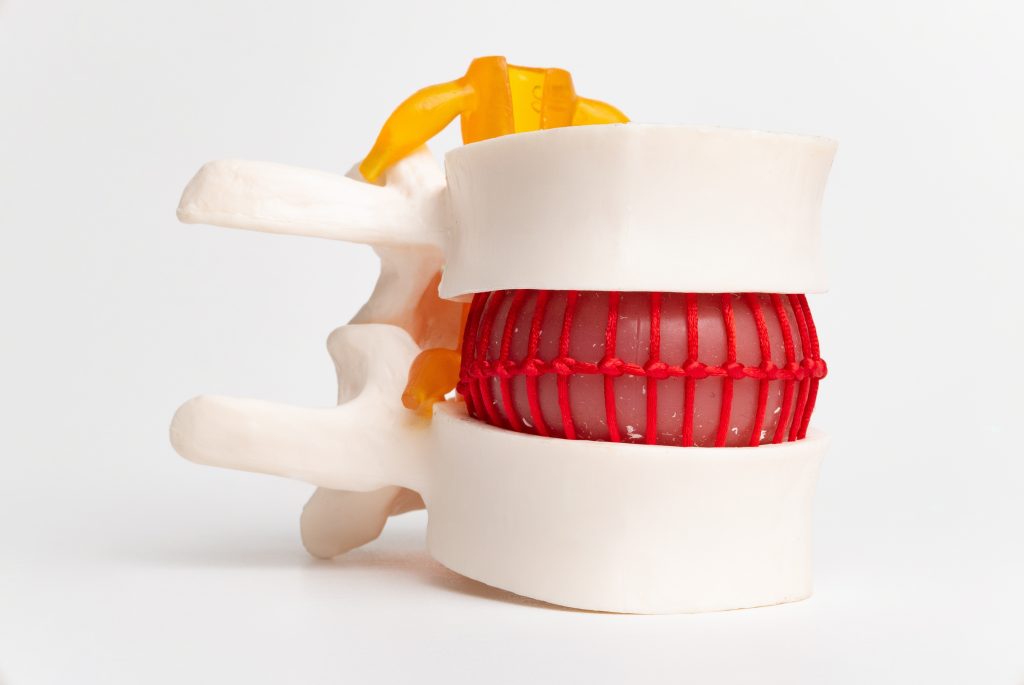
A prolapsed disc is one possible reason. The area where you feel symptoms, the movements that bring them on and the results of nerve testing all help us decide how likely nerve involvement is.
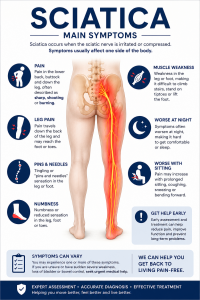
Leg pain can also come from other areas. For instance, if the main problem is pain around the hip when getting into the car or putting on a shoe, we may need to examine the hip as well as the back.
We can explain which findings point towards the back, the hip or another source, and whether it makes sense to review or investigate further. Explore our Sciatica Hub
Possible lumbar spinal stenosis
Lumbar spinal stenosis describes narrowing of the spaces that contain nerves in the lower back. One possible pattern is leg pain, heaviness or tingling that comes on with standing or walking and eases when you sit or lean forward.
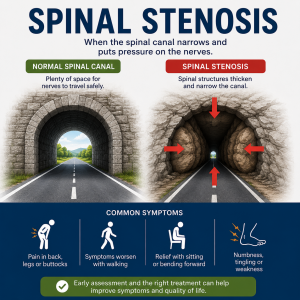
We ask how far you can walk, how quickly the symptoms settle and what you have to do to get relief. Other problems can affect walking in similar ways, so we use the pattern to guide the assessment and consider whether further investigation is needed.
When would an MRI help?
An MRI can show discs, nerves and other structures in the lower back in detail. Most people do not need an MRI. However we do have access to fast and affordable access to private MRI scans,
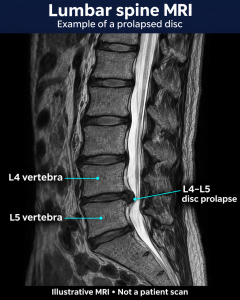
If an MRI report mentions a disc prolapse, we look at whether the level and side of the finding fit your symptoms and examination.
An MRI finding that matches the pattern can help explain what you’re feeling. A finding elsewhere may be incidental. If you already have a report, bring it to your appointment so we can discuss which findings may matter for you.
How the diagnosis shapes your next steps
Imagine three people coming to the clinic with lower back pain. These examples show how we use the assessment to decide what each person might need.
A gardener whose back hurts after clearing the borders. The pain stays around the belt line, bending brings it on and there are no leg symptoms.
If the assessment supports non-specific lower back pain, we might discuss taking shorter turns in the garden, varying the tasks and gradually building tolerance for bending and lifting.
A useful measure of progress could be how long they can work before needing a break.
An office worker with pain travelling into the calf. Sitting for long spells brings on familiar leg pain and tingling. We look at how the symptoms behave and check leg strength, sensation and reflexes.
If the findings suggest nerve root irritation, we may choose a closer follow-up to monitor the leg symptoms. New or worsening weakness would change how quickly they need further assessment.
A walker who has started cutting outings short. After a predictable stretch of walking, their legs feel heavy and they need to sit down.
We explore what happens during standing and walking, whether leaning forward helps and how quickly the legs recover.
The findings help determine whether the spine may be involved and whether a referral is appropriate. Their walking distance and the number of stops give us a way to track what matters to them.
Why we sometimes review the diagnosis
Your clinician may describe the initial explanation as a working diagnosis. T
his is the best explanation based on the information available at the time.
At a review, we can compare what you were able to do at the first appointment with what you can do now.
You might still have some pain by the end of the day but be able to sit for longer, walk further or sleep with fewer interruptions. Those functional changes can help us decide whether to continue or adjust the plan.
If the symptoms change location, weakness develops or your progress is different from what we expected, we revisit the assessment. That may mean repeating part of the examination, considering another cause or discussing a referral. You can ask what improvement would look like for you, when we’ll review it and which changes should prompt you to seek advice sooner. NICE guidance on reviewing new or changed symptoms
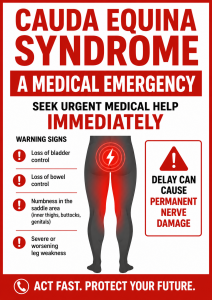
When to get urgent help
This is uncommon butf you have back pain with new difficulty passing urine, loss of bladder or bowel control, numbness around your genitals or anus, pain, tingling, weakness or numbness in both legs, or a new change in sexual sensation or function.
What to bring to your appointment
If you’re booking a lower back pain assessment in Buxton or Bakewell, it can help to bring a brief note of when the pain began, where it travels and what makes it better or worse. Bring any relevant scan reports or letters if you have them, and mention anything that has changed since you booked. Think of one everyday activity you’d most like to get back to. That goal can help us agree which changes to look for first.
By the end of your appointment, you should have answers to three questions. What is the most likely explanation for my symptoms? Do I need any further tests or a referral? What should I do next, and when should we review it? A personalised diagnosis gives you a way to understand what you’re feeling and decide what to do about it, based on how your back pain affects your life.