Osteopathy for Lower Back Pain in Buxton and the Peak District
Osteopathy is a gentle manual therapy that has been around a long time.
At Buxton Osteopathy Clinic we have all been qualified for at least 20 years and we come with a lot of experience.
As osteopaths we specialise in treating soft tissue and joint injuries and we are very used to seeing people with lower back pain.
Walking on two legs has its good points and bad points. It does provide key benefits as it requires less energy than walking on all fours! It certainly frees up our arms. We can carry our shopping to the car at Aldi!
The key issue is that in evolutionary terms we evolved from being quadrupeds so quickly our bodies did not adapt as well as they could have done. We put most our body weight through our lower backs in the form of a constant downward pressure. That is just the tip of the iceberg.
The spine is complex and there is a lot to go wrong in an effort to keep us upright.
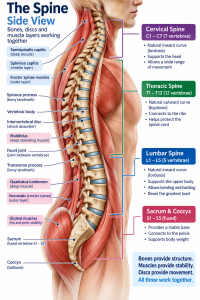
When things go wrong with this complex network of structures the effects on us are rather humbling. Getting out of bed, putting on your socks, sitting through a working day or enjoying a walk around the Peak District may become become a mission.
At Buxton & Bakewell Osteopathy Clinic, we specialise in diagnosing, treating, and preventing lower back pain using a combination of expert hands-on care and cutting-edge technology. Our clinics are recognised throughout Derbyshire and the Peak District for providing effective, evidence-based solutions that go far beyond quick fixes.•
Understanding lower back pain
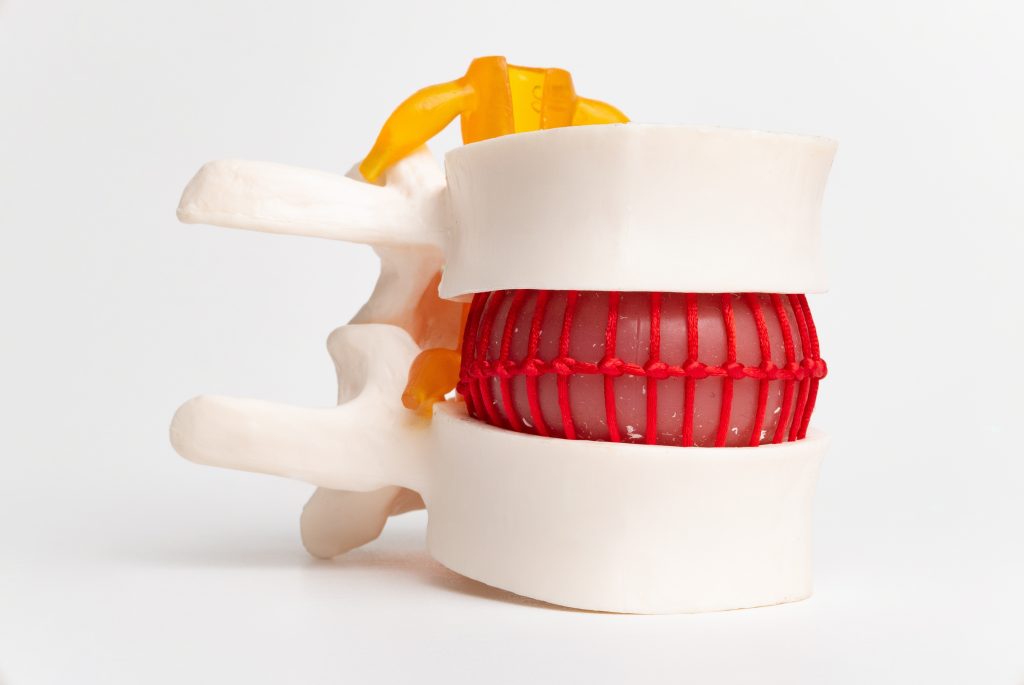
Your lower back contains vertebrae, intervertebral discs, joints, ligaments, muscles and nerves. These structures work together whenever you bend, lift, walk or change position.
| Structure | 🔢 Number | Main Job |
|---|---|---|
| 🦴 Vertebral segments | 33 | Support & protection |
| 🔵 Spinal discs | 23 | Cushion & absorb load |
| 💪 Muscles | @120 | Movement & support |
| 🔗 Ligaments | @220 | Stability & control |
| 🔄 Facet joints | 48 | Guide spinal movement |
| ⚡ Spinal nerve pairs | 31 | Carry nerve signals |
| 🧠 Spinal cord | 1 | Connects brain & body |
Frequently, there is no single structure that can be identified with certainty as the source. Clinicians often describe this as non-specific lower back pain. That does not mean the pain is imaginary or unimportant.
It means assessment has not identified a specific disease or a clearly established structural cause.
The useful question becomes: what is affecting your movement and daily life, and what can help you improve?
Which symptoms might bring you to an osteopath?
People seek help for many different patterns of lower back pain, including:
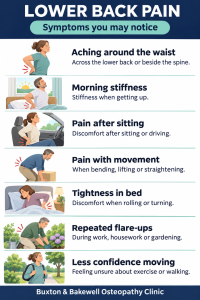
These symptoms do not establish a diagnosis by themselves. For example, pain when bending does not automatically mean a damaged disc, and pain when standing does not prove that a particular joint is responsible.
What Does an Osteopath Do for Lower Back Pain?
| What we do | What this involves |
|---|---|
| 🗣️ Listen to your symptoms | Discuss your pain, medical history, daily activities and what you want to get back to doing. |
| 🔎 Assess your movement | Examine how your back moves and check relevant areas, such as your hips, to understand your difficulties. |
| 🦵 Check nerve function when needed | Assess strength, sensation and reflexes if symptoms suggest nerve involvement, such as sciatica. |
| 💬 Explain the findings | Discuss the likely explanation for your symptoms, any uncertainty and your treatment options. |
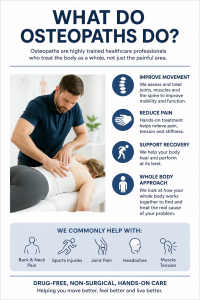
| 🤲 Use hands-on treatment | Offer suitable soft tissue techniques and gentle joint movements to help ease discomfort and improve movement. |
| 🏋️ Prescribe appropriate exercises | Recommend manageable exercises to build mobility, strength and confidence alongside hands-on care. |
| 🚶 Give practical advice | Help you adapt sitting, lifting, gardening, work and exercise while gradually returning to normal activity. |
| 📈 Review your progress | Check improvements in pain and everyday function, adjusting your plan according to your response. |
| 🩺 Refer when necessary | Recommend medical assessment or further investigation when symptoms need a different approach. |
Osteopathy for Muscle tension and Protective Guarding
When muscles or ligaments become injured, they may tighten to protect the area — leading to stiffness and limited movement.
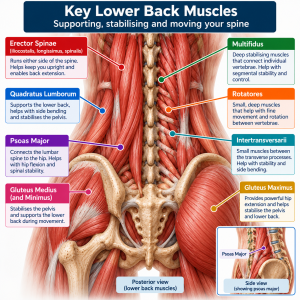
Over time, this protective tension can disrupt normal spinal alignment, compress joints, and cause pain to spread into the neck, shoulders, or hips.l back often feels tight or “locked”. Following a strain or flare-up, the surrounding muscles may become more protective, particularly when you expect a movement to hurt.
This can make bending, straightening or getting out of a chair feel awkward. It may also leave you hesitant to move.
Treatment may help ease discomfort, while gentle movement provides an opportunity to rebuild confidence. Understanding that tightness does not necessarily mean something is displaced can be reassuring.
Osteopathy for Joint Pain in the Back
Facet joint pain is a common cause of neck and lower back discomfort because these small joints are constantly involved in supporting, stabilising and controlling spinal movement. Located at the back of the spine, between neighbouring vertebrae, facet joints guide movements such as bending, twisting and extending backwards
Sudden twisting, heavy lifting, falls, sporting injuries or whiplash can overstretch or sprain the protective joint capsule.
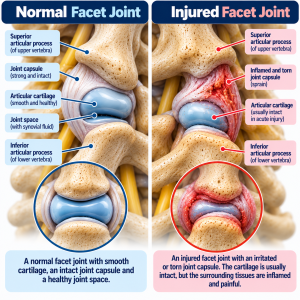
This may trigger localised inflammation, swelling and irritation of the sensitive nerve endings surrounding the joint.In more severe injuries, the joint capsule may tear, cartilage may be damaged or small fractures may occur.
Most uncomplicated facet joint sprains improve with appropriate osteopathic conservative management, including gentle movement, activity modification, rehabilitation exercises and manual therapy where suitable.
Accurate clinical assessment is essential to distinguish facet joint injuries from disc problems, muscular strains and spinal nerve irritation.
Osteopathy for Recurring Back Pain
If your back keeps flaring up, it is useful to examine the pattern surrounding each episode.
Does pain follow a sudden increase in gardening? Does a long drive leave you stiff before a demanding day? Have you returned to strenuous activity after several quieter weeks?
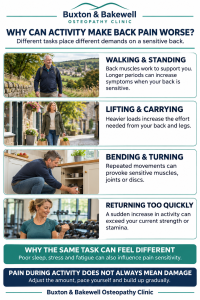
These questions help identify manageable changes. You might spread heavy tasks across the week, take movement breaks or build capacity before a walking holiday.
There is no single perfect posture that prevents all back pain. Spending a long time in any one position can become uncomfortable. Changing position regularly is often a practical place to start.
A useful long-term plan aims to increase what you can do and reduce the disruption caused by future flare-ups.
Osteopathy for Sciatica. What if pain travels into your leg?
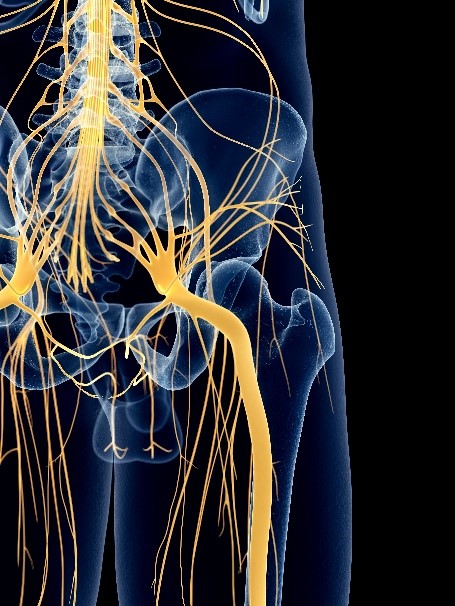
Pain extending into the buttock or leg needs careful assessment. Some leg pain is referred from the back without nerve involvement. Sciatica involves irritation or compression of a nerve root and may include tingling, numbness or weakness.
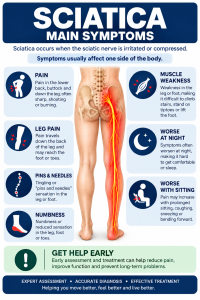
We can assess whether the presentation appears suitable for osteopathy or we can recomment our very affordable and rapid MRI service if necessary along with cutting edge IDD Therapy which is gold standard for sciatica or trapped nerves and herniated discs.
Hands-on treatment may form part of symptom management for some people, but it cannot be assumed to remove nerve compression or repair a herniated disc.
For more detail, explore our Sciatica Hub, alongside the symptoms and diagnosis sections of the Lower Back Pain Hub.
Combining Osteopathy With IDD Therapy
At Buxton & Bakewell Osteopathy Clinic, osteopathy may be incorporated into a broader programme for suitable patients undergoing IDD Therapy .
IDD Therapy is generally considered for more persistent spinal problems where reducing mechanical stress around an affected spinal segment is one of the treatment objectives.
Rather than seeing osteopathy and IDD Therapy as competing treatments, they can have different roles within an individual treatment programme.
Osteopathy may concentrate on areas such as:
Mobility + muscular tension + movement + rehabilitation
while IDD Therapy may be selected to provide a controlled spinal decompression intervention.
The precise combination depends upon the diagnosis, examination findings and response to treatment.
Bone changes and treatment choices
When we get lower back pain, we often assume it’s a tight muscle, an injured or worn joint or a disc. This is certainly not always the case
It is easy to forget that the foundation stones that give our spines its structural can also crack, erode, and become a hidden source of pain. There are three important architectural threats to our spines that deserve a closer look: osteoporosis, Modic changes, and vertebral compression fractures.
While each weakens the structural strength of our skeletal scaffolding in different ways, they all can trigger a deep, persistent lower back pain.
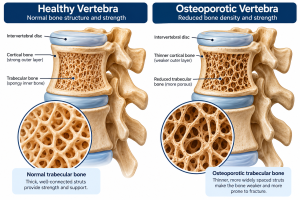
Our article Bone Changes in the Spine & Back Pain explores these topics further. Understanding the difference between bone health, scan findings and symptoms helps support more appropriate decisions.
Keeping active during recovery
Many people worry that movement will worsen their back problem. During an uncomplicated episode, staying gently active is generally encouraged, while prolonged bed rest can make returning to normal activity harder.
That does not mean pushing through severe pain. It means finding a manageable level and adjusting from there.
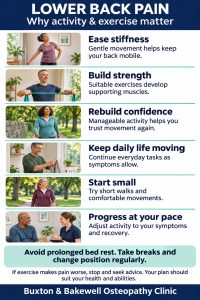
Why exercise belongs alongside hands-on treatment
Hands-on care may make movement feel easier, but recovery also involves what you do between appointments.
NICE guidance recommends considering manual therapy for lower back pain only within a treatment package that includes exercise. This supports an approach in which treatment helps you take an active role in recovery.
An exercise plan might involve comfortable mobility work, gradually building strength or increasing walking tolerance. The starting point should reflect what you can currently manage.
Someone with a recent flare-up may begin with short periods of gentle movement. Someone with recurring symptoms may benefit from a more progressive strengthening programme.
How many appointments will you need?
There is no reliable number that suits everyone.
The appropriate plan depends on your symptoms, medical history, goals and response to care. Some people need limited support; others benefit from a longer period of rehabilitation or a different clinical pathway.
A treatment plan should include review points. Progress might mean walking further, sleeping more comfortably, returning to work duties or managing a flare-up with greater confidence.
Temporary relief after treatment can be helpful, but it should be considered alongside improvements in everyday function.
If progress is limited, the plan needs reviewing. Continuing the same treatment indefinitely without meaningful benefit is not a useful goal.
When back pain needs urgent medical help
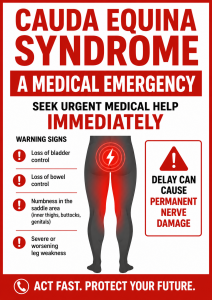
Taking the next step in Buxton and Bakewell
Lower back pain can narrow your activities gradually, until you begin planning your day around what your back might tolerate.
A useful assessment helps you understand the problem, consider suitable options and set realistic goals. Osteopathy may contribute through hands-on treatment, exercise and advice, with referral when another form of care is more appropriate.
At Buxton & Bakewell Osteopathy Clinic, we can assess your lower back symptoms and discuss an individual approach to care.
Contact the clinic to arrange an assessment and take the next step towards more comfortable, confident movement. You can also explore the causes, diagnosis, treatment and recovery sections of our Lower Back Pain Hub.
Clinical references:
- NICE NG59: https://www.nice.org.uk/guidance/ng59/chapter/recommendations
- NHS Back pain: https://www.nhs.uk/conditions/back-pain/