Targeted Treatment for Lower Back Pain: Reducing Pain and Improving Function
Lower back pain can make ordinary activities unexpectedly difficult.
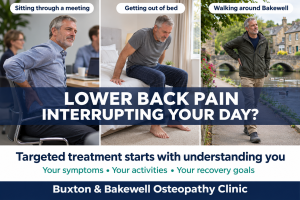
Sitting through a meeting, getting out of bed or enjoying a walk around Bakewell may become uncomfortable.
Although symptoms can on the surface look similar, people often need different approaches.
Someone with recent muscular pain may need different support from someone with persistent leg symptoms or reduced walking tolerance.
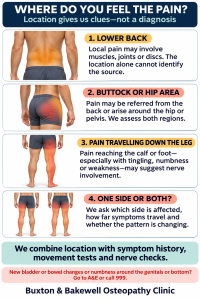
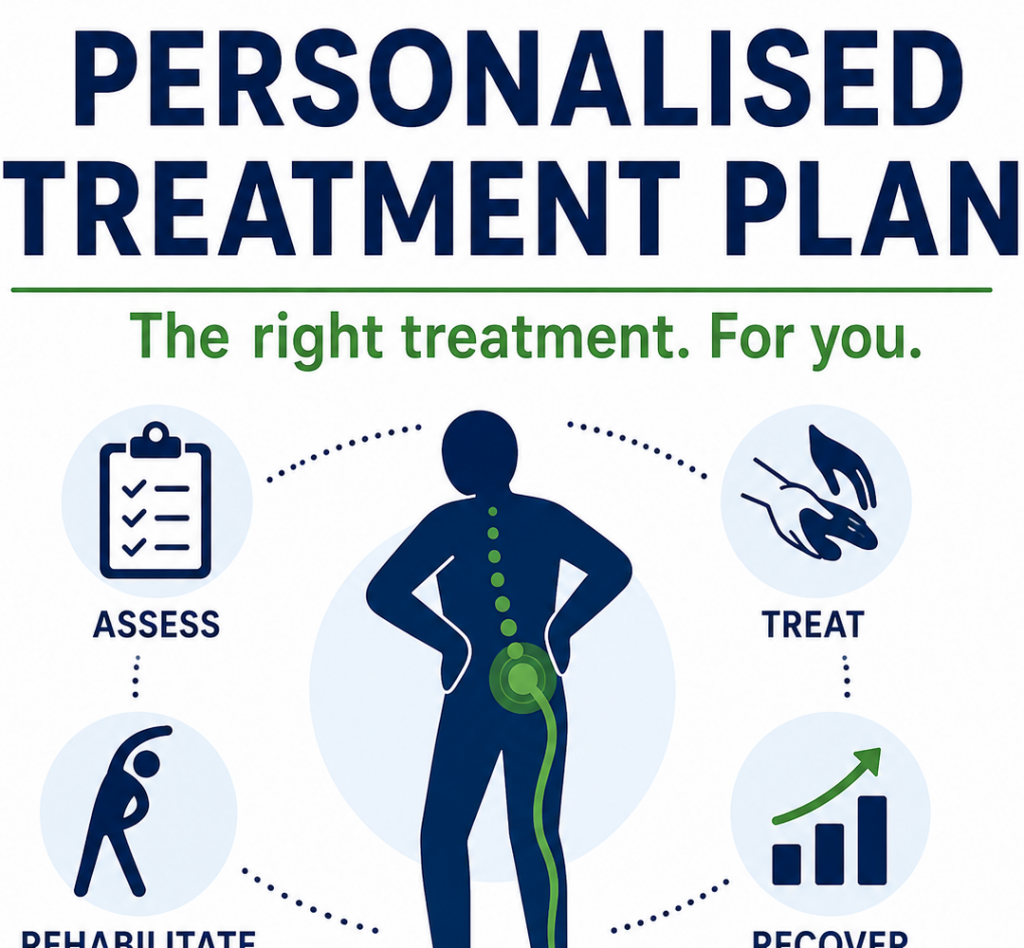
At Buxton & Bakewell Osteopathy Clinic, targeted treatment means matching care to your assessment findings, circumstances and recovery goals.
This may include osteopathy, rehabilitation and, where clinically justified, discussion of shockwave therapy, laser therapy or IDD Therapy.
Each option needs a clear purpose, an explanation of the evidence and regular review. The overall aim is to help you move more comfortably and return to activities that matter.
What Does Targeted Treatment Mean?
“Targeted” does not mean we can always identify one painful disc, joint or muscle with certainty. Many episodes are described as nonspecific lower back pain because no single structure fully explains them.
A useful plan can still be developed by understanding your symptoms, examining movement and identifying what you need to regain.
Assessment Comes Before Treatment
We begin with your clinical history: when symptoms started, where you feel them and how they affect everyday life.
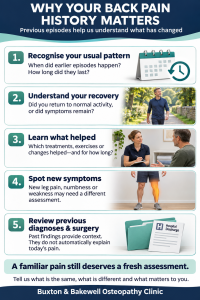
We ask about leg pain, numbness, weakness, previous episodes, medical conditions and treatments already tried.
Examination may include spinal movement, hip movement, walking, strength and, where appropriate, reflexes and sensation.
These findings help us decide whether conservative care is suitable or whether further investigation is needed.
MRI is rarely necessary before treatment.
Understanding the assessment also gives you an opportunity to ask questions before agreeing to care.
Osteopathy: Helping Comfortable Movement
Osteopathy may form part of a lower back pain programme when hands-on treatment is appropriate.
Depending on your assessment, techniques may include gentle joint mobilisation, soft tissue work, stretching and muscle energy techniques.
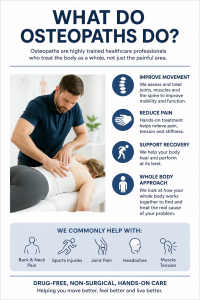
The purpose may be to ease discomfort, reduce protective tension and help you explore movement more comfortably.
Treatment should be adapted to your sensitivity, preferences and medical history.
Shockwave Therapy: A Selective Additional Option
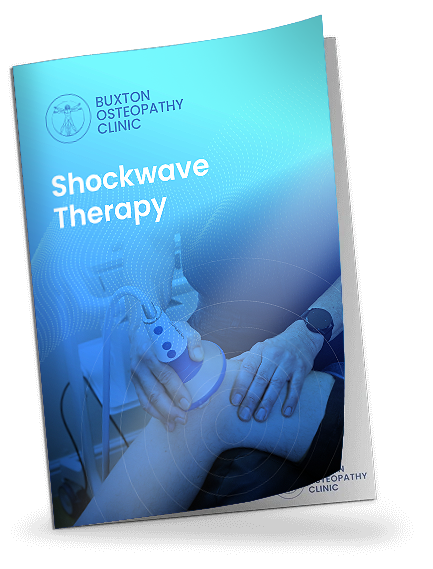
Shockwave therapy has been a game changer in musculoskeletal heathcare. We are one of the few clinics to use both radial and focused shockwave.
Focused Shockwave treatment (a recent innovation) has been a game changer in the healthcare industry allowing the treatment of intricate orthopaedic conditions. It can be directed with great precision deep inside joint space (knee or shoulder or hip joint) or with a high level of accuracy onto tendons or ligaments.
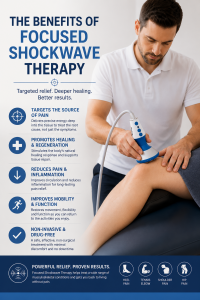
Radial Shockwave, on the other hand, treats a broader shallower area, it is very effective for less stubborn superficial tendinopathies and ligament problems . Radial Shockwave, and especially Focused Shockwave, treatments are the most advanced treatment therapies that are available on the market for musculoskeletal issues allowing us to be a go-to destination for tendinopathies.
At Buxton & Bakewell Osteopathy Clinic, Shockwave Therapy is not generally used as a treatment to directly decompress a spinal nerve or repair a prolapsed disc. Instead, it may be considered when there is a significant muscular, tendon or soft-tissue component contributing to the patient’s symptoms or slowing their recovery.
For selected patients, Shockwave Therapy can therefore form part of a wider lower back pain treatment programme alongside osteopathy, rehabilitation and, where appropriate, IDD Therapy
IDD Therapy: For Trapped Nerves
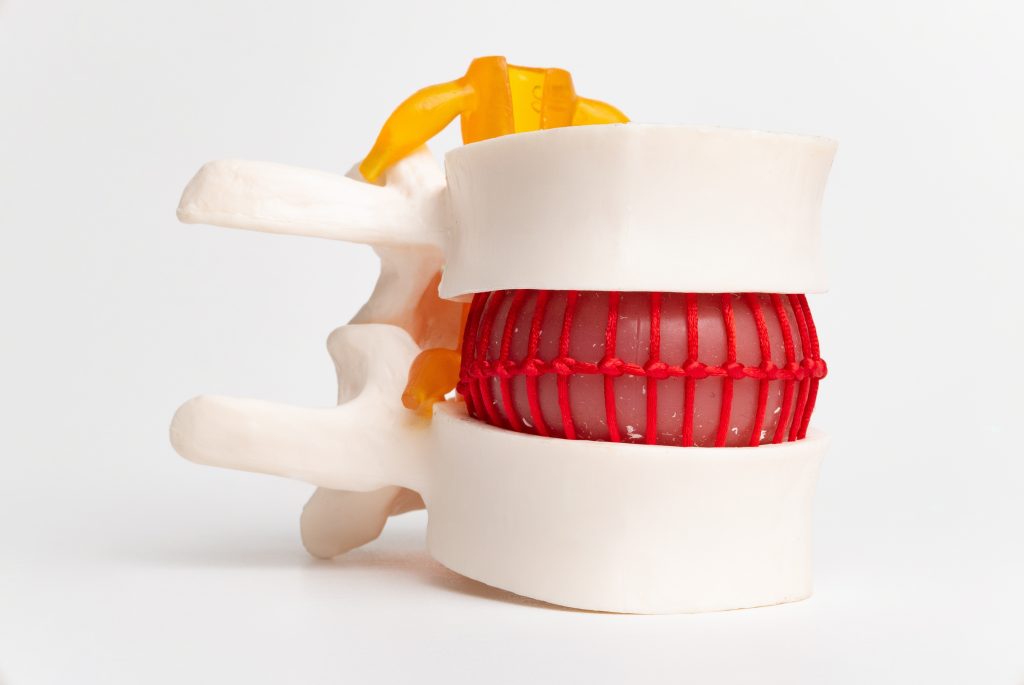
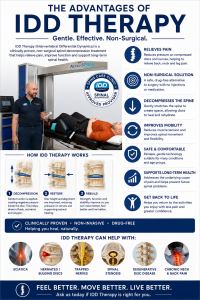
IDD Therapy is a form of advanced spinal decompression that uses computer-controlled mechanical traction to treat specific spinal segments. It was developed to fill the gap between standard manual therapies and surgery for disc-related conditions.
At our clinic, IDD Therapy is delivered through a specialist device that precisely targets the injured or degenerated disc while keeping the rest of the spine stable. You lie comfortably on the machine while the system gently stretches and decompresses your spine.
How IDD Therapy Fixes Nerve Compression
- Reduces Pressure on Spinal Nerves
IDD Therapy carefully distracts the affected spinal segment, creating a negative pressure inside the disc. This helps draw herniated disc material back into its normal position, reducing the bulge that’s pressing on the nerve. - Promotes Healing and Rehydration of Discs
The pumping action created during IDD Therapy improves fluid exchange in the discs, which enhances nutrient flow and encourages the disc to heal naturally. Over time, this helps restore disc height and cushioning ability, easing pressure on surrounding nerves. - Improves Spinal Mobility
When nerves are compressed, surrounding muscles and joints often become stiff and guarded. IDD Therapy gently mobilises the spine, improving flexibility and helping muscles to relax — all without pain or strain. - Breaks Chronic Pain Cycles
By reducing inflammation, easing mechanical stress, and improving nerve function, IDD Therapy interrupts the cycle of chronic pain. Patients often experience a noticeable reduction in symptoms after just a few sessions. - Targets Specific Problem Areas
IDD Therapy can be directed at very specific levels of the spine — such as L4/L5 or L5/S1 in the lower back — which means it’s ideal for patients who haven’t responded to general physiotherapy or osteopathy.
Exercise Connects Treatment With Everyday Life
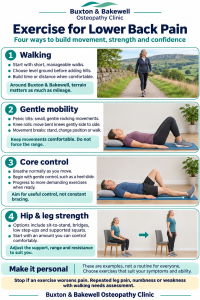
Whatever additional treatment is discussed, rehabilitation helps translate symptom improvement into useful activity.
An individual programme may include:
- Comfortable spinal and hip movement.
- Gradual walking progression.
- Strengthening the trunk, hips and legs.
- Practising bending and lifting.
- Building tolerance for work or hobbies.
The starting point should match your current ability.
A person with sensitive leg symptoms may need a different approach from someone with local stiffness and reduced fitness.
Progression should consider how you respond during activity and afterwards. Increasing distance, resistance and frequency together can make it harder to understand what your back currently tolerates.
Three Examples of Targeted Planning
The office worker: Back discomfort increases during long afternoons at a desk. Examination finds comfortable walking and no concerning neurological changes. The plan might combine osteopathy, movement breaks and gradually progressed exercise.
The gardener: Persistent local pain limits bending and carrying. Assessment considers the spine, hips and task demands. Rehabilitation may focus on strength and dividing jobs into manageable periods. Shockwave is discussed only if a suitable soft tissue indication exists.
The patient with sciatica: Leg pain and altered sensation require neurological assessment and monitoring. The priorities include appropriate advice, rehabilitation and referral when indicated.
These examples illustrate decision-making; they do not predict an individual diagnosis or outcome.
How We Monitor Progress
Review should consider more than whether the back feels looser after treatment.
We may track walking tolerance, sleep, sitting, daily tasks, exercise capacity and your confidence in movement.
Where nerve symptoms are present, changes in strength, sensation and reflexes may also matter.
An agreed review point helps identify whether treatment is worthwhile. If progress is limited, we should reassess the explanation, treatment choice and practical barriers.
Temporary soreness can occur after some treatments, but deterioration should not automatically be dismissed as a necessary healing response.
Tell your clinician about new symptoms, increased leg pain or difficulties that persist beyond the expected response.
When Medical Assessment Takes Priority
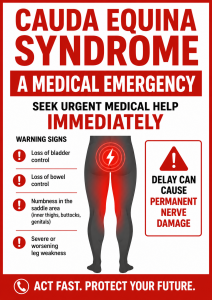
Some symptoms need a different pathway from routine clinic treatment.
With back or leg pain, although uncommon, new difficulty passing urine, loss of bladder or bowel control, numbness around the genitals or anus, or severe or worsening weakness or numbness in both legs require emergency assessment. Go to A&E or call 999.
Lower Back Pain Care in Buxton and Bakewell
At Buxton & Bakewell Osteopathy Clinic, the starting point is understanding your symptoms and what you want to regain.
We can discuss osteopathy, rehabilitation and the possible roles and limitations of shockwave, laser and IDD Therapy in relation to your findings.
The plan should explain the reason for each recommendation, the expected review point and the steps you can take yourself.
Whether your priority is managing work, returning to gardening or enjoying the Peak District again, recovery goals should be practical and personal.
Arrange an assessment to discuss your lower back pain and explore an appropriate plan for improving comfort, movement and everyday function.