Accurate Diagnosis of Lower Back Pain: Understanding Your Symptoms and Choosing the Right Recovery Plan
Lower back pain can leave you with more questions than answers.
Is it a muscle problem, an irritated joint or a disc injury?
Why does sitting hurt when walking feels easier?
Does leg pain mean a trapped nerve?
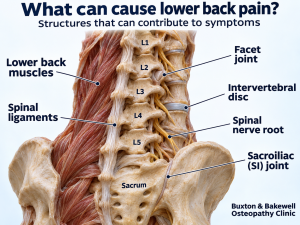
At Buxton & Bakewell Osteopathy Clinic, an accurate diagnosis begins with understanding your experience and examining the findings carefully.
The purpose is to provide a useful explanation, identify anything requiring medical attention and agree appropriate next steps.
Accuracy also means being honest about uncertainty. It is not always possible to identify one particular disc, muscle or joint as the definite source of pain.
What Does an Accurate Diagnosis Mean?
A diagnosis is a clinical explanation based on the information available.
It can sometimes identify a particular condition, or describe a broader pattern such as non-specific lower back pain.
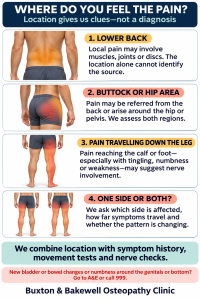
The World Health Organization explains that non-specific back pain is pain that cannot confidently be attributed to a particular disease or structural problem. This is the most common presentation.
The term does not mean your examination has failed to achieve what we set out to do. It means the evidence does not justify naming one structure with certainty.
A useful assessment should clarify what is likely, what remains uncertain, whether further investigation is needed and how care can help you move towards your goals.
Why Understanding the Cause Matters
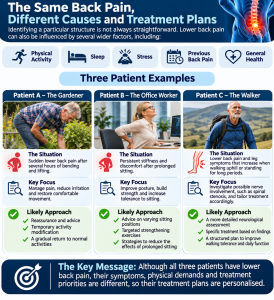
Two patients may both describe lower back pain but need different approaches.
One may have a recent episode of local discomfort without neurological symptoms. Another may describe leg pain, numbness and changing strength. A third may have symptoms suggesting a hip problem rather than a spinal condition.
Step 1: Listening to Your Story
Your history provides the context for everything that follows.
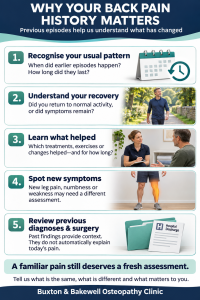
We ask when the symptoms began, whether there was an injury and how the problem has changed.
We explore the location of pain, any spread into the leg and which activities make things easier or harder.
Previous episodes, medication, medical conditions and treatment responses are also relevant.
You do not need technical language. “My back catches when I get out of the car” or “My foot feels numb after walking” are useful descriptions.
Step 2: Checking Movement and Function
A physical examination helps us compare your description with observable findings.
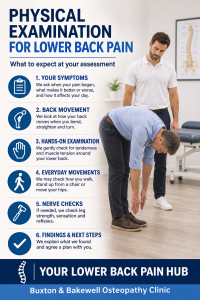
We may assess walking, forward bending, backward bending, side bending and rotation.
Hip movement and everyday tasks, such as standing from a chair, may also be relevant.
We note where discomfort occurs, how movement changes symptoms and whether the sides differ.
However, one painful movement rarely identifies a precise cause. Bending pain does not automatically confirm a disc injury, and tenderness does not prove a particular joint is responsible.
The value comes from combining findings. We adapt the examination to your comfort rather than forcing movement to achieve a particular range.
Step 3: Assessing Nerve Function
When symptoms suggest possible nerve involvement, examination may include strength, sensation and reflex testing.
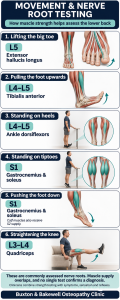
We might compare your ability to lift the foot, straighten the knee or rise onto the toes. Selected tests, such as the Straight Leg Raise, may help assess familiar leg symptoms.
New or progressive weakness needs prompt medical assessment. Recognising a change in nerve function can be more important than assigning a detailed label during the first appointment.
Understanding Common Clinical Patterns
Assessment may suggest several broad possibilities.
Local back pain without neurological changes may fit a non-specific musculoskeletal pattern. Radiating leg pain with matching examination findings may suggest irritation of a spinal nerve root.
Symptoms associated with standing and walking may prompt consideration of spinal narrowing, while hip examination may suggest an alternative explanation.
These are clinical possibilities, not shortcuts to diagnosis.
Similar symptoms can arise for different reasons, and more than one issue may be present. Your age, health, symptom behaviour and examination all help determine which explanation is most plausible and whether it needs further investigation.
Why “Wear and Tear” Is Not a Complete Explanation
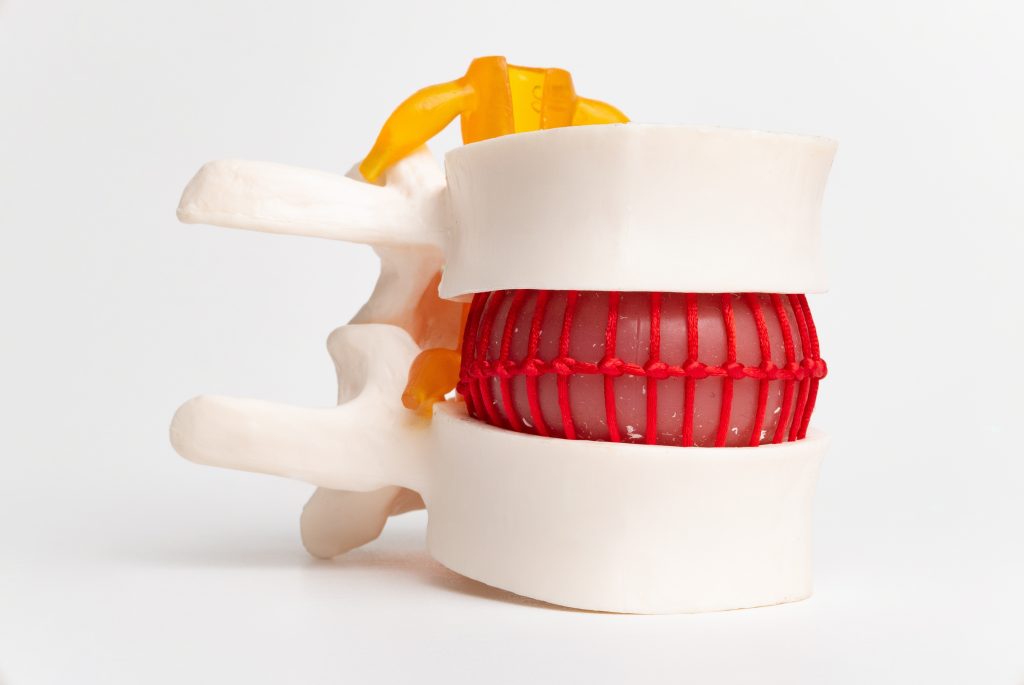
Terms such as degeneration, arthritis and disc bulge can sound alarming.
Structural changes are often found in people without pain. In fact all us have degenerative changes and we probably blissfully unaware.
An MRI for instance (which is rarely required) needs interpretation rather than being treated as a direct measure of symptoms or future ability.
This does not mean all findings are irrelevant. Some findings may fit your symptoms closely and influence what we do.
The question is whether a finding helps explain the clinical picture.
An accurate explanation should avoid predicting inevitable decline from an age-related change. We discuss what the findings mean for you, what they do not establish and how they affect the plan.
When Is an MRI Helpful?
MRI can provide detailed information about discs, nerves and other spinal tissues. It is useful when there is a clear clinical question that imaging can help answer
| MRI advantage | Why it matters for spinal assessment |
|---|---|
| 🔎 Shows discs directly | Reveals disc bulges and herniations. X-rays mainly show bones and the spaces between them. |
| ⚡ Shows nerves and the spinal cord | Helps assess compression that cannot be seen directly on an ordinary X-ray. |
| 🧵 Greater soft-tissue detail | Provides clearer images of ligaments and other tissues around the spine. |
| 🚇 Assesses spinal narrowing | Shows how narrowing of the spinal canal or nerve openings affects nearby nerves. |
| 🦴 Shows bone marrow changes | Can reveal swelling within bone and some abnormalities that are difficult to detect on X-ray. |
| 📷 Detailed cross-sectional views | Produces images in different planes, helping clinicians examine structures without overlapping bones obscuring them. |
| ☢️ No ionising radiation | Uses magnetic fields and radio waves rather than X-rays. |
| 🧭 Helps plan specialist care | Can provide information needed when considering spinal surgery or certain injections. |
MRI is particularly useful for discs, nerves and the spinal cord. X-rays remain useful for bone alignment and some fractures; the appropriate scan depends on the clinical question.
At our clinic, private MRI referral begins with an assessment by Phil. We explain why imaging is being considered and how the result could affect care.
Emergency symptoms require hospital assessment rather than waiting for a routine private scan.
Explaining the Findings in Plain Language
After assessment, you should have an opportunity to understand the findings and ask questions.
A helpful explanation covers the likely clinical picture, whether nerves appear involved, any important uncertainty and what happens next.
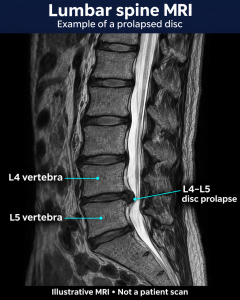
For example, a clinician might explain that movement is restricted and sensitive, but strength and sensation are reassuring. Another patient may need further investigation because neurological findings are changing.
The explanation should fit the evidence and avoid unsupported certainty.
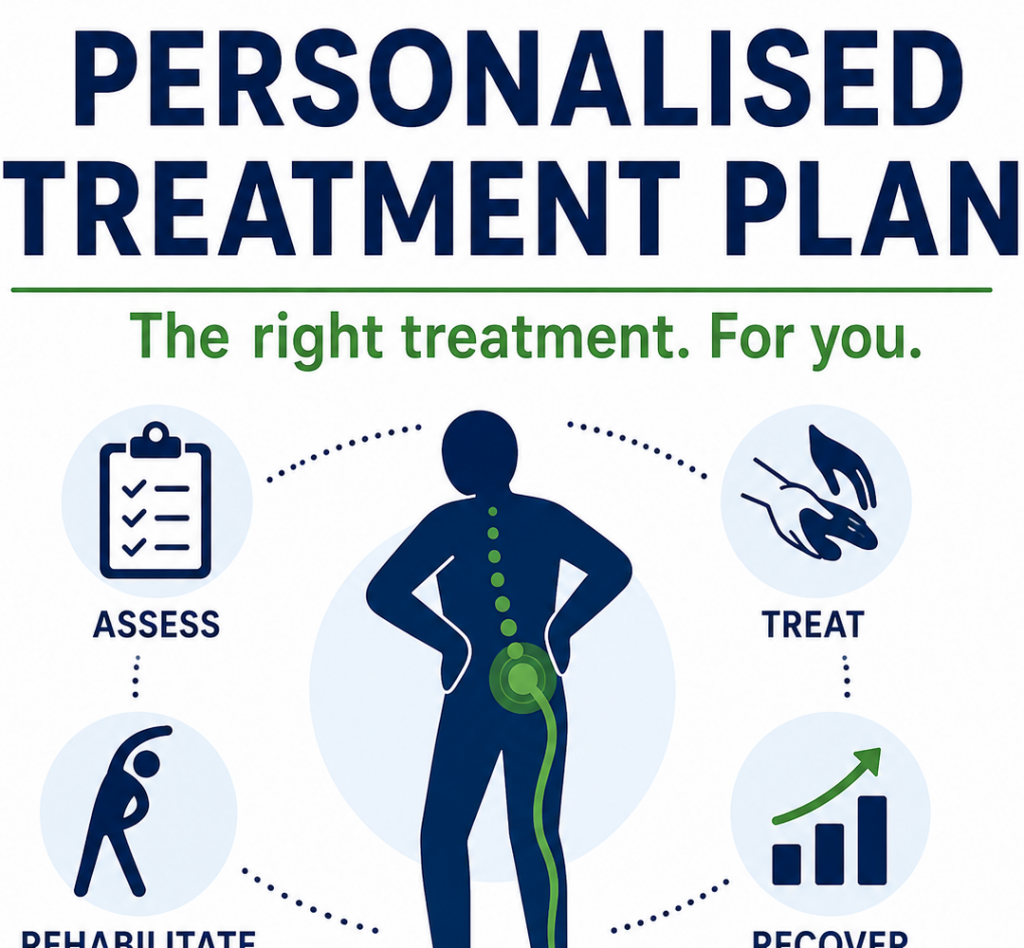
Moving from Diagnosis to a Recovery Plan
A diagnosis becomes useful when it helps guide action.
Your plan should reflect your symptoms, examination findings, general health, preferences and what you do day to day.
Busy days or limited time for exercise may require practical adjustments.
For someone working at a desk, the first goal may be sitting through a meeting with manageable symptoms. For a keen gardener, it may be returning to shorter outdoor tasks.
The plan should explain what you can try, what support is appropriate and how progress will be reviewed.
The Role of Osteopathy and Hands-On Care
Where appropriate, osteopathic treatment may include gentle mobilisation or soft-tissue techniques adapted to your symptoms and preferences.
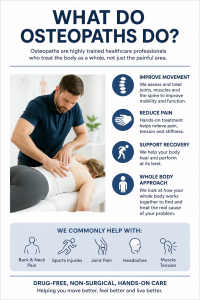
Manual treatment should have a clear purpose within the wider plan.
We discuss your response rather than assuming that temporary relief proves a particular diagnosis.
If treatment is not helping, that information should prompt review.
Some findings require medical investigation or referral instead of routine hands-on care.
Choosing the right next step is part of good clinical reasoning, even when it means recommending another service.
Building Movement, Strength and Confidence
Rehabilitation should start at a level you can manage and relate to the activities you want to regain.
Depending on your assessment, this may involve comfortable mobility work, walking, strengthening or practising everyday tasks.
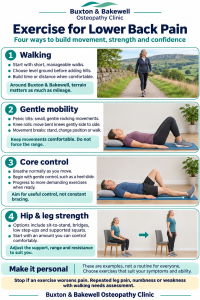
There is no universal exercise programme for every back problem. Your preferences, current tolerance and associated health conditions matter.
Progression may involve changing duration, resistance or complexity, with review of how you respond during and after activity.
The aim is to develop a sustainable routine. A plan that you understand and can realistically follow is more useful than a long list of exercises without guidance.
Monitoring Progress Beyond the Pain Score
Pain intensity matters, but it does not tell the whole story.
We may also review walking distance, sleep, sitting tolerance, dressing, work duties and confidence with movement.
Where relevant, strength, sensation and reflex findings are monitored.
These measures help distinguish a plan that is producing useful change from one that needs adjustment.
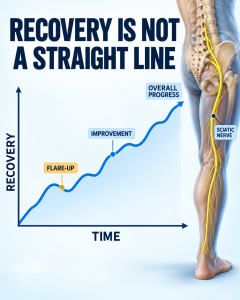
Recovery may fluctuate, so an uncomfortable day does not automatically mean a new injury. Equally, new neurological symptoms should not be dismissed as an ordinary flare-up.
We consider the overall direction of change and explain which developments require earlier review.
What If You Are Not Improving?
A recovery plan should not continue unchanged simply because it was agreed at the first appointment.
If improvement is limited, we reconsider the working diagnosis, treatment response and practical demands on your activity. We discuss whether the programme is tolerable and achievable.
The next step should answer a clear question: what information or change is most likely to help us make a better decision about your care?
Recognising Symptoms That Need Urgent Help
Accurate assessment includes identifying when routine clinic care is not the right pathway.
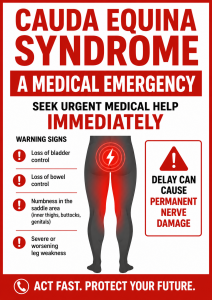
With back or leg pain, new difficulty passing urine, loss of bladder or bowel control, numbness around the genitals or bottom, or severe or worsening weakness or numbness in both legs require emergency assessment. Go to A&E or call 999
Accurate Diagnosis and Personalised Care in Buxton & Bakewell
At Buxton & Bakewell Osteopathy Clinic, accurate diagnosis means bringing your story, examination findings and relevant investigations together.
It also means explaining the limits of what we know, recognising changes and selecting appropriate care.
Our aim is to help patients across Buxton, Bakewell and the Peak District understand their symptoms and work towards meaningful recovery goals.
Whether the next step is advice, osteopathy, rehabilitation or medical referral, you should understand why it is relevant.
Visit buxtonosteopathy.co.uk to arrange an assessment and discuss an individual plan for your lower back pain.