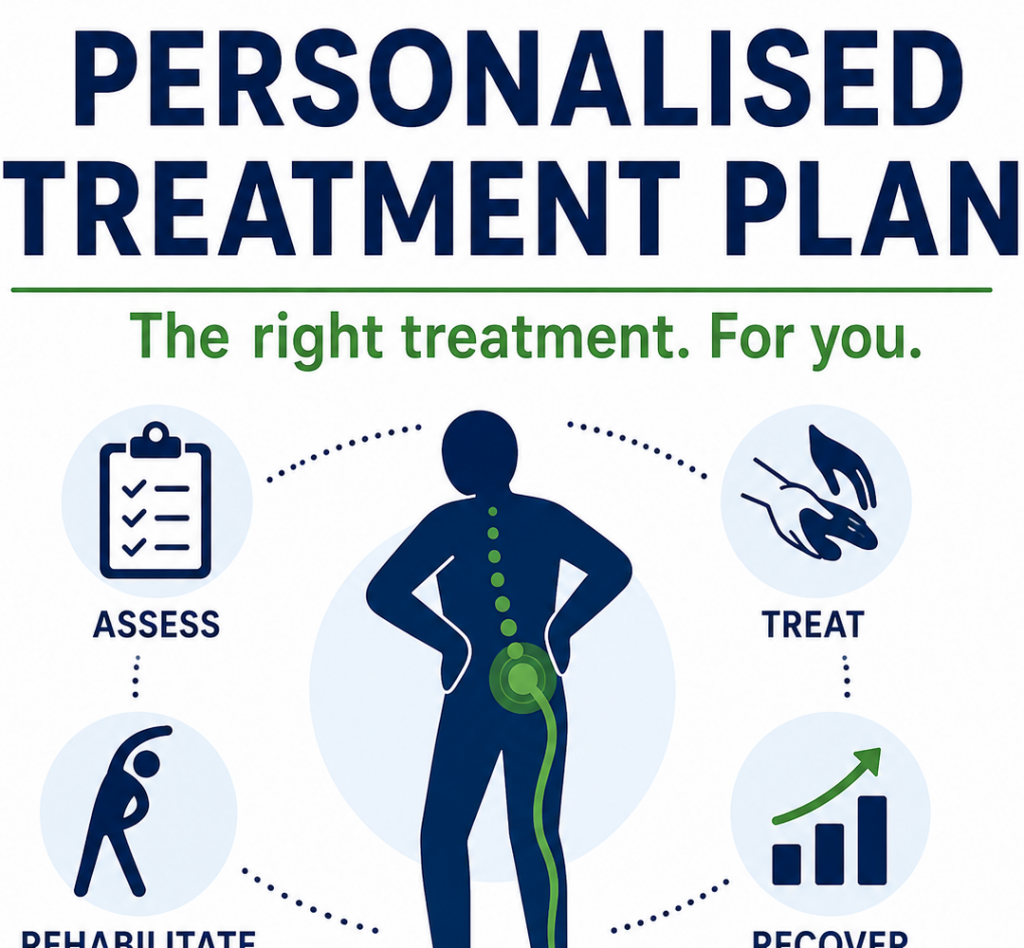
Exercise and Rehabilitation for Lower Back Pain: A Programme Tailored to You
Lower back pain can change how you move, work and spend your free time. You may avoid bending and putting your socks on, shorten your walks or worry that exercise will make things worse.
A rehabilitation programme helps you work towards comfortable movement and greater confidence, with activities selected for your circumstances.
At Buxton & Bakewell Osteopathy Clinic, we consider your symptoms, examination findings, health and goals before recommending exercises.
Your plan might begin with manageable everyday movement and progress towards strength, fitness and the demands of work or hobbies.
The aim is to help you regain useful function, with a programme you understand and can realistically follow.
Why Exercise Matters for Lower Back Pain
Exercise can improve strength, endurance and tolerance for everyday tasks. It also offers opportunities to practise movements that have become uncomfortable or worrying.
Research supports exercise for persistent nonspecific lower back pain.
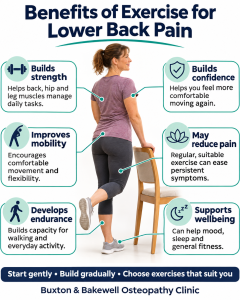
The practical challenge is choosing an approach you can manage consistently.
For someone struggling to leave the house, a short walk may be meaningful progress. Someone returning to physical work may eventually need more demanding strengthening.
Why Your Programme Should Be Tailored
Two people describing “lower back pain” may have different symptoms and abilities.
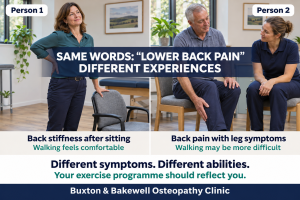
One may feel local stiffness after sitting. Another may have leg pain, altered sensation or difficulty walking.
Your programme should consider:
- Your assessment findings.
- The duration and behaviour of symptoms.
- Your current activity and fitness.
- Other health conditions.
- Previous responses to exercise.
- Your priorities and preferences.
- Time, equipment and support available.
Personalisation does not always require unusual exercises. Familiar movements can be adapted by changing the position, range, resistance or amount.
A short, relevant programme is often easier to maintain than a lengthy list without a clear purpose.
Assessment Before Exercise Prescription
Before selecting exercises, we discuss how your symptoms began, what aggravates them and what brings relief.
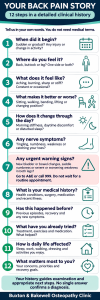
We assess relevant movements and everyday tasks, such as bending, walking or standing from a chair.
Hip movement, leg strength and balance may also be considered. Where leg symptoms suggest nerve involvement, neurological examination may include strength, sensation and reflexes.
The findings help establish a suitable starting point and identify reasons for medical assessment.
Set Goals That Matter to You
Goals make rehabilitation practical.
“Improve core strength” is less meaningful than being able to lift shopping or sit through a journey comfortably.
Your priorities might include:
- Getting out of bed with less difficulty.
- Returning to gardening.
- Walking around Bakewell.
- Managing a working day.
- Playing with grandchildren.
- Your favourite sport.
We can record what you currently manage and agree an achievable next step.
For example, a walker may first aim for a comfortable local route before returning to longer Peak District outings.
Progress can then be judged against activities you value, alongside changes in symptoms.
Walking: An Adaptable Rehabilitation Tool
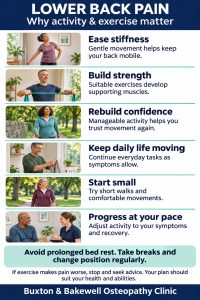
Walking is convenient for many people and can be adjusted through duration, pace, terrain and rest breaks.
Several brief walks may be more manageable than one long outing. Others may prefer a single comfortable walk as their starting point.
Around Buxton and Bakewell, consider the route as well as the distance. Slopes, uneven paths and a rucksack increase the demands.
A level route close to home can make it easier to adjust the session.
If walking consistently brings on leg pain, numbness, heaviness or weakness, discuss the pattern let us know.
Repeatedly pushing further is not a substitute for understanding those symptoms.
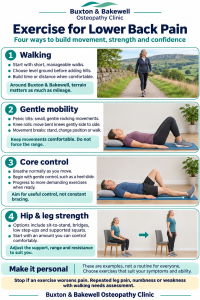
Stengthening you ‘Core’
Strengthening may involve the abdominal muscles, back muscles, buttocks and legs.
The “core” includes several muscles working together during breathing and movement. It is not one muscle that needs to stay tightly braced all day.
Depending on your ability, exercises might include controlled abdominal work, bridges, supported squats or standing resistance exercises.
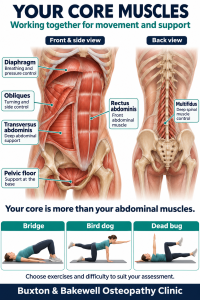
Low back pain does not automatically mean your core is weak or your spine is unstable. We choose exercises because they address relevant needs and goals.
Over time, suitable resistance can help you prepare for carrying, lifting, climbing stairs and other daily demands.
Hip Strength, Balance and Coordination
Rehabilitation should consider how the whole body performs a task.
Standing from a chair involves the hips and legs as well as the back. Walking on uneven ground also involves balance and coordination.
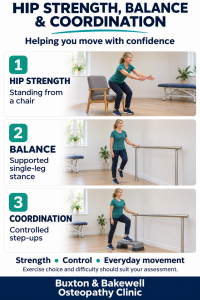
Possible exercises include sit-to-stand practice, supported step-ups or balance tasks beside a stable support.
An exercise that looks simple may still be demanding, particularly after a period of reduced activity.
We can adjust seat height, hand support, step height or resistance.
The aim is to select a challenge that is manageable and relevant, then review how it transfers to everyday movement.
How Much Exercise Should You Do?
There is no universal number of repetitions or weekly schedule for lower back pain.
The exercise type, resistance, duration and recovery time should match your current capacity.
Your written plan should explain:
- Which movements to practise.
- How many repetitions or how long to exercise.
- How often to do them.
- What response is acceptable.
- When to reduce, stop or progress.
Work, housework and caring responsibilities also contribute to your total activity, so the programme needs to fit within the whole day.
Understanding Discomfort During Rehabilitation
Some people experience mild, temporary muscular discomfort when beginning an unfamiliar activity. This does not automatically indicate damage.
However, exercise should not leave your existing symptoms substantially worse overall.
Agree symptom limits with your clinician rather than relying on a universal pain score.
Notice what happens during the session, later that day and afterwards. Worsening sleep, reduced walking tolerance or increasing leg symptoms can indicate that the plan needs adjustment.
Stop an exercise that causes new weakness, spreading numbness or escalating nerve pain and seek advice.
The purpose is to build capacity, with enough flexibility to respond to warning signs and setbacks.
Returning to Work, Gardening and Recreation
Rehabilitation becomes more useful when exercises resemble your everyday demands.
For desk work, this may involve movement breaks, building sitting tolerance and maintaining activity outside working hours.
For gardening, it may include practising bending and carrying, using smaller loads and dividing tasks into manageable periods.
For a Peak District walker, preparation might progress from level paths towards slopes, steps and uneven surfaces.
A return to sport may require additional strength, endurance and sport-specific practice.
These transitions should reflect what you can currently manage. A single successful exercise session does not always mean you are ready for several hours of a demanding activity.
Where Osteopathy Fits
Osteopathy may be used alongside rehabilitation when hands-on treatment is appropriate.
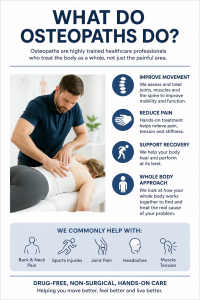
Gentle mobilisation or soft tissue techniques may help some patients feel more comfortable moving.
That opportunity can be used to practise exercises and tasks relevant to recovery.
Managing Flare-Ups and Reviewing Progress
Recovery is not always a straight line. A busier day, unfamiliar task or poor sleep may coincide with a temporary increase in symptoms.
A flare-up does not necessarily mean all progress has been lost.
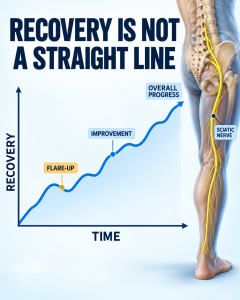
An agreed plan may involve reducing the demanding activity temporarily, maintaining manageable movement and returning gradually towards the previous level.
Persistent deterioration or new symptoms require reassessment.
A simple record can help: note the activity, amount and subsequent response. If exercises are difficult to fit in or understand, tell us so the plan can be made more practical.
When to Seek Urgent Help
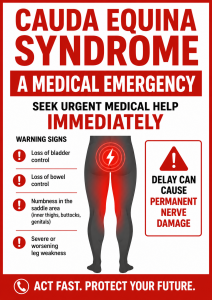
With back or leg pain, although rare new bladder or bowel changes, numbness around the genitals or anus, sciatica affecting both sides, or severe or worsening weakness or numbness in both legs require emergency assessment. Go to A&E or call 999
Personalised Rehabilitation in Buxton and Bakewell
At Buxton & Bakewell Osteopathy Clinic, rehabilitation begins with understanding your symptoms, current abilities and recovery goals.
We aim to explain why each exercise has been chosen, how to perform it and how to recognise when the programme needs adjusting.
Your plan should fit your life, whether you want to manage work, return to gardening or enjoy local walks again.
Arrange an assessment to discuss a tailored exercise and rehabilitation programme for your lower back pain, with practical steps towards improved movement, strength and everyday function.