Gradual Return to Daily Life After Lower Back Pain
Lower back pain can interrupt much more than exercise. Getting dressed, driving to work, carrying shopping or meeting friends may suddenly require extra thought.
As symptoms settle, a common question is: “How much can I safely do?”
For many people, returning to normal activities is part of recovery. The challenge is finding a manageable starting point and building from there, without rushing or becoming unnecessarily fearful of movement.
At Buxton & Bakewell Osteopathy Clinic, we help patients connect their assessment and rehabilitation with everyday goals.
Whether you want to manage your working day, return to gardening or enjoy the Peak District again, the plan should reflect your circumstances.
Why Returning to Activity Matters
After a painful episode, it is understandable to protect your back.
However, avoiding movement for a prolonged period can make daily life increasingly restricted. You may lose confidence in tasks that previously felt ordinary.
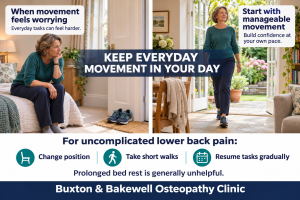
Current guidance encourages people with uncomplicated lower back pain to remain active and resume usual activities as they are able. Prolonged bed rest is generally unhelpful.
That does not mean ignoring significant symptoms or carrying on regardless.
A suitable return involves adjusting the amount and demands of activity, with medical assessment when needed.
You May Not Need to Be Completely Pain-Free
Many of us assume every ache must disappear before we can return to work or household tasks.
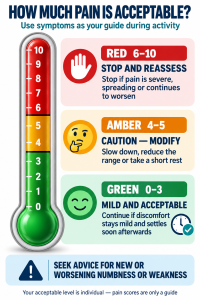
For uncomplicated back pain, that is often unnecessary. Some people can resume some gentle activities while mild symptoms remain.
The important questions include whether the task is manageable, whether symptoms remain acceptable and whether you can perform it safely.
Pain intensity alone does not give a complete picture of tissue damage or readiness.
The aim is to build useful function alongside recovery, with an agreed understanding of what should prompt review.
Start With Your Current Abilities
A practical plan begins with what you can manage now.
Consider getting out of a chair, walking locally, preparing a meal, sitting at a desk and climbing stairs.
Which activities feel comfortable? Which become difficult after a while? Are there symptoms in the leg as well as the back?
Choose a starting amount that is reasonably repeatable, rather than testing your absolute limit.
For example, someone who struggles after a long supermarket visit might begin with a shorter shopping trip and a lighter bag.
Your previous level remains a useful goal, but your current ability determines the first step.
Increase One Demand at a Time
Activities can become harder in several ways: greater duration, heavier loads, faster pace, more repetition or more challenging surroundings.
Changing everything together makes it difficult to understand your response.
A walker might extend a level route before adding hills. A gardener might increase time on lighter jobs before returning to digging.
There is no universal weekly percentage or timetable that suits everyone.
Progress can include maintaining an activity comfortably, as well as increasing it.
Other health conditions may change the approach. People who experience post-exertional symptom worsening, including those with ME/CFS, need condition-specific advice rather than automatic increases in activity.
Getting Out of Bed and Getting Dressed
Morning routines can feel awkward when the back is stiff or sensitive.
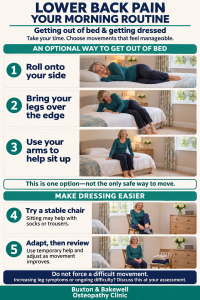
Give yourself enough time to move without rushing. Some people find it comfortable to roll onto their side, bring their legs over the bed edge and use their arms to help sit up.
This is an optional strategy, rather than the only safe method.
For dressing, sitting on a stable chair may make socks or trousers easier to manage.
Sitting and Working at a Desk
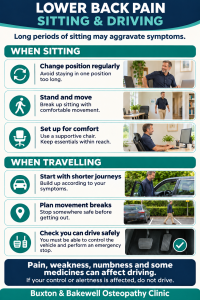
Sitting tolerance varies considerably and it really depends on your particular condition.
A good ergonomic supportive chair and a comfortable arrangement of the screen, keyboard and frequently used items may help you manage the task.
However, there is no single perfect sitting position that must be maintained all day.
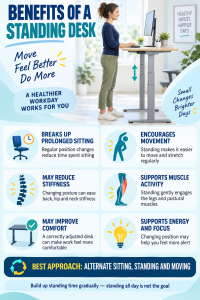
Try varying your position and breaking up longer periods of sitting with manageable movement.
A standing desk can offer another option, but standing continuously may also become uncomfortable.
Consider the whole working pattern: meetings, commuting and evening screen time all add to the day.
Your plan might begin with shorter periods of desk work and planned opportunities to change activity.
Returning to Driving
Driving requires more than being able to sit in the car.
Household Tasks Without Doing Everything at Once
Vacuuming, laundry, carrying shopping and cleaning involve different combinations of bending, reaching and lifting.
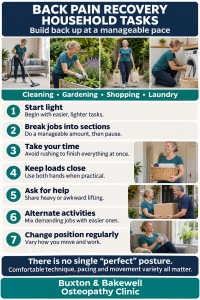
These adaptations can make tasks more manageable while you rebuild tolerance.
You do not have to hold your back rigidly throughout housework. Technique should be comfortable and suited to the task, with opportunities to vary position.
Returning to Gardening
Gardening is an important recovery goal for many patients around Buxton and Bakewell.
It combines enjoyable activity with tasks that can become demanding, particularly after time away.
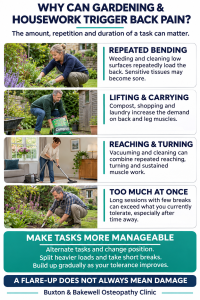
Start with manageable jobs such as light watering or tending a raised container. Longer periods of digging, carrying compost or moving pots may need further preparation.
A kneeling pad, suitable tools or a higher working surface may improve comfort.
Plan a stopping point before beginning, so enthusiasm does not turn a brief task into an afternoon of heavier work.
As tolerance improves, reintroduce more demanding jobs in stages, with appropriate strength and movement practice.
Walking Around Buxton, Bakewell and the Peak District
Local walks offer many ways to rebuild activity, but distance is only one part of the challenge.
A level riverside walk differs from a steep, uneven route with a rucksack.
Consider:
- Surface and gradient.
- Opportunities to pause or turn back.
- Distance from transport.
- Weather and footwear.
- What you need to carry.
Begin with a route that leaves room to adjust your plans.
Several short walks may suit some people better than one longer outing.
If walking repeatedly causes leg numbness, heaviness, pain or weakness, seek assessment rather than assuming you simply need more fitness.
Returning to Work
Your role determines what a workable return looks like.
Desk work, driving, care work and manual employment place different demands on the body.
A temporary plan might involve shorter hours, modified duties, reduced lifting or more frequent changes of task.
Discuss practical adjustments with your employer or occupational health service where available.
You may not need to be symptom-free before returning, but the work should be safe and manageable.
Safety-critical duties require particular attention if pain, medication or neurological symptoms affect performance.
Review the arrangement rather than treating it as permanent. As ability improves, duties can be reconsidered.
Rebuilding Bending and Lifting
Bending is a normal part of everyday life, although it may feel uncomfortable after a flare-up.
Rehabilitation can include practising manageable versions of reaching, bending and lifting.
You might begin with an unloaded movement or a light object placed at a convenient height, then adjust the task as appropriate.
Load, repetition, distance from the body and fatigue all influence difficulty.
There is no single technique that guarantees protection from back pain.
Find a comfortable approach, use assistance for demanding objects and build the capacity required for your actual tasks.
Any restrictions after surgery or fracture should take priority over general lifting advice.
Exercise That Supports Everyday Function
A rehabilitation programme should help you do more of what matters outside the clinic.
Depending on your assessment, it might include walking, mobility work, strengthening, balance exercises and practice of particular tasks.
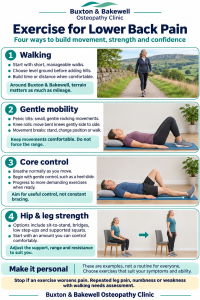
Sit-to-stand exercises may support getting out of a chair. Step practice may help prepare for stairs or local terrain.
Exercises should have a clear purpose and an amount you understand.
An extensive routine is not automatically better than a few relevant movements performed consistently.
Review both the exercises and their effect on daily life. Improving a test in the clinic is useful when it translates into meaningful activity.
What to Do During a Flare-Up
A temporary increase in pain does not necessarily mean that an injury has returned or all progress has been lost.
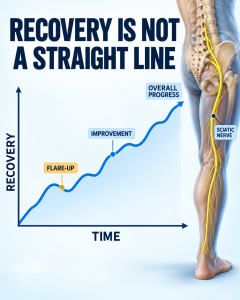
You might temporarily reduce the most aggravating task while maintaining movement you can manage.
Comfortable positioning and relaxation may also help.
As symptoms settle, reconsider how to return towards your previous activity level.
Avoid treating every setback as a reason to abandon rehabilitation, but do not dismiss persistent deterioration.
New symptoms, a substantial change in the pattern or failure to recover as expected should prompt reassessment.
When Medical Help Takes Priority
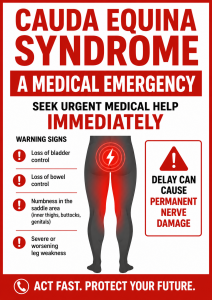
With back or leg pain, although this is very uncommon, if the spinal cord becomes severely compressed this can cause new bladder or bowel changes, numbness around the genitals or anus, or symptoms affecting both legs require emergency assessment. Go to A&E or call 999.
Support From Buxton & Bakewell Osteopathy Clinic
At Buxton & Bakewell Osteopathy Clinic, we aim to connect treatment and rehabilitation with the activities that matter to you.
Assessment helps us understand your symptoms and identify suitable next steps. Osteopathy may be considered alongside exercise and advice when appropriate, with referral when medical investigation is needed.
The plan should explain what to try, how to adjust it and when to seek further help.
Arrange an assessment to discuss returning to daily life after lower back pain, with practical goals for work, home and enjoying Buxton, Bakewell and the Peak Distric