Exercise and Rehabilitation for Lower Back Pain in Buxton and the Peak District
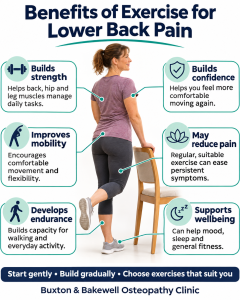
Why does movement matter?
| Benefit | How rehabilitation may help |
|---|---|
| 🔄 Improve spinal movement | Make bending, turning and everyday movement easier. |
| 💆 Reduce muscle spasm | Ease protective muscle tension through suitable movement. |
| 🩸 Increase blood flow | Encourage circulation through physical activity. |
| 🤸 Improve flexibility | Develop a comfortable range of movement. |
| 💪 Strengthen supporting muscles | Build strength and endurance around the back, abdomen and hips. |
| 🪑 Support comfortable posture | Improve tolerance of different positions and encourage regular movement. |
| 🌅 Reduce stiffness | Help you move more freely after rest or inactivity. |
| ⚖️ Improve balance | Develop stability and coordination. |
| 🚶 Restore movement confidence | Gradually rebuild trust in everyday activities. |
| 🛡️ Reduce future episodes | Support long-term activity habits that may lower the risk of recurrence. |
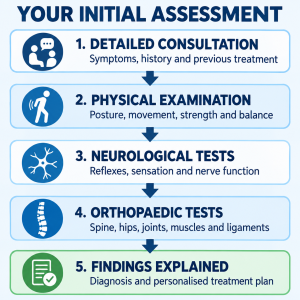
Start with an assessment when needed
Lower back pain is a symptom with several possible explanations. Muscle strains, painful joints, disc-related problems and nerve irritation may require different exercise choices. Sometimes there is no single structure that can be confidently identified as the source.
An assessment is particularly helpful if pain keeps returning, limits daily life or is accompanied by leg symptoms.
Known osteoporosis, a recent fracture or spinal surgery may require specific precautions. General online exercises should not replace an individual plan in these circumstances.
Rehabilitation involves more than stretching
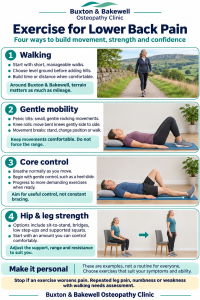
Stretching is often the first thing we all try, especially when our back feels tight. Gentle mobility work can be useful, but rehabilitation usually needs a broader approach.
A balanced program can include:
- Comfortable movement to reduce stiffness.
- Walking or another manageable aerobic activity.
- Strength and endurance exercises.
- Practice with bending, lifting and carrying.
- A gradual return to work, hobbies and sport.
Your programme should reflect what you need your back to do. Someone returning to desk work may have different priorities from someone who lifts equipment, cycles or maintains a large garden.
There is no requirement to master every exercise before resuming everyday life. Rehabilitation and normal activity can develop together.
Learning to bend and lift again
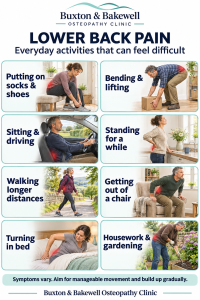
Many people become cautious about bending after a painful episode. Initially, modifying how you move can help you stay active while symptoms settle.
For lifting, it may be useful to keep the object close, share the effort through your hips and knees, and choose a manageable weight. Breaking a large load into smaller loads can also help.
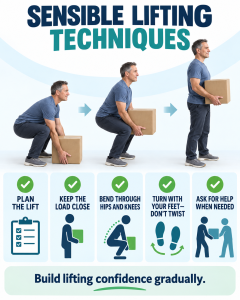
There is no single posture that makes every lift safe. The weight, repetition, fatigue and your current capacity all matter.
Rehabilitation can gradually reintroduce bending and lifting, beginning with easy tasks and increasing the challenge.
The aim is to restore options and confidence. It is usually more helpful to build tolerance gradually than to believe that your spine must always remain completely straight.
How much exercise should you do?
There is no universal number of repetitions or minutes that suits everyone with lower back pain.
Begin with a dose that feels achievable. For one person, that might mean a few repetitions of two exercises. Another may already tolerate longer walks and moderate strengthening.
Consider four variables:
| Variable | How you can adjust it |
|---|---|
| Duration | Exercise for a shorter or longer period |
| Repetitions | Perform fewer or more movements |
| Resistance | Reduce or increase the load |
| Frequency | Change how often you exercise |
Change one variable at a time where possible. This makes it easier to understand your response.
Strength sessions may need recovery time between them, while comfortable movement can often be spread throughout the day.
Should exercise hurt?
Some people with persistent back pain can tolerate mild, familiar discomfort during rehabilitation. However, pain is not a target, and you do not need to provoke it for exercise to work.
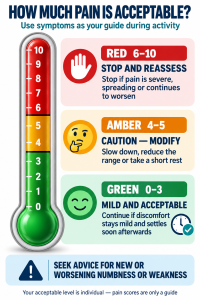
Pay attention to what happens during the activity, afterwards and the following day. A suitable exercise should not produce a sustained worsening of your usual symptoms.
If discomfort increases, reduce the range, resistance, repetitions or duration. Stop an exercise that clearly makes your pain worse and seek advice if symptoms persist.
New or increasing leg pain, tingling, numbness or weakness needs particular attention. Do not repeatedly push through these symptoms.
There is no single pain score that reliably tells everyone whether an exercise is suitable. Your overall response and clinical circumstances matter.
What if you have a flare-up?
Recovery is not always a straight line. Symptoms may fluctuate after extra activity, poor sleep, illness or an unusually demanding day.
A flare-up does not automatically mean new damage, but it is a reason to reassess what is manageable.
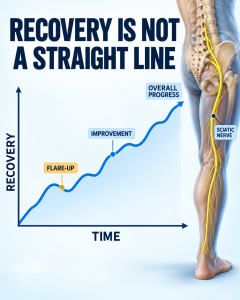
Temporarily reduce the activities that are clearly aggravating your symptoms. Continue comfortable movement where possible, and return to a previously manageable level before building again.
Avoid making up for missed exercise with a much harder session when you feel better. Repeatedly doing too much on good days can make consistency difficult.
Seek reassessment if the flare-up is unusually severe, keeps worsening, feels different from your normal symptoms or is accompanied by neurological changes.
Returning to gardening and housework
Gardening and housework combine bending, reaching, carrying and prolonged positions. A task may become uncomfortable because of its duration or repetition, even when each movement seems light.
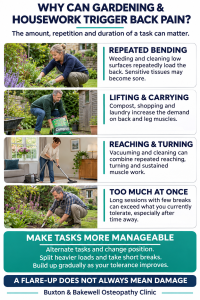
Break larger jobs into shorter periods. Alternate tasks so that you are not repeatedly loading your back in the same way.
For example, switch between light pruning, walking and a brief period of weeding. Use manageable containers rather than repeatedly carrying one heavy load.
Treat these activities as part of your overall exercise dose. A demanding afternoon in the garden may mean reducing additional strengthening that day.
As your tolerance improves, gradually extend the time or difficulty. Progress should help you do more of what matters, with fewer disruptions from symptoms.
What about Pilates, swimming and gym exercise?
Several forms of exercise may be useful for lower back pain. The best choice often depends on what you enjoy, can access and can practise consistently.
Pilates can offer controlled movement and strength work. Swimming or water-based exercise may feel comfortable for some people. Gym exercises can develop strength through adjustable resistance.
However, a class labelled “back care” is not automatically suitable for every condition. Tell the instructor about your symptoms and ask for modifications where necessary.
NICE recommends choosing exercise according to the person’s needs, preferences and capabilities.[2] You do not need to find one supposedly perfect method.
Choose an approach that supports your goals and allows sensible progression.
How can osteopathy support rehabilitation?
Osteopathic assessment can help clarify your symptoms and identify movements or activities that need adapting. Treatment may include advice, exercise guidance and appropriate manual therapy.
For some patients, hands-on treatment helps them feel more comfortable while they begin moving more confidently. However, ongoing rehabilitation should develop the skills and capacity needed between appointments.
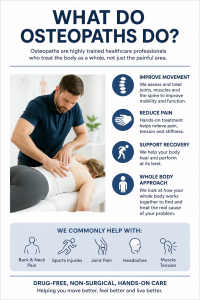
NICE recommends considering manual therapy as part of a package that includes exercise. Treatment and activity planning should therefore work together.
At Buxton & Bakewell Osteopathy Clinic, discussing your practical goals can help make rehabilitation relevant: whether you want to manage a working day, return to gardening or enjoy walking in the Peak District.
When should you seek urgent help?
Exercise is not appropriate as the first response to every episode of back pain.
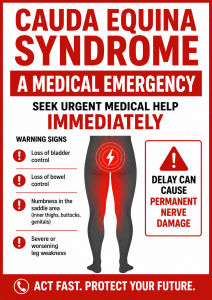
Go to A&E immediately if back pain occurs with new bladder or bowel changes, loss of feeling around the genitals or anus, or pain, weakness, tingling or numbness in both legs.
Taking the next step
Successful rehabilitation is about building a back that can meet your everyday needs. Progress may show up as an easier school run, a longer walk or greater confidence picking something up.
If lower back pain is limiting your activity, an assessment at Buxton & Bakewell Osteopathy Clinic can help you understand your symptoms and discuss a suitable rehabilitation plan.
Start with what you can manage, build steadily, and make your goals meaningful to you.