Long-Term Prevention of Lower Back Pain: Building Strength, Confidence and Lasting Habits
When lower back pain improves, it is natural to want reassurance that it will never return.
Although no treatment, exercise or posture can guarantee this, there are practical ways to reduce the likelihood of future problems and limit their impact.
How Likely Is Lower Back Pain to Return? 🚦
This is a general guide, not a absolute risk score. pubmed.ncbi.nlm.nih.gov
| Back pain type or pattern | Traffic light and explanation |
|---|---|
| First episode that fully settles | 🟢 Relatively lower concern. Returning to normal activity without repeated episodes is encouraging, although pain can still return. |
| Occasional mechanical back pain | 🟠 Recurrence is possible. Symptoms settle between episodes but may flare again. The pattern over time matters more than identifying one muscle or joint. |
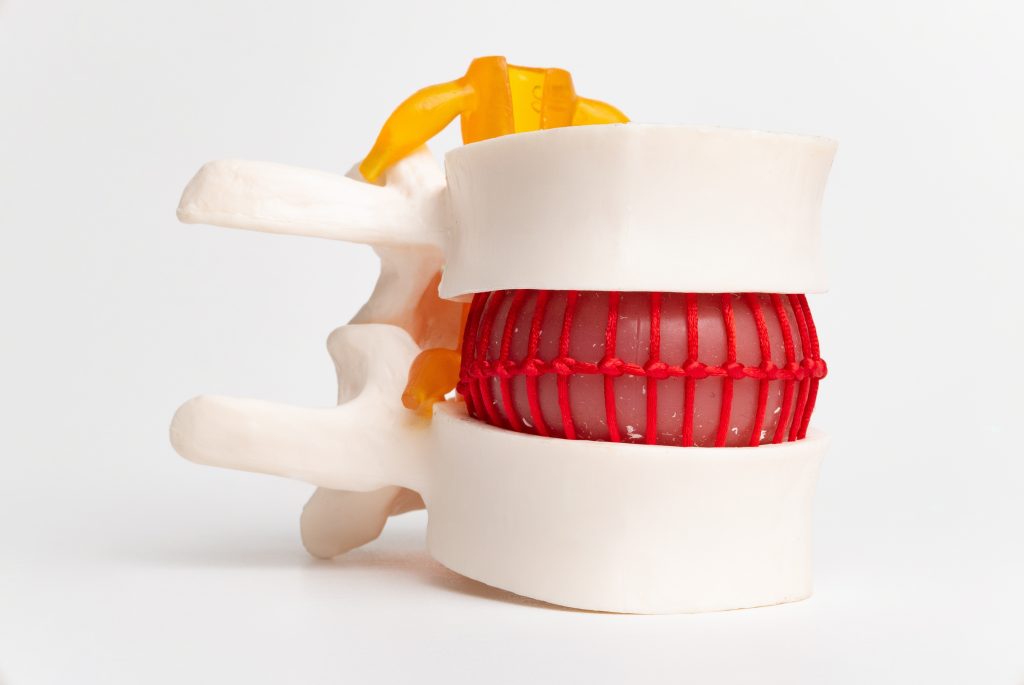
| Disc-related pain or sciatica | 🟠 Can recur after recovery. A future episode does not automatically mean the disc has herniated again. Many disc changes also exist without symptoms. |
| Repeated back pain episodes | 🔴 Greater concern about recurrence. Several previous episodes are associated with a higher likelihood of another flare-up. |
| Persistent back pain with flare-ups | 🔴 An ongoing management need. Symptoms have not fully settled, so worsening represents a flare-up rather than a separate recurrence. |
| Symptomatic lumbar spinal stenosis | 🔴 Symptoms may fluctuate long term. This is an ongoing condition rather than a series of separate injuries. Symptoms do not inevitably worsen. |
Sciatica can return, while spinal stenosis commonly follows a variable, long-term course. These conditions cannot be ranked precisely against muscular, facet-joint or sacroiliac pain using a reliable universal recurrence scale.
🟢 Lower concern does not mean no risk. 🔴 Greater concern does not mean permanent damage or an emergency.
Long-term prevention involves maintaining activity, building useful strength and understanding how to manage changes in symptoms.
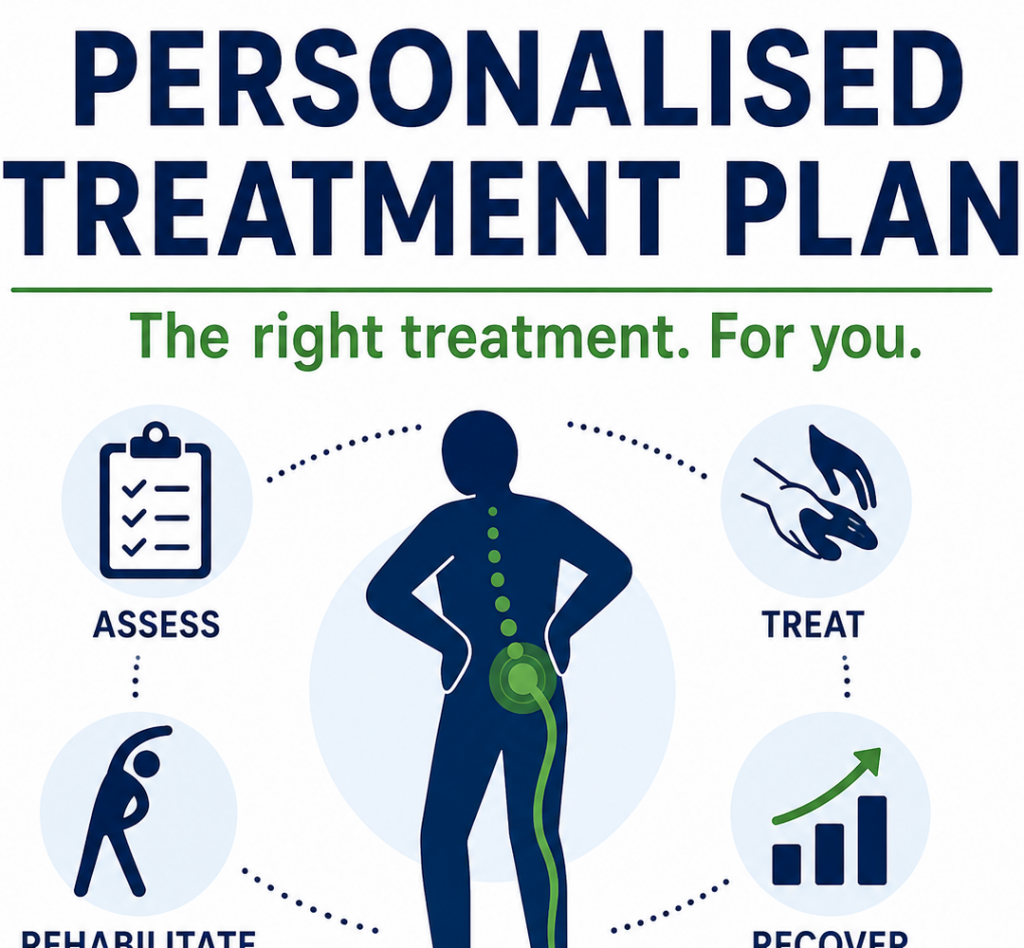
At Buxton & Bakewell Osteopathy Clinic, we help patients develop plans that fit their health, work and everyday priorities.
Whether you enjoy gardening, walking in the Peak District or simply want more comfortable daily movement, the aim is a sustainable routine that supports confidence and independence.
What Does Prevention Really Mean?
Prevention does not mean making your spine bullet proof.
It means reducing you risk to future episodes and reducing pain intensity.
Regular exercise + education: Research consistently shows that ongoing physical activity—especially when paired with useful practical education about back care and movement—is the most reliable way to prevent future lower back pain episodes and long-term disability. Building general fitness, walking, cycling, resistance training, and core/hip strength helps your back tolerate everyday loads.
Broader health habits: Sleep quality, stress management, and varying prolonged sitting or repetitive tasks all support spinal health. Organizations like BackCare highlight everyday movement habits across work, home, and leisure.
Walking Has Evidence for Reducing Recurrence
The 2024 WalkBack trial studied 701 adults who had recently recovered from nonspecific lower back pain.
An individual walking and education programme, supported by manual therapy, delayed lower back pain happening again compared to doing nothing.
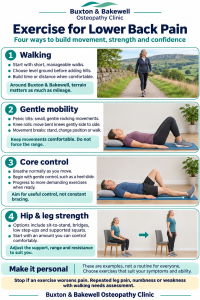
This was a combined programme, so the results cannot be attributed to walking alone. Participants were also selected for suitability, and lower-limb adverse events were more numerous in the intervention group.
Choose Local Walks That Match Your Capacity
Buxton, Bakewell and the Peak District offer many opportunities to stay active.
However, a short level route and a long hillside walk place different demands on you.
Consider terrain, weather, footwear, distance and what you carry.
A convenient route near home may be easier to maintain during a working week than an occasional ambitious outing.
Increase demands when the current amount feels manageable, with room to maintain or reduce activity when needed.
Repeated walking-related leg pain, numbness, heaviness or weakness deserves assessment.
Do not assume these symptoms simply mean you need to become fitter or push further.
Maintain Strength for Everyday Tasks
Strength training can help you prepare for carrying shopping, climbing stairs, gardening and lifting.
The programme may include exercises for the trunk, hips and legs, alongside general whole-body strengthening.
Examples might involve standing from a chair, stepping, resistance bands or suitable weights.
Exercise choice and difficulty should reflect your ability and goals.
If you are starting after a prolonged break, or have relevant medical conditions, agree an appropriate starting point and progression with a qualified professional.
Your Core Is Part of a Bigger Picture
The core includes abdominal and back muscles working with breathing and pelvic support.
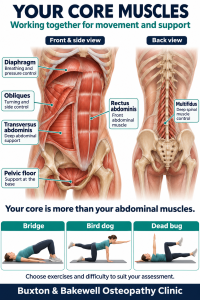
Improving muscle control and endurance can be useful, but lower back pain does not automatically mean your core is weak.
Build Activity Gradually and Flexibly
A return to demanding activity after time away can require preparation.
For example, restarting heavy gardening after a quiet winter may call for shorter sessions and lighter jobs initially.
Change one demand at a time where practical: duration, load, pace or complexity.
There is no universal percentage increase that suits every person.
Vary Positions at Work
A comfortable workstation can make your working day easier, but no chair or desk guarantees prevention.
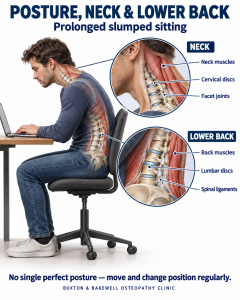
There is no single perfect posture that everyone must hold.
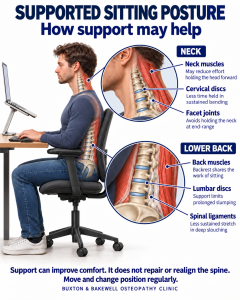
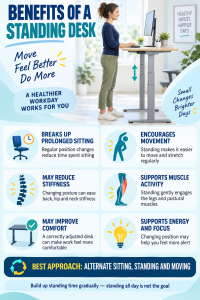
Instead, consider whether you can vary tasks, change position and take manageable movement breaks.
A standing desk provides another option, rather than a requirement to remain standing all day.
Prepare for Lifting Rather Than Fearing It
Lifting is part of ordinary life.
A useful long-term aim is to build the capacity for your usual tasks, rather than avoid lifting indefinitely.
Consider the object’s weight and shape, the available space and whether assistance would help.
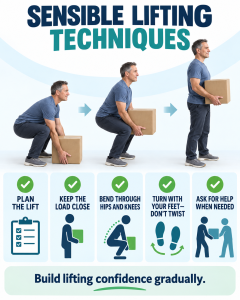
Smaller loads or lifting aids may be sensible for demanding jobs.
There is no single lifting posture that guarantees protection from back pain. Choose a comfortable approach and practise relevant tasks progressively.
Restrictions following surgery, fracture or another specific condition still need to be followed.
If lifting repeatedly produces escalating leg symptoms, seek advice instead of simply changing technique and continuing.
Make Household and Gardening Routines Sustainable
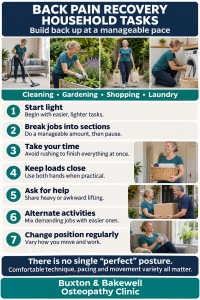
A large amount of work concentrated into one session can be difficult to manage.
Try spreading demanding jobs across the week and alternating activities where helpful.
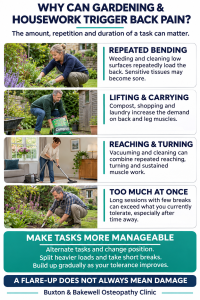
For example, you might combine a manageable gardening session with lighter tasks rather than digging, moving pots and clearing a shed together.
Keep suitable tools available and ask for help with awkward objects.
These are practical adaptations, rather than evidence that your back is fragile.
As your capacity improves, you may be able to do more without needing the same adjustments.
The aim is continued participation in activities you value, with a routine that remains manageable.
Have a Plan for Flare-Ups
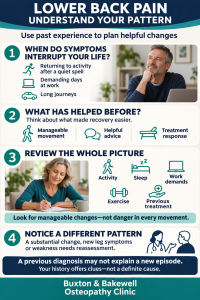
A flare-up does not necessarily mean that damage has occurred or your prevention efforts have failed.
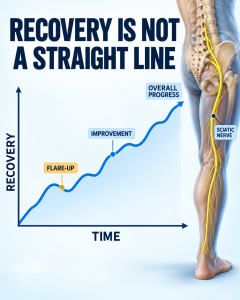
Consider what helped previously, while checking whether the current episode has any unfamiliar features.
As symptoms settle, return towards your usual activity without trying to make up everything immediately.
Persistent deterioration or new neurological symptoms require reassessment.
A flare-up plan should support confidence, with clear limits on self-management when the pattern suggests something different.
Where Osteopathy Can Fit
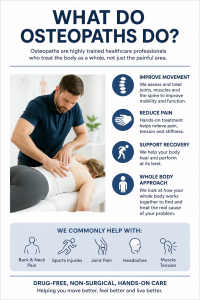
NICE recommends manual therapy for lower back pain as part of a package that includes exercise.
A Practical Prevention Plan
A sustainable plan might include:
- An enjoyable activity you can repeat regularly.
- Strength exercises relevant to your daily demands.
- Opportunities to vary prolonged positions.
- Preparation before returning to heavier tasks.
- A clear response to flare-ups.
- Review if symptoms change or function declines.
Choose a small number of habits that fit your week.
For example, a gardener might maintain walking and strength work through winter. An office worker might combine regular exercise with changes to long meetings and commuting.
These are planning examples, not universal prescriptions.
Review what is realistic during busy periods so that the routine can adapt rather than disappear.
Know When to Seek Medical Help
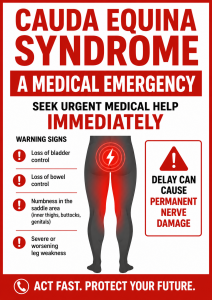
With back or leg pain, although very uncommon severe pressure on the spinal cord can cause new bladder or bowel changes, loss of feeling around the genitals or anus, or pain, tingling, weakness or numbness affecting both legs require emergency assessment. Go to A&E or call 999.
Long-Term Back Care in Buxton and Bakewell
At Buxton & Bakewell Osteopathy Clinic, we help patients connect recovery with practical long-term habits.
Your plan should reflect your assessment, general health, preferences and the demands of your life.
The priorities are maintaining useful movement, building appropriate strength and understanding what to do if symptoms change.
You do not need to achieve a perfect posture or avoid every demanding activity to look after your back.
Arrange an assessment to discuss recurrent lower back pain and develop a realistic plan for staying active at work, at home and across the Peak District.