Better Habits and Ergonomics for Lower Back Pain: Posture, Movement, Lifting and Workstation Setup
Lower back pain can make you question ordinary habits.
Is your chair wrong? How long can I sit for? Would a standing desk help? Do you need to keep your back straight all day?
Ergonomics means adapting tasks, equipment and surroundings to the person using them. Combined with manageable movement and appropriate exercise, it can help you work and carry out everyday activities more comfortably.
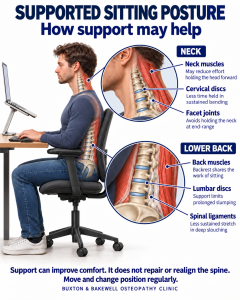
At Buxton & Bakewell Osteopathy Clinic, we consider your symptoms alongside the practical demands of your day.
The aim is a comfortable, flexible routine that supports recovery and independence.
Does Poor Posture Cause Back Pain?
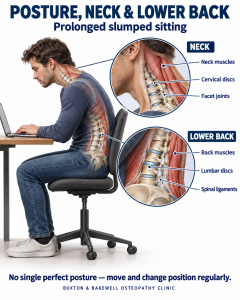
Posture is often blamed for symptoms, but the relationship is more complicated than “slouching damages the spine”.
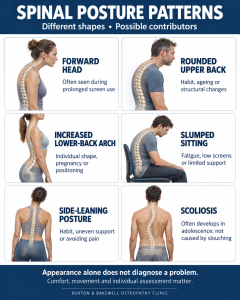
There is no single perfect posture.
The practical aim is to find tolerable comfortable options and vary them.
Comfortable Alignment Is a Starting Point
Workstation recommendations provide a useful starting point.
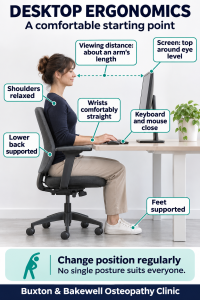
Try sitting so that your body feels supported, your shoulders can relax and your work is easy to reach.
Persistent difficulty finding any comfortable position deserves assessment, particularly if symptoms extend into the leg or affect strength.
🔄 Give Movement a Place in Your Routine
| Focus | Practical advice |
|---|---|
| Movement breaks | Take short, frequent breaks or change tasks during screen work. |
| Position changes | Build opportunities to vary your position into your day. |
| Exercise | Use movement breaks alongside exercise and rehabilitation. |
🪑 Arrange Your Chair and Feet
| Focus | Practical advice |
|---|---|
| Seat height | Reach the keyboard with your shoulders relaxed. |
| Foot support | Rest feet on the floor or a suitable footrest. |
| Back support | Use a comfortable backrest. A cushion should not force an exaggerated arch. |
| Adjustments | Change one thing at a time and check comfort during work. |
🖥️ Position the Screen for Easy Viewing
| Focus | Practical advice |
|---|---|
| Screen position | Place your main screen directly ahead for comfortable viewing. |
| Height and distance | Start with the top around eye level, about an arm’s length away. |
| Text size | Enlarge text if you keep leaning forwards to read. |
| Glasses | Adapt screen height to your vision, particularly with varifocals. |
| Overall setup | Check the screen, keyboard and chair together. |
🖱️ Keep Equipment Within Easy Reach
| Focus | Practical advice |
|---|---|
| Keyboard and mouse | Keep frequently used equipment close to avoid repeated reaching. |
| Arm support | Support hands or forearms comfortably without pressure from desk edges. |
| Documents | Place regularly used papers on a holder near the screen. |
| Lighting | Reduce reflections and adjust brightness for comfortable viewing. |
| Comfort | Adapt the arrangement to your tasks and response. |
💻 Laptops, Two Screens and Home Working
| Focus | Practical advice |
|---|---|
| Laptop use | For longer sessions, raise the screen and use a separate keyboard and mouse. |
| Main screen | Position your most-used screen centrally. |
| Equal screen use | Arrange both to minimise prolonged turning to one side. |
| Turning | Move your chair or body when helpful rather than holding a twist. |
| Home working | Review each workspace and add suitable support or equipment. |
Treat these as flexible starting points: comfort, individual needs and regular changes of position matter.
Would a Standing Desk Help?
A height-adjustable desk can provide another working position.
Its value lies partly in allowing change, rather than making standing superior to sitting.
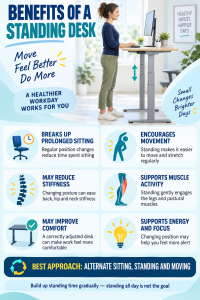
Long periods of standing can also become uncomfortable.
If you have access to an adjustable desk, start with manageable periods and review your response.
Check screen and input-device positions when changing height.
You do not need to buy an expensive desk before trying simpler changes, such as varying tasks and arranging movement breaks.
Someone whose leg symptoms reliably worsen when standing may need a different plan. Assessment should guide the advice rather than a general rule that everyone should stand more.
Lifting: Consider the Whole Job
Lifting advice should begin before the object leaves the ground.
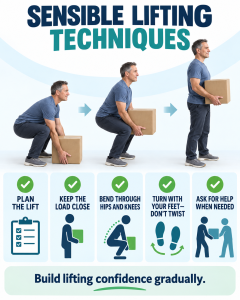
Ask whether the load needs moving, whether it can be divided and whether a suitable aid or another person would help.
Consider where it is going, the available route and any obstacles.
HSE emphasises that technique does not replace improvements to the task, load or environment.
A careful-looking lift can still be too demanding if the object is heavy, awkward or repeatedly handled.
At home, this might mean moving compost in smaller amounts. At work, it may involve appropriate equipment or changing storage.
These practical changes can matter more than memorising a posture.
Practical Principles for Handling Loads
📦 Plan Before Moving a Load
| Principle | Practical advice |
|---|---|
| Check the need | Does the object need moving? Could the task be avoided? |
| Reduce the load | Divide heavy loads into smaller amounts where possible. |
| Use assistance | Consider suitable equipment or another person’s help. |
| Plan the route | Check the destination, available space and obstacles. |
| Review the whole task | Weight, awkward shapes and repeated handling matter alongside technique. |
| Improve the arrangement | Change storage or working height to make handling easier. |
👐 Practical Principles for Handling Loads
| Principle | Practical advice |
|---|---|
| Stable stance | Position your feet to feel balanced and secure. |
| Secure grip | Make sure you can hold the object comfortably. |
| Load close | Keep the object near your body where practical. |
| Smooth movement | Let your hips and knees contribute in a way that suits you. |
| Turn with control | Reposition your feet when turning with a substantial load. |
| Avoid snatching | Reassess objects that feel stuck or unexpectedly heavy. |
| Adjust safely | Put the load down before changing your grip if needed. |
| Recognise limits | Change the task or get help if it remains difficult. |
🔄 Bending Is Not Something to Fear
| Principle | Practical advice |
|---|---|
| Normal movement | Bending is part of dressing, gardening and everyday life. |
| Rounded back | A rounded back during ordinary movement does not automatically mean damage. |
| Adapt when sensitive | Try hand support, a raised object or a smaller movement. |
| Rebuild tolerance | Rehabilitation can help you become more comfortable with relevant tasks. |
| Allow flexibility | You do not need a deep squat for every small item. |
| Follow specific advice | Restrictions after surgery, fracture or another diagnosed condition take priority. |
| Review leg symptoms | Seek assessment for new or increasing leg symptoms rather than repeatedly provoking them. |
🌿 Household Tasks and Gardening
| Principle | Practical advice |
|---|---|
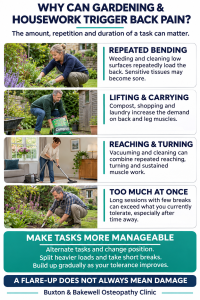
| Work in sections | Divide larger jobs into manageable amounts. |
| Vary activities | Alternate demanding tasks with easier ones. |
| Prepare equipment | Keep useful items nearby to reduce repeated carrying. |
| Adjust working height | A higher surface may make some jobs more comfortable. |
| Build up gradually | Allow preparation when returning to gardening after a quieter period. |
| Match your ability | Choose a workload suited to what you can currently manage. |
Driving and Carrying Equipment
A comfortable driving position should allow easy access to controls and an adequate view without excessive reaching.
Consider the whole journey, including getting in and out and handling bags afterwards.
Plan safe stopping places for movement breaks on longer trips.
Only drive when you can control the vehicle safely; pain, weakness, altered sensation and medication may affect this.
For bags, consider what you genuinely need to carry. Splitting equipment, using wheels where suitable or making additional manageable trips may help.
The useful adjustment depends on the surroundings. An uneven Peak District path and an office corridor present different challenges for carrying the same load.
Build Capacity Alongside Ergonomic Changes
Equipment adjustments can improve convenience, but they are only part of care.
Strengthing and exercise is important
A tailored rehabilitation programme can connect exercise with the tasks you want to manage, such as lifting shopping, working at a bench or walking between appointments.
Where osteopathy is appropriate, hands-on care can be considered within a wider package that includes exercise.
The goal is to help you use your body comfortably and confidently, with practical strategies you can continue independently.
When Assessment Is Needed
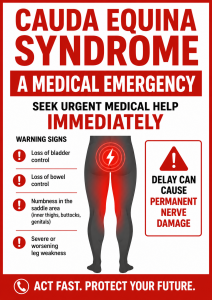
Back or leg pain (this is very uncommon) with new bladder or bowel changes, numbness around the genitals or anus, or symptoms affecting both legs requires emergency assessment. Go to A&E or call 999.
Severe rapidly worsening pain, significant injury or feeling feverish and unwell also needs urgent medical advice.
Better Habits With Buxton & Bakewell Osteopathy Clinic
At Buxton & Bakewell Osteopathy Clinic, we aim to make advice practical and relevant.
We consider your symptoms, examination findings and everyday demands when discussing posture, movement, lifting and workstation adjustments.
The most useful plan may involve a few straightforward changes, appropriate rehabilitation and osteopathy where indicated.
You do not need a perfect posture or an elaborate collection of equipment to begin.