Common Knee Ligament Problems: Expert Care in Buxton & Bakewell
Knee pain and instability can dramatically affect your quality of life — whether you’re an athlete, weekend walker, or simply want to stay active without discomfort. At Buxton & Bakewell Osteopathy Clinic, we specialise in diagnosing and treating the full spectrum of knee ligament problems with advanced, evidence-based techniques — including Shockwave Therapy, a leading non-surgical treatment that accelerates healing and delivers long-lasting results.
In this in-depth guide, we explain common ligament injuries of the knee, how to recognise them, and why early expert assessment — especially in the Buxton and Derbyshire area — can prevent chronic issues. We also outline how Shockwave Therapy helps improve pain, function, and recovery outcomes when ligament irritation, instability, or associated tendon irritation is present.
Understanding Knee Ligaments: Anatomy & Function
The knee is one of the most complex and heavily used joints in the body, relying on strong ligaments to maintain stability and guide motion. There are four main ligaments that support healthy knee function:
-
Anterior Cruciate Ligament (ACL) – prevents the shinbone (tibia) from sliding forward and controls rotation.
-
Posterior Cruciate Ligament (PCL) – prevents the tibia from sliding backward.
-
Medial Collateral Ligament (MCL) – stabilises the inner knee against sideways forces.
-
Lateral Collateral Ligament (LCL) – stabilises the outer knee against sideways forces.
These ligaments are essential for everyday activities — from walking to running, pivoting, and climbing stairs. When one or more become strained or torn, it can lead to pain, swelling, instability, and reduced mobility.

Common Ligament Injuries & Symptoms
1. Anterior Cruciate Ligament (ACL) Injuries

ACL injuries are among the most recognised knee ligament problems, particularly common in sports involving sudden stops, rapid turns, or direct impact.
Symptoms may include:
-
A feeling of the knee “giving way” under load
-
A loud pop or crack at the time of injury
-
Rapid swelling and sharp pain
-
Difficulty weight-bearing or walking
ACL tears are graded from partial strain to complete rupture. Mild tears may heal with conservative care, while complete ruptures may require surgical reconstruction and targeted rehabilitation. Early diagnosis and tailored treatment are essential to maximise outcomes.
2. Posterior Cruciate Ligament (PCL) Injuries

Though less common than ACL injuries, PCL injuries still occur — especially during falls or direct strikes to the front of the knee.
Symptoms often include:
-
Pain deep in the back of the knee
-
Mild swelling post-injury
-
A sense of instability when walking downhill or descending stairs
PCL injuries vary in severity, and careful assessment by a trained clinician helps determine whether conservative rehabilitation or more advanced treatment is needed.
3. Medial & Lateral Collateral Ligament Injuries (MCL & LCL)

The collateral ligaments protect the knee from sideways stress. Minor strains often result from awkward twists, while more severe tears typically accompany contact injuries
Signs include:
-
Pain and swelling along the inner (MCL) or outer (LCL) knee
-
Instability during side-to-side movements
-
Tenderness on palpation along the ligament path
MCL injuries, in particular, are frequently treated non-surgically with rehabilitation and supportive therapies, especially in early or Grade 1–2 strains.
How Ligament Problems Develop
Knee ligament injuries can occur instantaneously — such as during a fall or sports collision — but they can also develop over time due to chronic overuse, biomechanical strain, or inefficient movement patterns. Some of the most common mechanisms include:
-
Sudden changes in direction or speed
-
Jumping and landing awkwardly
-
Direct impact to the knee
-
Weakness or imbalance in supporting muscles
-
Previous knee trauma or worn joint structures
Accurate diagnosis starts with a detailed clinical assessment and is often supported with imaging where necessary, ensuring we understand precisely which tissues are involved and how best to support healing.
Why Early Assessment Matters
Delaying treatment for ligament injuries can lead to chronic instability, degraded performance, and compensatory problems in the hips, lower back, or opposite knee. At Buxton & Bakewell Osteopathy Clinic, we prioritise early and accurate assessment, using advanced physical examination techniques to pinpoint the source of your pain and dysfunction. This tailored approach ensures you receive the most appropriate treatment plan — whether that includes manual therapy, targeted rehabilitation, or advanced technologies like Shockwave Therapy.
Focused Shockwave Therapy: A Breakthrough in Non-Surgical Healing
One of the leading advancements in conservative musculoskeletal care is Focused Shockwave Therapy, a highly effective, non-invasive treatment modality offered at our clinic.
What is Focused Shockwave Therapy?
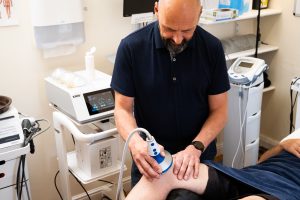
Focused Shockwave Therapy — also known as Extracorporeal Shockwave Therapy (ESWT) — uses high-energy sound waves to stimulate the body’s own healing abilities. It increases blood flow, reduces pain-producing factors, and encourages tissue repair without the need for injections or operations.
How Shockwaves Help Ligament & Knee Problems
For patients with knee ligament irritation, tendinopathy, or associated soft-tissue issues, Shockwave can:
-
Accelerate healing and tissue regeneration
-
Reduce pain and inflammation
-
Improve mobility and functional strength
-
Enhance outcomes when combined with rehabilitation
Emerging scientific evidence supports these benefits, showing Shockwave’s role in improving functional recovery and pain relief in related knee conditions.
Importantly, Shockwave Therapy is also being explored as a supportive adjunct for ligament recovery in clinical settings — including improved tissue healing and pain reduction — giving patients a promising alternative to invasive procedures.
Why Focused Shockwave Therapy at Buxton & Bakewell?
We have been offering Shockwave Therapy since 2017, tailored to each patient’s presentation and recovery goals. In Buxton and Bakewell, we are recognised as local leaders in this treatment, combining decades of hands-on expertise with advanced technologies rarely available in general practice.
Our Shockwave Protocol is personalised for your unique knee condition — whether you have ligament irritation, accompanying tendon issues (like patella tendinopathy), or persistent pain that hasn’t responded to conventional therapy. We provide clear expectations, regular monitoring, and integration with physiotherapy and strengthening programmes for optimal rehabilitation.
Rehabilitation: Beyond Shockwave Treatment
While Shockwave Therapy accelerates your body’s repair systems, lasting recovery — especially after ligament injury — also depends on structured rehabilitation. Our clinic develops bespoke programmes that include:
-
Targeted strengthening exercises for quads, hips, and core
-
Proprioception and balance training to improve stability
-
Movement retraining to reduce risk of reinjury
-
Manual therapy to improve joint mobility
This comprehensive care approach ensures you’re not only recovered but stronger and more resilient than before.
When to Seek Specialist Assessment
You should consider prompt expert assessment if you experience:
-
Persistent knee pain longer than a few days
-
Swelling, instability, or catching sensations in the knee
-
Difficulty walking, climbing stairs, or weight-bearing
-
A sudden injury with a “pop” sound
The sooner we can assess your knee — especially here at a specialist osteopathy clinic in Buxton & Derbyshire — the better the potential outcome and recovery.
Patient Experience: What to Expect at Your Visit
Your first appointment focuses on understanding your symptoms, activity history, and detailed physical examination. If Shockwave Therapy or other advanced techniques are part of your personalised plan, we’ll explain what to expect and how it fits into your broader recovery process. We also work collaboratively with your GP or surgeon if your condition requires multidisciplinary care.
Book Your Expert Assessment in Buxton or Bakewell
Whether you’re struggling with a recent knee ligament injury, chronic knee pain, or instability that’s holding you back from daily life — we’re here to help. Our evidence-based shockwave programmes and specialist assessments combine local expertise with world-class care.
📞 Call 01298 214994 to book at our Buxton Clinic
📞 Call 01629 812800 to book at our Bakewell Clinic
Or book online for a comprehensive review with our expert osteopaths — leaders in shockwave therapy and musculoskeletal care in Buxton & Bakewell.