Understanding Iliotibial Band Syndrome
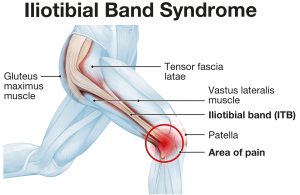
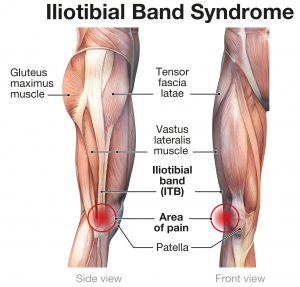
Iliotibial Band Syndrome (ITBS), often simply called iliotibial band pain, is one of the most common causes of lateral knee and outer-thigh pain seen by osteopaths and sports medicine specialists. It’s especially prevalent in runners, cyclists, and those who perform repetitive knee bending activities. Over time, the iliotibial (IT) band, a thick band of connective tissue running from the hip down to the tibia, can become irritated, tight, or inflamed. This results in painful movement, particularly around the knee, and can seriously disrupt training, daily activity, and quality of life.
At the Buxton & Bakewell Osteopathy Clinic, we see many patients struggling with ITB pain; not just athletes, but walkers, gym-goers, gardeners, and those who simply want to be pain-free around town and on the beautiful Peak District trails.
What Causes ITB Pain?
The IT band helps stabilise the knee during movement. When it becomes tight, repeatedly rubs against the outer knee, or fails to glide smoothly, irritation, inflammation, and pain develop. Several factors can contribute:
1. Overuse Injury
Activities that involve lots of knee flexion and extension, like running, cycling, hiking, or frequent stair climbing, place repeated stress on the IT band. This irritation is a key driver of ITBS.
2. Biomechanical Issues
Weakness in the hip muscles, poor foot mechanics, or uneven gait patterns can change how forces travel through the leg, forcing the IT band to compensate and become overloaded.
3. Training Errors
Suddenly increasing training intensity or frequency without adequate rest and recovery is a common trigger for IT band irritation.
4. Surface and Equipment
Running on crowned roads, uneven trails, or inappropriate footwear can strain the IT band.
Understanding YOUR triggers is the first step and this personalised assessment is a cornerstone of expert osteopathic care at Buxton & Bakewell.
Recognising the Symptoms
You might be suffering from ITB pain if you experience:
- Sharp or burning pain on the outside of your knee during activity
- Aching or tightness along the lateral thigh
- Pain worsening with running downhill or longer distances
- A “catching” feeling near the knee on motion
- Pain when getting up from sitting after exercise
Unlike a simple muscle strain, ITB pain can persist (even with rest) unless the underlying mechanical issues are treated.
Traditional Approaches to ITB Management
Conservative management often begins with:
Rest & Activity Modification
Reducing irritating activities and modifying movement patterns to allow inflammation to settle.
Ice, Heat, and Self-Care Modalities
Applying ice after activity, gentle heat before movement, and simple calf/hamstring stretching can offer symptomatic relief.
Manual Therapy & Osteopathic Techniques
Expert soft tissue work, joint mobilisation, and alignment assessment help reduce tension and restore efficient biomechanics. This is where osteopathy excels; assessing body mechanics as a whole, not just treating the site of pain.
However, when ITB pain persists or becomes chronic, advanced therapies such as Shockwave Therapy have become a vital part of modern treatment and an area where our clinic has extensive expertise.
Why Choose Shockwave Therapy for ITB Pain?
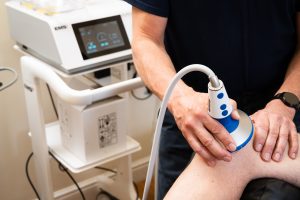
At the Buxton & Bakewell Osteopathy Clinic, we are proud to offer state-of-the-art Shockwave Therapy for musculoskeletal conditions (including iliotibial band pain) as part of a comprehensive rehabilitation plan.Shockwave Therapy — also known as Extracorporeal Shockwave Therapy (ESWT) is a non-invasive treatment that uses high-energy acoustic waves delivered through the skin to stimulate biological healing responses in the tendon and surrounding soft tissues. It’s recognised in clinical research for its ability to:
✔ Reduce Pain and Inflammation
Shockwaves help improve local blood flow and reduce inflammatory mediators at the site of pain; leading to relief and functional improvement.
✔ Stimulate Natural Tissue Repair
Unlike passive therapies that only mask symptoms, Shockwave Therapy encourages cell regeneration, new blood vessel formation, and collagen production speeding up recovery.
✔ Improve Mobility and Function
By breaking down scar tissue and reducing tension in tight fascial structures like the IT band, Shockwave enhances tissue elasticity and range of motion.
✔ Reduce Dependency on Medications or Injections
Many patients experience significant improvement without opioids, steroids, or surgery making it particularly attractive for active individuals and those seeking sustainable recovery.Multiple studies and clinical experience also show that Shockwave Therapy can significantly improve pain and function in ITB conditions when paired with manual therapy and exercise rehabilitation.
How Shockwave Therapy Works — Explained
At our clinic we tailor Shockwave sessions specifically for ITB pain. You’ll typically experience:
- Consultation & Assessment ; A thorough biomechanical and movement evaluation to identify underlying factors contributing to your pain.
- Targeted Application of Shockwaves ; The applicator delivers pulses of energy into the affected soft tissues. These pulses stimulate blood flow, reduce nerve sensitivity, and trigger healing pathways.
- Rehabilitation & Exercises; Post-Shockwave, we work with you on strengthening and flexibility exercises to correct biomechanical imbalances and prevent recurrence.
Treatment sessions are short, well-tolerated, and many patients report noticeable pain reduction after just a few visits.
Why Local Expertise Matters
If you’re in Buxton, Bakewell, Chapel-en-le-Frith, or Derbyshire’s surrounding communities, finding a specialist who understands both the biomechanics of ITB pain and advanced regenerative therapies makes a real difference. Our clinic:
⭐ Has offered Shockwave Therapy since 2017
This isn’t a new toy — it’s part of our long-standing commitment to evidence-based, effective care.
⭐ Combines Osteopathy with Modern Modalities
You’ll benefit from hands-on treatment PLUS cutting-edge technology — a combination shown to improve outcomes faster and more sustainably.
⭐ Provides Personalised Rehabilitation Plans
No two bodies are the same. We tailor treatment plans specifically to your age, activity level, biomechanics, and goals — whether you’re a weekend warrior or a Peak District trail runner.
What to Expect from Treatment
Most patients begin with a clinical assessment. Depending on your condition’s severity, you might then receive:
- Shockwave Therapy sessions
- Osteopathic manual treatment
- Functional movement analysis
- Targeted strengthening and flexibility exercises
- Progress reviews to track improvements
Recovery timelines vary from person to person, but many patients find meaningful relief within weeks — and long-term improvement with consistent care. Pain is reduced, movement becomes easier, and you get back to the activities you love without fear.
Frequently Asked Questions
Is Shockwave Therapy painful?
Most patients feel mild pulses during treatment but it’s generally well-tolerated, and discomfort is transient.
How many treatments will I need?
This depends on pain duration, severity, and tissue response — typically 3–6 sessions is an effective range.
Can Shockwave replace exercise and manual therapy?
No — Shockwave is most effective when part of a broader treatment plan that addresses strength, flexibility, and biomechanics.
Is Shockwave safe?
Shockwave Therapy is non-invasive and safe when delivered by trained professionals as part of a clinical programme.
Take the Next Step — Expert ITB Pain Relief in Buxton & Bakewell
If iliotibial band pain is holding you back whether you’re a runner, cyclist, walker, or simply someone who wants to move freely again the expert team at Buxton & Bakewell Osteopathy Clinic is here to help.
We combine traditional osteopathy with advanced Shockwave Therapy to offer effective, lasting relief — often without drugs, injections, or surgery. Book your assessment today and discover a personalised plan that gets you back to pain-free movement.
👉 Contact us to book your consultation or learn more about how Shockwave Therapy can transform your recovery.